AL-FAHADSNLE PREPARATION
HomeMaternal & Child NursingPaediatric Respiratory & Cardiac
Maternal & Child NursingChapter 11 of 15

Paediatric Respiratory & Cardiac

التنفّس والقلب عند الأطفال
بِسْمِ اللّهِ الرَّحْمَٰنِ الرَّحِيمِ
Prayer for knowledgeدعاء طلب العلم
اللَّهُمَّ انْفَعْنِي بِمَا عَلَّمْتَنِي، وَعَلِّمْنِي مَا يَنْفَعُنِي، وَزِدْنِي عِلْمًا“O Allah, benefit me by what You have taught me, teach me what benefits me, and increase me in knowledge.”
«رَبِّ زِدْنِي عِلْمًا»“My Lord, increase me in knowledge.” Qur’an, Ṭā-Hā 20:114 · سورة طه، الآية ١١٤

In this chapterفي هذا الفصل

10 sections · 60 questions · 73 flashcards · 8 clinical casesالأقسام: 10 · الأسئلة: 60 · البطاقات التعليمية: 73 · الحالات السريرية: 8

Key terms (12)المصطلحات الأساسية
Stridor and wheezeالصرير والأزيز
Stridor is an upper airway sound, usually inspiratory, whereas wheeze is a lower airway sound, usually expiratory.الصرير صوت صادر عن المجرى الهوائي العلوي ويكون عادة شهيقياً، أما الأزيز فصوت صادر عن المجرى الهوائي السفلي ويكون عادة زفيرياً.
Silent chestالصدر الصامت
A chest in which so little air is moving that no sound is produced, in a child who was wheezing loudly; it is a pre-arrest sign, not an improvement, along with exhaustion, drowsiness and a falling saturation.صدر لا يتحرك فيه من الهواء ما يكفي لإحداث صوت لدى طفل كان يأزّ بشدة؛ وهو علامة تسبق التوقّف القلبي التنفسي وليس تحسناً، ويقترن بالإرهاق والنعاس وانخفاض تشبّع الأكسجين.
Croupالخُناق (الكروب)
A viral illness of 6 months to 6 years with gradual onset, a barking seal-like cough, hoarse voice and inspiratory stridor; treated with a single dose of oral dexamethasone for any severity and nebulised adrenaline for moderate to severe cases, not with humidified air or steam.مرض فيروسي يصيب الأعمار من ٦ أشهر إلى ٦ سنوات، يبدأ تدريجياً ويتّسم بسعال نباحي يشبه نباح الفقمة وبحّة في الصوت وصرير شهيقي؛ ويُعالج بجرعة واحدة من الديكساميثازون الفموي في أي درجة من الشدة، وبالأدرينالين بالرذاذ في الحالات المتوسطة والشديدة، لا بالهواء المرطَّب أو البخار.
Epiglottitisالتهاب لسان المزمار
A rare bacterial airway emergency of sudden onset with no cough, a muffled voice, drooling, high fever and the tripod position; the throat is never examined and the child is not laid down or upset.طارئ بكتيري نادر في المجرى الهوائي يبدأ فجأة بلا سعال، مع صوت مكتوم وسيلان لعاب وحمّى شديدة ووضعية الحامل ثلاثي القوائم؛ ولا يُفحص الحلق أبداً ولا يُضجَع الطفل ولا يُزعَج.
Bronchiolitisالتهاب القصيبات
A lower respiratory infection of infants under about two, usually RSV, that worsens over days three to five and is treated supportively with oxygen, feeding support and nasal suction, not with antibiotics, steroids or bronchodilators.عدوى تنفسية سفلية تصيب الرضّع دون السنتين تقريباً، وسببها عادة الفيروس المخلوي التنفسي، وتسوء خلال الأيام ٣ إلى ٥، وتُعالج علاجاً داعماً بالأكسجين ودعم التغذية وشفط الأنف، لا بالمضادات الحيوية ولا الستيرويدات ولا موسِّعات القصبات.
Cystic fibrosisالتليف الكيسي
An autosomal recessive condition producing abnormally thick secretions that obstruct the airways, pancreas and gut, diagnosed by the sweat chloride test and managed with airway clearance physiotherapy, pancreatic enzymes with meals and segregation from other children with the condition.حالة وراثية جسمية متنحية تنتج إفرازات لزجة بشكل غير طبيعي تسدّ الطرق الهوائية والبنكرياس والأمعاء، ويُشخَّص باختبار كلوريد العرق، ويُدبَّر بعلاج فيزيائي لتصريف المجاري الهوائية وبإنزيمات البنكرياس مع الوجبات وبعزل المصابين عن بعضهم.
Pertussisالسعال الديكي
Paroxysms of coughing with an inspiratory whoop and vomiting after coughing, although young infants often do not whoop and present with apnoea or cyanotic episodes; protection comes from maternal vaccination in pregnancy and vaccinating the household.نوبات سعال انتيابية مع صياح شهيقي وتقيؤ بعد السعال، مع أن الرضّع الصغار كثيراً ما لا يصيحون ويُظهرون انقطاع النَّفَس أو نوبات زرقة؛ وتأتي الحماية من تطعيم الأم أثناء الحمل وتطعيم أفراد الأسرة.
Paediatric early warning score (PEWS)مقياس الإنذار المبكر للأطفال (PEWS)
A safety net, not a decision, that converts a nurse's unease into a number that somebody must act on; the trend matters more than the number, parental concern is a trigger in its own right, and escalation is made on the score or on concern, whichever comes first.شبكة أمان وليس قراراً، تحوّل قلق الكادر التمريضي إلى رقم يتعيّن على أحدهم أن يتصرف بناءً عليه؛ والاتجاه أهمّ من الرقم، وقلق الوالدين مُطلِق للتصعيد بحدّ ذاته، ويُصعَّد الأمر بناءً على الدرجة أو على القلق أيّهما سبق.
Tet spellنوبة الزرقة في رباعي فالو (Tet spell)
A hypercyanotic spell in tetralogy of Fallot, with sudden deepening cyanosis, distress and irritability often triggered by crying, feeding or waking, managed first with the knee-chest position, which raises systemic vascular resistance and reduces the right-to-left shunt.نوبة زرقة شديدة في رباعي فالو تتمثل في ازدياد الزرقة فجأة مع كرب وتهيّج، وكثيراً ما يحرّضها البكاء أو الرضاعة أو الاستيقاظ؛ وتُعالج أولاً بوضعية الركبتين على الصدر التي ترفع المقاومة الوعائية الجهازية وتقلّل التحويلة من اليمين إلى اليسار.
Acyanotic and cyanotic congenital heart diseaseأمراض القلب الخلقية غير الزرقاء والزرقاء
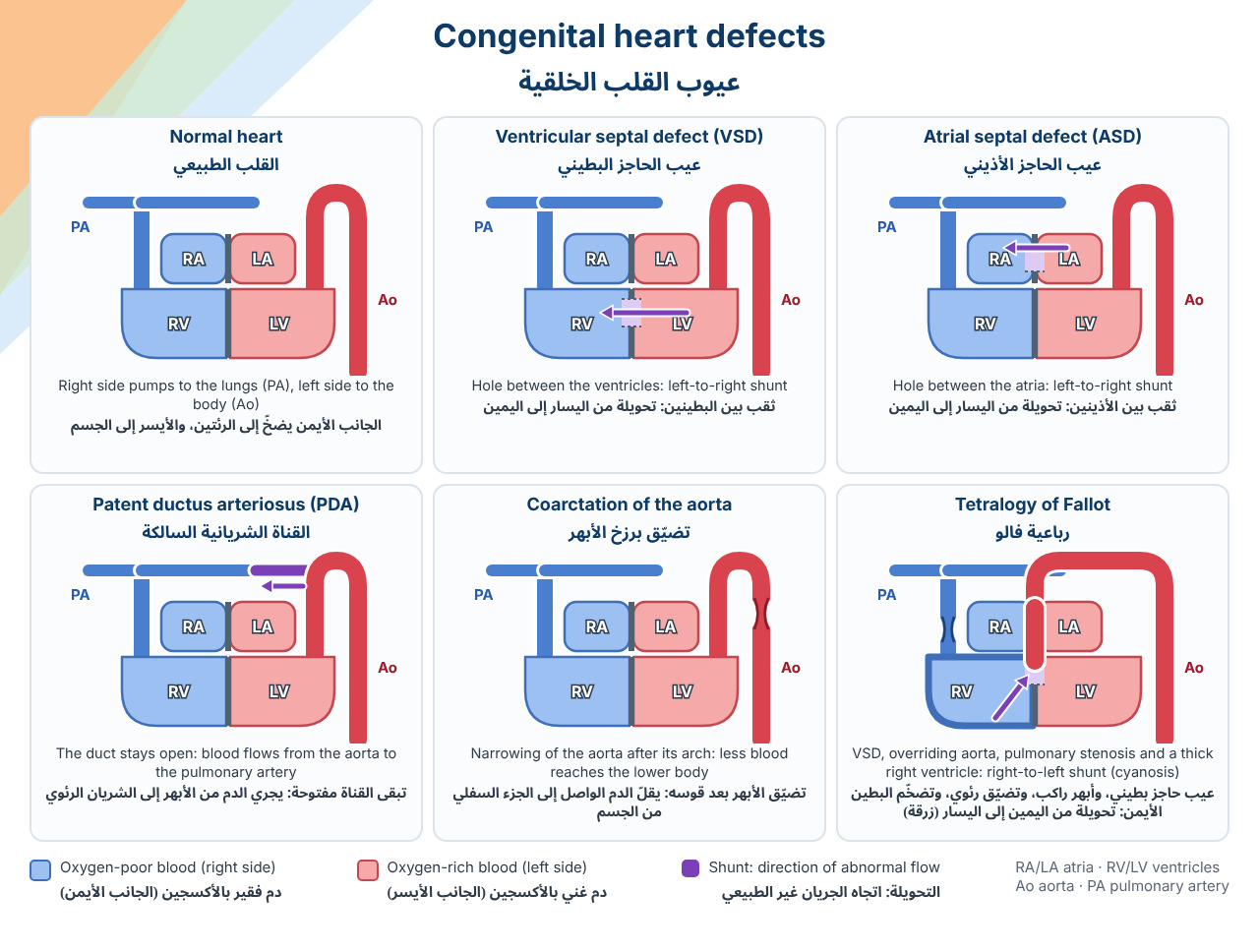
Acyanotic lesions (VSD, ASD, PDA) shunt oxygenated blood left to right, causing pulmonary overcirculation, heart failure and poor growth, whereas cyanotic lesions (tetralogy of Fallot, transposition) shunt right to left, causing central cyanosis not corrected by oxygen.تحوّل الآفات غير الزرقاء (عيب الحاجز البطيني والأذيني والقناة الشريانية السالكة) الدم المؤكسج من اليسار إلى اليمين فتسبّب فرط جريان الدم في الرئتين وقصور القلب وضعف النمو، أما الآفات الزرقاء (رباعي فالو وتبدّل الشرايين الكبيرة) فتحوّل الدم من اليمين إلى اليسار فتسبّب زرقة مركزية لا يصححها الأكسجين.
Digoxinالديجوكسين
A cardiac drug given in children with four nursing rules: count the apical pulse for a full minute before every dose and withhold below the age threshold, know the toxicity signs (in children arrhythmia or bradycardia is usually the earliest sign, and vomiting is common), do not repeat a vomited dose, and watch the potassium.دواء قلبي يُعطى للأطفال بأربع قواعد تمريضية: عدّ النبض القمي دقيقة كاملة قبل كل جرعة وحجب الجرعة دون العتبة الخاصة بالعمر، ومعرفة علامات السمّية (وأبكرها لدى الأطفال عادةً اضطراب النظم أو بطء القلب، والتقيؤ شائع)، وعدم تكرار الجرعة المتقيَّأة، ومراقبة البوتاسيوم.
Kawasaki diseaseداء كاواساكي
A vasculitis of unknown cause in young children with fever of 5 days or more plus at least four of five features: bilateral non-purulent conjunctivitis, strawberry tongue and cracked lips, rash, swollen hands and feet with peeling, and a cervical node; treated with immunoglobulin and aspirin to prevent coronary artery aneurysm.التهاب وعائي مجهول السبب يصيب صغار الأطفال، يتميّز بحمّى ٥ أيام أو أكثر مع أربع على الأقل من خمس علامات هي التهاب ملتحمة ثنائي غير قيحي، ولسان فراولي وشفاه متشققة، وطفح جلدي، وتورّم اليدين والقدمين مع تقشّر، وعقدة لمفية عنقية؛ ويُعالج بالغلوبولين المناعي والأسبرين لمنع أمهات الدم في الشرايين الإكليلية.
Chapter outline (10 sections)مخطط الفصل
  1. Learning Objectivesأهداف التعلّم
  2. 11.1 · Why a Child's Airway Is Different١١٫١ · لماذا مجرى الطفل الهوائي مختلف
  3. 11.2 · Croup and Epiglottitis١١٫٢ · الخانوق والتهاب لسان المزمار
  4. 11.3 · Bronchiolitis, Asthma and Cystic Fibrosis١١٫٣ · التهاب القصيبات والربو والتليّف الكيسي
  5. 11.4 · The Rest of the Chest١١٫٤ · بقية الصدر
  6. 11.5 · Noticing Deterioration Before It Happens١١٫٥ · ملاحظة التدهور قبل حدوثه
  7. 11.6 · After a Tonsillectomy١١٫٦ · بعد استئصال اللوزتين
  8. 11.7 · Congenital Heart Disease١١٫٧ · أمراض القلب الخلقية
  9. 11.8 · Rheumatic Fever, Kawasaki Disease and the Local Setting١١٫٨ · الحمّى الروماتيزمية وداء كاواساكي والسياق المحلّي
  10. 11.9 · Murmurs, Activity and Going Home١١٫٩ · النفخات والنشاط والعودة للمنزل

Start learningبدء التعلّم Learning objectivesأهداف التعلّم Test yourselfالاختبار الذاتي

Learning Objectivesأهداف التعلّم

1
Explain why a child's airway obstructs more easily.
بيان لماذا ينسدّ مجرى الطفل الهوائي بسهولة أكبر.
2
Recognise the signs of respiratory distress.
تمييز علامات الضائقة التنفّسية.
3
Recognise respiratory failure and why it looks like improvement.
تمييز القصور التنفّسي ولماذا يبدو كتحسّن.
4
Distinguish stridor from wheeze.
التمييز بين الصرير والأزيز.
5
Describe the presentation and management of croup.
وصف تظاهر الخانوق وتدبيره.
6
State the four Ds of epiglottitis.
ذكر علامات «D» الأربع في التهاب لسان المزمار.
7
State the golden rule in suspected epiglottitis.
ذكر القاعدة الذهبية في التهاب لسان المزمار المشتبه.
8
Prepare correctly for a child with epiglottitis.
التحضير الصحيح لطفل مصاب بالتهاب لسان المزمار.
9
Distinguish croup from epiglottitis.
التمييز بين الخانوق والتهاب لسان المزمار.
10
Describe bronchiolitis and its management.
وصف التهاب القصيبات وتدبيره.
11
State the precautions used for respiratory syncytial virus.
ذكر الاحتياطات المستخدَمة للفيروس المخلوي التنفّسي.
12
Explain why feeding matters in bronchiolitis.
بيان لماذا تهمّ الرضاعة في التهاب القصيبات.
13
Explain the role of a spacer in childhood asthma.
بيان دور المباعد في ربو الطفولة.
14
Recognise the silent chest and what it means.
تمييز الصدر الصامت وما يعنيه.
15
State the diagnostic test for cystic fibrosis.
ذكر الفحص التشخيصي للتليّف الكيسي.
16
Describe the respiratory and nutritional management of cystic fibrosis.
وصف التدبير التنفّسي والغذائي للتليّف الكيسي.
17
Identify the earliest sign of post-tonsillectomy haemorrhage.
تحديد أبكر علامة للنزف بعد استئصال اللوزتين.
18
State what to give and avoid after a tonsillectomy.
ذكر ماذا يُعطى وماذا يُتجنّب بعد استئصال اللوزتين.
19
Distinguish acyanotic from cyanotic congenital heart lesions.
التمييز بين آفات القلب الخلقية غير المزرقة والمزرقة.
20
State the signs of coarctation of the aorta.
ذكر علامات تضيّق الأبهر.
21
Manage a tet spell and explain why the position works.
تدبير نوبة فالو وبيان لماذا تنجح الوضعية.
22
Recognise heart failure in an infant.
تمييز قصور القلب لدى رضيع.
23
Apply the feeding management for an infant in heart failure.
تطبيق تدبير التغذية لرضيع مصاب بقصور القلب.
24
State the nursing rules for digoxin in a child.
ذكر القواعد التمريضية للديجوكسين لدى طفل.
25
Recognise rheumatic fever and Kawasaki disease.
تمييز الحمّى الروماتيزمية وداء كاواساكي.

11.1 · Why a Child's Airway Is Different١١٫١ · لماذا مجرى الطفل الهوائي مختلف

Almost everything in this chapter follows from a small number of anatomical facts.

وكلّ شيء في هذا الفصل تقريباً ينبع من عدد صغير من الحقائق التشريحية.

•Why the same illness is worse in a child◆ لماذا يكون المرض نفسه أشدّ لدى الطفل
Narrow airwayA small amount of swelling occludes a large proportion of it — resistance rises sharply as the radius falls.مجرى ضيّق — تورّم صغير يسدّ نسبةً كبيرة منه والمقاومة ترتفع بحدّة كلّما نقص نصف القطر.
Large tongue, floppy epiglottisThe tongue occludes easily; the airway obstructs in the unconscious child.لسان كبير ولسان مزمار رخو — يسدّ اللسان المجرى بسهولة، وينسدّ المجرى لدى الطفل فاقد الوعي.
Ribs horizontal, muscles weakHe cannot increase tidal volume much, so he raises the rate instead — and tires.أضلاع أفقية وعضلات ضعيفة — لا يستطيع زيادة الحجم المدّي كثيراً فيرفع المعدّل بدلاً منه ثم يتعب.
Higher oxygen demandA higher metabolic rate with smaller reserves — he desaturates fast.طلب أكسجين أعلى — معدّل استقلاب أعلى واحتياطي أصغر، فينخفض إشباعه بالأكسجين بسرعة.
Obligate nose breatherAn infant under a few months cannot easily mouth-breathe — a blocked nose is a real problem.متنفّس أنفي إلزامي — الرضيع دون عمر بضعة أشهر لا يتنفّس فموياً بسهولة، فانسداد الأنف مشكلة حقيقية.

Respiratory distress is recognised from across the room, and the signs are cumulative rather than alternative — the more of them present, the sicker he is.

والضائقة التنفّسية تُميَّز من الطرف الآخر من الغرفة والعلامات تراكمية لا بديلة — فكلّما زاد عددها اشتدّ مرضه.

1
Tachypnoea
The first and most sensitive sign.
تسرّع التنفّس — أول العلامات وأكثرها حساسية.
2
Recession
Intercostal, subcostal, sternal — the deeper, the worse.
الانسحاب — بين الأضلاع وتحتها وقصّي: كلّما عمُق ساء.
3
Nasal flaring and head bobbing
Accessory effort in an infant.
توسّع المنخرين وهزّ الرأس — جهد إضافي في رضيع.
4
Grunting
Expiring against a partly closed glottis to hold the airways open — a sign of significant disease.
النخير — زفير على مزمار شبه مغلق للإبقاء على المجاري الهوائية مفتوحة: علامة مرض ذي أهمية سريرية.
5
Audible noise
Stridor on inspiration means upper airway; wheeze on expiration means lower.
ضجيج مسموع — الصرير الشهيقي يدلّ على مجرى هوائي علوي، والأزيز الزفيري على مجرى هوائي سفلي.
6
Tripod or refusing to lie flat
He has found the position that works. Do not make him lie down.
وضعية الحامل ثلاثي القوائم أو رفض الاستلقاء — وجد الوضعية التي تنجح فلا يجوز إضجاعه.

Respiratory failure is what distress becomes when he can no longer compensate — and the danger is that several of its signs look like improvement.

والقصور التنفّسي ما تصير إليه الضائقة حين لا يعود يعوّض — والخطر أن عدداً من علاماته تبدو تحسّناً.

💨Working hard — distress
  • Fast, noisy, visibly struggling
  • Recession, flaring, grunting
  • Restless, agitated
  • Frightening to watch — but he is compensating
يجهد — ضائقة: تنفّس سريع وصاخب ومكافحة ظاهرة؛ انسحاب وتوسّع منخرين ونخير؛ تململ وهياج؛ منظره مُخيف لكنّه يعوّض.
🚨Running out — failure
  • Rate falling and effort reducing
  • Silent chest — no air moving, so no wheeze
  • Drowsy, floppy, quiet
  • Bradycardia and cyanosis — pre-arrest
ينفد — قصور: معدّل هابط وجهد متناقص؛ صدر صامت — لا هواء يتحرّك فلا أزيز؛ نعاس ورخاوة وهدوء؛ بطء قلب وزرقة — ما قبل التوقّف.

That is the trap this chapter turns on: a quiet child is not a settled child. A falling respiratory rate, a chest that has gone silent, and a baby who has stopped fighting are all signs he is close to arrest.

وذلك الفخّ الذي يدور عليه هذا الفصل: أن الطفل الهادئ ليس طفلاً مستقرّاً. فمعدّل تنفّس هابط وصدر صار صامتاً وطفل توقّف عن المقاومة كلّها علامات قربه من التوقّف.

⭐
Key point
نقطة أساسية
A child's airway is narrower at every level, so a millimetre of oedema that would be trivial in an adult can halve the airway of an infant.
مجرى الطفل الهوائي أضيق في كلّ مستوى، فمليمتر وذمة تافه في بالغ قد ينصّف مجرى رضيع.
🔑
Memory aid
مفتاح للحفظ
Distress: tachypnoea, recession, nasal flaring, head bobbing, grunting, stridor or wheeze, inability to feed or speak in sentences, accessory muscle use.
الضائقة: تسرّع تنفّس وانسحاب وتوسّع منخري وهزّ رأس ونخير وصرير أو أزيز وعدم القدرة على الرضاعة أو الكلام بجمل واستخدام عضلات مساعدة.
⭐
Key point
نقطة أساسية
Stridor is an upper airway sound, usually inspiratory. Wheeze is a lower airway sound, usually expiratory.
الصرير صوت مجرى علوي شهيقي عادةً. والأزيز صوت مجرى سفلي زفيري عادةً.
🚩
Watch out
تنبيه
The signs of respiratory failure look like improvement — becoming quiet, less recession, a falling respiratory rate, drowsiness, or a wheeze that disappears while the effort continues. The child is exhausting, not settling.
علامات القصور التنفّسي تبدو كتحسّن — الهدوء وقلّة الانسحاب وانخفاض معدّل التنفّس والنعاس أو أزيز يختفي بينما يستمرّ الجهد. فالطفل يُنهَك لا يستقرّ.
🚩
Watch out
تنبيه
A silent chest means so little air is moving that no sound is produced. It is an emergency, not an improvement.
الصدر الصامت يعني أن هواءً قليلاً جداً يتحرّك بحيث لا يُنتَج صوت. وهو طارئ لا تحسّن.

11.2 · Croup and Epiglottitis١١٫٢ · الخانوق والتهاب لسان المزمار

🐶Croup
  • Viral, common; 6 months–6 years
  • Gradual onset over a day or two, worse at night
  • Barking, seal-like cough; hoarse voice
  • Inspiratory stridor; low-grade fever
  • The child looks unwell but not toxic
  • Wants to sit up
الخانوق — فيروسي وشائع، من عمر ٦ أشهر إلى ٦ سنوات؛ بدء تدريجي خلال يوم أو يومين وأسوأ ليلاً؛ سعال نباحي شبيه بنباح الفقمة وبحّة صوت؛ صرير شهيقي وحمّى منخفضة؛ يبدو الطفل مريضاً لكن غير سمّي المظهر؛ ويفضّل الجلوس منتصباً.
🚨Epiglottitis
  • Bacterial, rare now; any age
  • Sudden onset over hours
  • No cough; muffled ‘hot potato’ voice
  • Drooling; high fever; toxic-looking
  • Tripod position, chin forward, refusing to lie
  • A true airway emergency
التهاب لسان المزمار — جرثومي ونادر حالياً، في أي عمر؛ بدء مفاجئ خلال ساعات؛ بلا سعال وصوت مكتوم («صوت البطاطا الساخنة»)؛ سيلان لعاب وحمّى عالية ومظهر سمّي؛ وضعية الحامل ثلاثي القوائم مع بروز الذقن ورفض الاستلقاء؛ طارئ حقيقي للمجرى الهوائي.

The discriminators worth carrying: cough present in croup, absent in epiglottitis; drooling in epiglottitis, not in croup; and gradual against sudden.

والفوارق الجديرة بالتذكّر: السعال موجود في الخانوق وغائب في التهاب لسان المزمار؛ وسيلان اللعاب في الثاني لا الأول؛ وتدريجي مقابل مفاجئ.

The golden rule is the single most important instruction in this chapter, and it is absolute.

والقاعدة الذهبية أهمّ تعليمة منفردة في هذا الفصل وهي قطعية.

•Suspected epiglottitis — what NOT to do◆ التهاب لسان المزمار المشتبه — ما لا يجوز فعله
Never examine the throatNo tongue depressor, no torch, no look. It can precipitate complete obstruction.يُمنَع فحص الحلق أبداً — لا خافض لسان ولا مصباح ولا نظر: قد يُحدث انسداداً كاملاً.
Do not lay him downLet him sit in whatever position he has chosen.لا يُضجَع الطفل — يُترك ليجلس بالوضعية التي اختارها.
Do not upset himCrying worsens obstruction. Keep the parent with him; no cannulas, no bloods.لا يُزعَج الطفل — فالبكاء يفاقم الانسداد. يُبقى الوالد معه، ولا قنيّات ولا تحاليل دم.
Do call for senior and anaesthetic helpThe airway is secured in a controlled setting, by the person able to secure it.يجب طلب المساعدة من كبار المختصين ومن فريق التخدير — يُؤمَّن المجرى في بيئة مضبوطة على يد من يستطيع تأمينه.

Croup management has changed, and the outdated version is still widely taught.

وتدبير الخانوق تغيّر والنسخة القديمة ما زالت تُدرَّس على نطاق واسع.

❌No longer recommended
  • Humidified air and cool mist
  • Repeatedly shown ineffective in trials
  • Steamy bathrooms and steam tents
  • It persists in teaching, not in evidence
لم تعد مُوصى بها — الهواء المرطّب والرذاذ البارد: ثبت عدم فعاليتهما مراراً في التجارب؛ وكذلك حمّامات البخار وخيم البخار: تستمرّ في التدريس لا في الدليل العلمي.
✅What works
  • Oral dexamethasone — a single dose, for every severity including mild
  • Nebulised adrenaline for moderate to severe
  • — but its effect is temporary, so observe afterwards
  • Keep him calm; oxygen if needed
ما ينجح — ديكساميثازون فموي بجرعة واحدة لكلّ شدّة بما فيها الخفيفة؛ وأدرينالين مُرذَّذ للمتوسّط والشديد، لكنّ أثره مؤقّت فتلزم المراقبة بعده؛ مع إبقاء الطفل هادئاً وإعطاء الأكسجين عند الحاجة.

Two closing points. Epiglottitis is now much less common, and the reason connects directly to Chapter 10: routine Hib immunisation. So it is rarer, not gone — and it is commoner in an unimmunised or incompletely immunised child, which is a question worth asking. And after nebulised adrenaline, the child is observed rather than discharged, because the effect wears off before the swelling does.

ونقطتان ختاميتان: الأولى أنّ التهاب لسان المزمار صار أقلّ شيوعاً بكثير والسبب يتّصل مباشرةً بالفصل العاشر: التطعيم الروتيني ضد المستدمية النزلية من النمط ب (Hib). فهو أندر لا زائل — وأشيع في طفل غير مطعَّم أو ناقص التطعيم وذلك سؤال يستحقّ الطرح. والثانية أنّه بعد الأدرينالين المُرذَّذ يُراقَب الطفل ولا يُخرَج، فالأثر يزول قبل أن يزول التورّم.

🔑
Memory aid
مفتاح للحفظ
Croup: viral, gradual, barking cough, inspiratory stridor, hoarseness, low fever, worse at night. Epiglottitis: bacterial, sudden, high fever, toxic, drooling, no barking cough.
الخانوق: فيروسي وتدريجي وسعال نباحي وصرير شهيقي وبحّة وحمّى خفيفة وأسوأ ليلاً. والتهاب لسان المزمار: جرثومي ومفاجئ وحمّى عالية وسمّي وسيلان لعاب ولا سعال نباحي.
🔑
Memory aid
مفتاح للحفظ
The four Ds of epiglottitis: Drooling, Dysphagia, Dysphonia, Distress — with the tripod position, sitting forward leaning on the hands with the neck extended.
علامات «D» الأربع في التهاب لسان المزمار: Drooling (سيلان اللعاب) وDysphagia (عسر البلع) وDysphonia (عسر الصوت) وDistress (الضائقة) — مع وضعية الحامل ثلاثي القوائم جالساً للأمام متّكئاً على يديه ورقبته ممدودة.
🚩
Watch out
تنبيه
In suspected epiglottitis never examine the throat, never use a tongue depressor and never leave the child. It can provoke complete airway obstruction and respiratory arrest.
في التهاب لسان المزمار المشتبه يُمنَع فحص الحلق أبداً، ولا يُستخدَم خافض اللسان، ولا يُترك الطفل وحده أبداً. فذلك قد يُحدث انسداداً كاملاً للمجرى وتوقّفاً تنفّسياً.
⭐
Key point
نقطة أساسية
Keep him calm and upright on the parent's lap, call for senior and anaesthetic help, and have intubation and tracheostomy equipment prepared at the bedside before it is needed.
يُبقى الطفل هادئاً منتصباً في حجر الوالد، ويُطلَب العون من كبار المختصين ومن فريق التخدير، وتُحضَّر معدّات التنبيب وفغر الرغامى عند السرير قبل الحاجة إليها.
🔑
Memory aid
مفتاح للحفظ
Croup barks; epiglottitis drools. And keeping the child calm is treatment rather than kindness, because distress worsens the obstruction.
الخانوق ينبح؛ والتهاب لسان المزمار يُسيل اللعاب. وإبقاء الطفل هادئاً علاج لا لطف، فالكرب يفاقم الانسداد.

11.3 · Bronchiolitis, Asthma and Cystic Fibrosis١١٫٣ · التهاب القصيبات والربو والتليّف الكيسي

Bronchiolitis is a lower respiratory infection of infants under about two, usually RSV. It begins as a coryzal illness and worsens over days three to five — so a baby who looks manageable today may not tomorrow, and that is what parents are told.

والتهاب القصيبات عدوى تنفّسية سفلية في رضّع دون نحو السنتين والمسبّب عادةً الفيروس المخلوي التنفّسي. ويبدأ كمرض زكامي ويسوء عبر الأيام ٣ إلى ٥ — فالطفل الذي يبدو محتملاً اليوم قد لا يكون غداً وذلك ما يُقال للوالدين.

✅Treatment IS
  • Oxygen to maintain the target saturation
  • Feeding support — small frequent, nasogastric or intravenous if he cannot feed
  • Nasal suction before feeds — he is an obligate nose breather
  • Minimal handling; observation
العلاج هو — أكسجين للحفاظ على التشبّع المستهدف؛ ودعم التغذية بوجبات صغيرة متكرّرة، وبأنبوب أنفي معدي أو وريدياً إن عجز عن الرضاعة؛ وشفط أنفي قبل الرضعات لأن الرضيع متنفّس أنفي إلزامي؛ والحدّ الأدنى من التعامل مع الطفل والمراقبة.
❌Treatment is NOT
  • Antibiotics — it is viral
  • Steroids — no benefit in bronchiolitis
  • Bronchodilators — not routinely effective
  • Chest physiotherapy
العلاج ليس — مضادات حيوية (المرض فيروسي) ولا ستيرويدات (لا فائدة منها في التهاب القصيبات) ولا موسّعات قصبية (غير فعّالة روتينياً) ولا علاج طبيعي للصدر.

Knowing that treatment is supportive prevents a great deal of unnecessary intervention — and the intervention that does matter is watching the feeding, because a baby who stops feeding is the one who needs admission.

ومعرفة أن العلاج داعم تمنع تدخّلاً كثيراً غير ضروري — والتدخّل المهمّ مراقبة الرضاعة، فالطفل الذي يتوقّف عن الرضاعة هو من يحتاج التنويم.

Asthma in a child presents with wheeze, cough — often worse at night and with exercise — breathlessness and chest tightness, typically variable and with triggers. But the red flag is the one from the first section of this chapter, and it deserves repeating on its own.

والربو في طفل يتظاهر بأزيز وسعال — أسوأ ليلاً ومع الجهد غالباً — وضيق نفس وضيق صدر متغيّران عادةً ومرتبطان بمحفّزات. لكن علامة الإنذار هي التي من القسم الأول وتستحقّ التكرار وحدها.

•The silent chest◆ الصدر الصامت
Wheeze needs airflowA wheeze is air being forced through a narrowed airway. To wheeze, he must be moving air.الأزيز يحتاج إلى جريان هواء — فهو هواء يُدفَع عبر مجرى ضيّق؛ ولكي يئزّ الطفل يجب أن يكون الهواء متحرّكاً لديه.
So a chest that goes quietin a child who was wheezing loudly is not improving — he has stopped moving enough air to make the sound.فالصدر الذي يصمت في طفل كان يئزّ بصوت عالٍ لا يعني التحسّن — فقد توقّف عن تحريك قدر كافٍ من الهواء لإحداث الصوت.
It is a pre-arrest signSilent chest, exhaustion, drowsiness, and a falling saturation — escalate immediately.علامة قبل التوقّف — صدر صامت وإنهاك ونعاس وانخفاض التشبّع: يجب التصعيد فوراً.

Cystic fibrosis is an autosomal recessive condition producing abnormally thick secretions that obstruct the airways, the pancreas and the gut.

والتليّف الكيسي حالة وراثية صبغية جسمية متنحّية تُنتج إفرازات سميكة شاذّة تسدّ المجاري الهوائية والبنكرياس والأمعاء.

•How it presents — by system◆ كيف يتظاهر — بحسب الجهاز
NewbornMeconium ileus — failure to pass meconium, with distension and vomiting.الوليد — علوص العقي: عدم إخراج العقي مع انتفاخ وتقيّؤ.
RespiratoryPersistent wet cough, recurrent chest infections, and eventual bronchiectasis.التنفّسي — سعال رطب مستمرّ وعدوى صدر متكرّرة وتوسّع قصبات في النهاية.
GastrointestinalPancreatic insufficiency — steatorrhoea, bulky offensive stools, and failure to thrive despite a good appetite.الهضمي — قصور بنكرياسي وبراز دهني ضخم كريه الرائحة وفشل نموّ رغم شهية جيّدة.
The classic signSalty-tasting skin — and the diagnostic test is the sweat chloride test.العلامة الكلاسيكية — جلد مالح المذاق، والاختبار التشخيصي هو اختبار كلوريد العرق.

Management is lifelong and multidisciplinary: airway clearance physiotherapy, pancreatic enzyme replacement with meals, a high-calorie high-protein diet with fat-soluble vitamins, and aggressive treatment of infections. And a specific infection-control point: children with cystic fibrosis are segregated from one another to prevent cross-infection with resistant organisms — which is why they are not put in the same bay or the same clinic waiting room.

والتدبير مدى الحياة ومتعدّد التخصّصات: علاج طبيعي لتصفية المجاري الهوائية وتعويض إنزيمات البنكرياس مع الوجبات وحمية عالية السعرات والبروتين مع فيتامينات ذائبة في الدهن وعلاج حازم للعدوى. ونقطة مكافحة عدوى محدّدة: أن أطفال التليّف الكيسي يُفصَلون عن بعضهم منعاً للعدوى المتصالبة بكائنات مقاومة — ولهذا لا يُوضَعون في الحيّز نفسه ولا غرفة انتظار العيادة نفسها.

⭐
Key point
نقطة أساسية
In bronchiolitis, poor feeding is a marker of severity rather than a separate problem — an infant working hard to breathe cannot suck, swallow and breathe at the same time.
في التهاب القصيبات ضعف الرضاعة علامة على الشدّة لا مشكلة منفصلة — فالرضيع الذي يجهد للتنفّس لا يستطيع المصّ والبلع والتنفّس في آن.
🚩
Watch out
تنبيه
Respiratory syncytial virus needs contact precautions with meticulous hand hygiene (plus droplet precautions where local policy requires) — not airborne precautions.
الفيروس المخلوي التنفّسي يحتاج احتياطات تماسّ مع نظافة يدين دقيقة (مع احتياطات الرذاذ حيث تقتضي السياسة المحلية) — لا احتياطات هوائية.
⭐
Key point
نقطة أساسية
Suction the nose before feeds — an infant is an obligate nose-breather, and a blocked nose alone can prevent feeding.
يُشفَط الأنف قبل الرضعات — فالرضيع متنفّس أنفي إلزامي وأنف مسدود وحده قد يمنع الرضاعة.
⭐
Key point
نقطة أساسية
A metered-dose inhaler with a spacer delivers as effectively as a nebuliser in children. It is the preferred method, not a second-best substitute — and technique is checked rather than assumed.
جهاز الاستنشاق مُقنَّن الجرعة مع مباعد يوصل الدواء بفعالية جهاز الإرذاذ نفسها لدى الأطفال. وهو الطريقة المفضّلة لا بديلاً ثانوياً — والتقنية تُفحَص لا تُفترَض.
🚩
Watch out
تنبيه
A child using his reliever more and more often is a child whose asthma is not controlled, not a child who is managing.
الطفل الذي يستخدم البخّاخ المُسعِف أكثر فأكثر طفل ربوه غير مضبوط لا طفل يتدبّر أمره.
🔑
Memory aid
مفتاح للحفظ
Cystic fibrosis: sweat chloride is the gold standard; chest physiotherapy before meals, not after; pancreatic enzymes with every meal and every snack.
التليّف الكيسي: كلوريد العرق المعيار الذهبي؛ والعلاج الطبيعي الصدري قبل الوجبات لا بعدها؛ وإنزيمات البنكرياس مع كلّ وجبة وكلّ وجبة خفيفة.

11.4 · The Rest of the Chest١١٫٤ · بقية الصدر

•Four more respiratory presentations◆ أربعة تظاهرات تنفّسية أخرى
PneumoniaFever, cough, tachypnoea and increased work of breathing. In a child, tachypnoea is the most useful single sign — more reliable than chest signs, which are often absent.الالتهاب الرئوي — حمّى وسعال وتسرّع تنفّس وزيادة جهد التنفّس. وفي الطفل يكون تسرّع التنفّس أنفع علامة منفردة — وهو أوثق من علامات الصدر التي كثيراً ما تغيب.
Foreign body aspirationThe history is the diagnosis: sudden choking or coughing in a previously well toddler, often while eating or playing. May settle into a persistent cough or unilateral wheeze — so a unilateral wheeze in a toddler is a foreign body until proven otherwise.استنشاق جسم أجنبي — القصّة هي التشخيص: اختناق أو سعال مفاجئ في دارج كان بخير، غالباً أثناء الأكل أو اللعب؛ وقد يستقرّ على سعال مستمرّ أو أزيز أحادي الجانب — فالأزيز أحادي الجانب في دارج جسم أجنبي إلى أن يثبت العكس.
PertussisParoxysms of coughing, a whoop on inspiration, and vomiting after coughing. But in the infants it kills, the whoop is often absent — they present with apnoea or cyanotic episodes instead.السعال الديكي — نوبات سعال وشهقة شهيقية وتقيّؤ بعد السعال؛ لكن في الرضّع الذين يقتلهم المرض تغيب الشهقة غالباً ويأتون بانقطاع نفس أو نوبات زرقة بدلاً منها.
TuberculosisRelevant here because BCG is on the routine schedule. Suspect it with a chronic cough, weight loss, night sweats or contact with an adult case.السلّ — له صلة بهذا الفصل لأن لقاح BCG ضمن الجدول الروتيني؛ يُشتبَه به مع سعال مزمن ونقص وزن وتعرّق ليلي أو مخالطة بالغ مصاب.

The pertussis point is worth its own line, because it is how infants die: a young infant with pertussis may never whoop, and the presentation is apnoea, colour change or a seizure. Protection comes from maternal vaccination in pregnancy and from vaccinating the household — the infant is too young to be protected by his own schedule.

ونقطة السعال الديكي تستحقّ سطراً خاصّاً فهكذا يموت الرضّع: أن الرضيع الصغير المصاب بالسعال الديكي قد لا يشهق أبداً والتظاهر انقطاع نفس أو تغيّر لون أو اختلاج. والحماية من تطعيم الأمّ في الحمل وتطعيم أفراد المنزل — فالرضيع أصغر من أن يحميه جدوله.

Oxygen delivery: the device is chosen by the concentration needed, and the concentration a device delivers depends on the flow and on how much room air the child entrains.

وإيصال الأكسجين: يُختار الجهاز بحسب التركيز اللازم، ويعتمد التركيز الذي يوصله الجهاز على التدفّق وعلى كمية هواء الغرفة التي يسحبها الطفل.

1
Nasal cannulae
Low flow, low concentration. Well tolerated; good for a child who will not keep a mask on.
قنيّة أنفية — تدفّق وتركيز منخفضان ومحتملة جيّداً؛ مناسبة لطفل لا يُبقي القناع على وجهه.
2
Simple face mask
Moderate concentration. Needs a minimum flow to clear exhaled carbon dioxide.
قناع وجه بسيط — تركيز متوسّط ويحتاج تدفّقاً أدنى لطرح ثاني أكسيد الكربون.
3
Non-rebreathing mask with reservoir
The highest concentration — for the acutely unwell child. Ensure the bag stays inflated.
قناع عدم إعادة التنفّس ذو الخزّان — أعلى تركيز، للطفل المريض مرضاً حاداً؛ ويجب إبقاء الكيس منتفخاً.
4
Head box or blow-by
For an infant who will not tolerate anything on the face.
صندوق الرأس أو الأكسجين المنفوخ قرب الوجه — لرضيع لا يحتمل شيئاً على وجهه.

Two practical points. Distress about the mask makes the hypoxia worse, so a lower-concentration device the child tolerates may deliver more oxygen than a high-concentration one he fights. And keep him with his parent — crying costs oxygen.

ونقطتان عمليتان: الأولى أنّ الكرب من القناع يفاقم نقص الأكسجة، فجهاز أقلّ تركيزاً يحتمله الطفل قد يوصل أكسجيناً أكثر من جهاز عالي التركيز يقاومه. والثانية أن يُبقى الطفل مع والده — فالبكاء يكلّف أكسجيناً.

⭐
Key point
نقطة أساسية
Tachypnoea is the most sensitive single sign of pneumonia in a child — which is why counting the rate over a full minute is worth more than a hurried listen.
تسرّع التنفّس أكثر العلامات المنفردة حساسية للالتهاب الرئوي لدى الطفل — ولهذا يستحقّ عدّ المعدّل عبر دقيقة كاملة أكثر من إصغاء متعجّل.
🚩
Watch out
تنبيه
A young child with pneumonia may present with abdominal pain and vomiting rather than chest symptoms, because lower lobe consolidation irritates the diaphragm.
الطفل الصغير المصاب بالالتهاب الرئوي قد يتظاهر بألم بطن وتقيّؤ لا بأعراض صدرية، لأن تكثّف الفص السفلي يُهيّج الحجاب.
🔑
Memory aid
مفتاح للحفظ
Suspect foreign body aspiration when the onset is sudden rather than progressive, there is no fever, and the signs are unilateral.
يُشتبَه في استنشاق جسم أجنبي حين يكون البدء مفاجئاً لا تدريجياً، ولا توجد حمّى، وتكون العلامات أحادية الجانب.
🚩
Watch out
تنبيه
If the child is coughing effectively, encourage the cough and do not interfere. Never perform a blind finger sweep — it can push the object further in.
إن كان الطفل يسعل بفعالية فيُشجَّع السعال ولا يُتدخَّل. ولا يُجرى مسح أعمى بالإصبع أبداً — فقد يدفع الجسم أعمق.
🚩
Watch out
تنبيه
A young infant with pertussis may not whoop at all, presenting instead with apnoea, colour change or a brief collapse — so consider it in unexplained infant apnoea.
الرضيع الصغير المصاب بالسعال الديكي قد لا يشهق إطلاقاً بل يتظاهر بانقطاع نفس أو تغيّر لون أو انهيار قصير — فيُنظَر في السعال الديكي عند كلّ انقطاع نفس غير مفسَّر لدى الرضيع.
⭐
Key point
نقطة أساسية
In a child, the oxygen device he tolerates delivers more than the device that is optimal but pulled off. A screaming child fighting a mask is being harmed by it.
لدى الطفل، يوصل جهاز الأكسجين الذي يحتمله أكسجيناً أكثر ممّا يوصله الجهاز الأمثل الذي يُنزَع. فالطفل الذي يصرخ ويقاوم القناع يتضرّر منه.
🚩
Watch out
تنبيه
A normal saturation in a child working very hard to breathe is not reassurance — it is a child who is compensating.
التشبّع الطبيعي في طفل يجهد بشدّة للتنفّس ليس طمأنة — بل طفل يعوّض.

11.5 · Noticing Deterioration Before It Happens١١٫٥ · ملاحظة التدهور قبل حدوثه

Because a child compensates and then collapses, the whole system of paediatric ward safety is built around noticing the change early — which is what a paediatric early warning score exists to do.

ولأن الطفل يعوّض ثم ينهار بُني نظام سلامة أجنحة الأطفال كلّه حول ملاحظة التغيّر مبكّراً — وهو ما توجد لأجله درجة الإنذار المبكّر للأطفال.

•Two things about the score — both the opposite of how it is often used◆ أمران عن الدرجة — وكلاهما عكس ما تُستخدَم به غالباً
It is a safety net, not a decisionA normal score does not overrule your concern. If a child looks wrong, escalate on that — the score is there to catch what you miss, not to overrule what you see.شبكة أمان لا قرار — الدرجة الطبيعية لا تُبطل القلق السريري. وإذا بدا الطفل على غير ما يرام يُصعَّد استناداً إلى ذلك — فالدرجة موجودة لالتقاط ما قد يفوت، لا لإبطال ما يُرى.
The trend beats the numberA score of 3 that was 0 four hours ago is more worrying than a stable 3. Direction of travel is the information.الاتّجاه يغلب الرقم — درجة ٣ كانت صفراً قبل أربع ساعات أقلق من درجة ٣ مستقرّة؛ فمنحى التغيّر هو المعلومة.
And the parent counts‘He is not himself’ from someone who knows him is data, and many scoring systems now include parental concern for exactly that reason.وقلق الوالد يُحتسَب — عبارة «ليس على طبيعته» ممّن يعرف الطفل هي بيانات، وكثير من أنظمة الدرجات تُدرج الآن قلق الوالدين لهذا السبب تحديداً.

Escalating works better when it is structured. Say who you are and where, what the situation is, the relevant background, your assessment, and — the part most often left out — what you want to happen and by when.

والتصعيد ينجح بصورة أفضل حين يكون منظّماً. يُذكر مَن المتّصل وأين، والوضع، والخلفية ذات الصلة، والتقييم، وما المطلوب حدوثه ومتى — وهو الجزء الأكثر إغفالاً.

1
State the request explicitly
“I need you to come and see him now” — not “when you get a chance”.
يُذكر الطلب صراحةً — «أحتاج إلى حضوركم لمعاينته الآن» لا «حين تسنح فرصة».
2
Give a time
“Within ten minutes” makes a vague response impossible.
يُحدَّد وقت — «خلال عشر دقائق» تجعل الردّ المبهم مستحيلاً.
3
If it does not land, escalate again
Through the route above the person you called. Do not conclude you have discharged your duty.
إن لم يصل الطلب فيُصعَّد مجدّداً — عبر مسار التصعيد إلى من هو أعلى ممّن جرى الاتّصال به؛ ولا يُفترَض أن الواجب قد أُدّي.
4
Document what you raised and when
Including the response — a concern in a corridor cannot be shown to have been raised.
يُوثَّق ما جرى رفعه ومتى — بما فيه الردّ؛ فالقلق المُثار في الممرّ لا يمكن إثبات أنه رُفع.
•Two safety points about procedures◆ نقطتان للسلامة بشأن الإجراءات
Distraction worksBubbles, a screen, a story, a parent’s voice — measurably reduces distress. It is an addition to analgesia, never a substitute.التشتيت ينجح — فقاعات وشاشة وقصّة وصوت الوالد تخفّف الكرب بصورة قابلة للقياس؛ وهو إضافة للتسكين لا بديل عنه أبداً.
The treatment roomDo painful procedures there, not at the bedside, so the bed stays a safe place. A child who is hurt in his bed does not rest in it.غرفة العلاج — تُجرى الإجراءات المؤلمة فيها لا عند السرير، كي يبقى السرير مكاناً آمناً؛ فالطفل الذي يُؤلَم في سريره لا يرتاح فيه.

Finally, the ward around the child. Respiratory infections in children are seasonal and predictable, and they spread on the ward — so cohorting by organism, strict hand hygiene, and correct precautions matter more in winter than any single treatment decision. And note the two specific ones from this chapter: bronchiolitis spreads readily and needs contact precautions, and children with cystic fibrosis are kept apart from one another.

وأخيراً الجناح حول الطفل. فالعدوى التنفّسية في الأطفال موسمية ومتوقّعة وتنتشر في الجناح — فالتجميع بحسب الكائن ونظافة اليدين الصارمة والاحتياطات الصحيحة تهمّ في الشتاء أكثر من أيّ قرار علاجي منفرد. ولتُلاحَظ النقطتان المحدّدتان من هذا الفصل: أن التهاب القصيبات ينتشر بسهولة ويحتاج احتياطات تماسّ وأن أطفال التليّف الكيسي يُبقَون متباعدين.

⭐
Key point
نقطة أساسية
A paediatric early warning score converts a nurse's unease into a number that somebody has to act on — which is very different from mentioning that a child seems not quite right.
درجة الإنذار المبكّر للأطفال تحوّل قلق الكادر التمريضي إلى رقم يتعيّن على أحدهم التصرّف بناءً عليه — وذلك مختلف جداً عن ذكر أن طفلاً يبدو غير سليم تماماً.
🚩
Watch out
تنبيه
The score is a floor, not a ceiling. Escalate on the score or on your concern, whichever comes first — a normal score in a child you are worried about means the score has not caught up yet.
الدرجة أرضية لا سقف. يُصعَّد استناداً إلى الدرجة أو إلى القلق السريري أيّهما أسبق — فالدرجة الطبيعية لدى طفل يثير القلق تعني أنها لم تلحق بعد.
⭐
Key point
نقطة أساسية
Parental concern is an escalation trigger in its own right. A parent has often managed a chronically ill child for years and knows the pattern better than the ward does.
قلق الوالدين مُطلِق تصعيد بذاته. فكثيراً ما يكون الوالد قد تولّى تدبير حالة طفل مصاب بمرض مزمن سنوات، فيعرف النمط أفضل من الجناح.
⭐
Key point
نقطة أساسية
Hand over a deteriorating child by trend rather than by snapshot. A single set of observations tells the next nurse almost nothing; the direction tells her everything.
يُسلَّم أمر الطفل المتدهور بالاتّجاه لا باللقطة. فمجموعة قياسات واحدة لا تخبر الفريق التمريضي التالي شيئاً تقريباً؛ والاتّجاه يخبره كلّ شيء.
🚩
Watch out
تنبيه
Sedation in a child with upper airway obstruction is dangerous — the child's own muscle tone and respiratory effort are part of what is keeping the airway open, and a sedative removes both.
التهدئة الدوائية لطفل بانسداد مجرى علوي خطر — فتوتّر الطفل العضلي وجهده التنفّسي جزء ممّا يُبقي المجرى مفتوحاً والمهدّئ يزيل كليهما.
⭐
Key point
نقطة أساسية
Cohort by organism, not by symptom — putting two wheezing infants together without knowing what each has can give each of them the other's virus.
يُجمَّع المرضى بحسب الكائن لا بحسب العرَض — فوضع رضيعين يئزّان معاً دون معرفة ما لدى كلّ منهما قد يعطي كلّاً منهما فيروس الآخر.

11.6 · After a Tonsillectomy١١٫٦ · بعد استئصال اللوزتين

Tonsillectomy is one of the commonest operations in childhood, and the nursing responsibility afterwards is dominated by one complication: bleeding. The problem is that a child swallows the blood, so the classic sign of haemorrhage — visible blood — is exactly what you do not see.

واستئصال اللوزتين من أشيع العمليات في الطفولة والمسؤولية التمريضية بعده يهيمن عليها مضاعفة واحدة: النزف. والمشكلة أن الطفل يبتلع الدم فالعلامة الكلاسيكية للنزف — دم مرئي — هي بالضبط ما لا يُرى.

•So watch behaviour, not the pillow◆ لذا يُراقَب السلوك لا الوسادة
Frequent swallowingThe earliest and most reliable sign. Count it.البلع المتكرّر — أبكر وأوثق علامة. يُحصى عدد مرّات البلع.
Repeated throat clearingOr a child who keeps clearing his throat quietly.تنحنح متكرّر — أو طفل يواصل تنظيف حلقه بهدوء.
Restlessness and pallorWith a rising pulse — the compensation described in section one.تململ وشحوب — مع نبض مرتفع: التعويض الموصوف في القسم الأول.
Vomiting fresh or altered bloodBy the time this appears, he has swallowed a great deal.تقيّؤ دم طازج أو متغيّر — بحلول ظهوره يكون قد ابتلع كثيراً.
Two peak timesThe first hours after surgery, and around days 5–10 when the eschar separates — so the family needs the warning after discharge too.وقتا الذروة — الساعات الأولى بعد الجراحة، وحول الأيام ٥ إلى ١٠ عند انفصال القشرة — فتحتاج الأسرة إلى التحذير بعد الخروج أيضاً.

Positioning follows from the same problem.

والوضعية تنبع من المشكلة نفسها.

1
While unconscious — prone or side-lying
So secretions and any blood drain out rather than pool at the back of the throat.
أثناء فقد الوعي — منبطحاً أو جانبياً كي تُصرَّف الإفرازات وأي دم إلى الخارج بدلاً من أن تتجمّع في مؤخّرة الحلق.
2
Once awake — sitting up
More comfortable and easier to observe.
بمجرّد استيقاظه — جالساً: أريح وأسهل ملاحظةً.
3
Cool fluids and soft diet
Encouraged early — swallowing keeps the area moving and prevents dehydration.
سوائل باردة وحمية طرية — تُشجَّع مبكّراً فالبلع يحرّك المنطقة ويقي من الجفاف.
4
Regular analgesia
A child who will not swallow because it hurts becomes dehydrated and bleeds more.
تسكين منتظم — فالطفل الذي لا يبلع لأنه يؤلم يُصاب بالجفاف وينزف أكثر.

Two prohibitions. No red or brown fluids — they make fresh blood impossible to distinguish from a drink. And nothing that encourages coughing, straining, gargling or throat clearing, including a straw in some units, since suction on the wound can dislodge the clot.

ومنعان. لا سوائل حمراء أو بنّية — فهي تجعل تمييز الدم الطازج عن الشراب مستحيلاً. ولا شيء يشجّع السعال أو الشدّ أو الغرغرة أو التنحنح بما فيه المصّاصة في بعض الوحدات، فالشفط على الجرح قد يُزيح الخثرة.

🚩
Watch out
تنبيه
Frequent swallowing or repeated throat clearing is the earliest sign of post-tonsillectomy haemorrhage — a child bleeding into the back of his throat swallows the blood, so there is nothing visible.
البلع المتكرّر أو تنحنح الحلق المتكرّر أبكر علامة للنزف بعد استئصال اللوزتين — فالطفل النازف في مؤخّرة حلقه يبلع الدم فلا شيء مرئي.
⭐
Key point
نقطة أساسية
Position prone or side-lying while drowsy, so blood and secretions drain out of the mouth rather than pooling where he can aspirate them.
الوضعية منبطحاً أو جانبياً أثناء النعاس كي يُصرَّف الدم والإفرازات خارج الفم لا يتجمّعان حيث يستنشقهما.
🔑
Memory aid
مفتاح للحفظ
Avoid after tonsillectomy: straws, dairy, hot or spicy food, rough or sharp food, and red or brown fluids — the last because they make vomited blood indistinguishable from a drink.
تُتجنّب بعد استئصال اللوزتين: المصّاصات والألبان والطعام الساخن أو الحارّ والخشن أو الحادّ والسوائل الحمراء أو البنّية — والأخيرة لأنها تجعل الدم المتقيّأ لا يُميَّز عن شراب.
🚩
Watch out
تنبيه
Bleeding is most likely in the first hours and again around five to ten days later when the clot separates — by which time the child is usually at home, so parents must know exactly what to watch for.
النزف أرجح في الساعات الأولى ومجدّداً نحو خمسة إلى عشرة أيام لاحقاً حين تنفصل الخثرة — ويكون الطفل حينها في المنزل عادةً فيجب أن يعرف الوالدان بالضبط ما يترقّبانه.
⭐
Key point
نقطة أساسية
Give regular analgesia, because a child in pain will not drink, and a dehydrated child has a drier, more painful throat and bleeds more easily.
يُعطى مسكّن منتظم فالطفل المتألّم لن يشرب، والطفل المصاب بالجفاف يكون حلقه أجفّ وأكثر ألماً وينزف بسهولة أكبر.

11.7 · Congenital Heart Disease١١٫٧ · أمراض القلب الخلقية

Normal heart and five congenital defects; purple arrows show the direction of shunting
Normal heart and five congenital defects; purple arrows show the direction of shuntingالقلب الطبيعي وخمسة عيوب خلقية؛ تُبيّن الأسهم البنفسجية اتجاه التحويلةAL-FAHAD diagram
🩷Acyanotic — left to right
  • Oxygenated blood shunts back to the lungs
  • VSD, ASD, PDA (shunts); coarctation (obstructive, but also acyanotic)
  • Pulmonary overcirculation → heart failure
  • Presents with feeding difficulty and poor growth
غير مزرقّة — تحويلة من اليسار لليمين: يعود الدم المؤكسج إلى الرئتين؛ VSD وASD وPDA (تحويلات) وتضيّق الأبهر (انسدادي لكنه غير مزرق أيضاً)؛ فرط دوران رئوي يؤدي إلى قصور القلب؛ يتظاهر بصعوبة الرضاعة وضعف النموّ.
💙Cyanotic — right to left
  • Deoxygenated blood reaches the body
  • Tetralogy of Fallot, transposition
  • Central cyanosis not corrected by oxygen
  • Presents with blue episodes and clubbing over time
مزرقّة — تحويلة من اليمين لليسار: يصل الدم غير المؤكسج إلى الجسم؛ رباعية فالو وتبدّل الأوعية الكبرى؛ زُراق مركزي لا يصحّحه الأكسجين؛ يتظاهر بنوبات زرقة وتبقّق الأصابع مع الزمن.

The distinction that matters at the bedside: cyanosis that does not improve with oxygen suggests a cardiac shunt rather than a lung problem, because the blood is bypassing the lungs rather than failing to be oxygenated in them.

والتمييز المهمّ عند السرير: أن الزُراق الذي لا يتحسّن بالأكسجين يوحي بتحويلة قلبية لا مشكلة رئوية، فالدم يتجاوز الرئتين لا يفشل في الأكسجة فيهما.

A tet spell — a hypercyanotic spell in tetralogy of Fallot — is the emergency to know. A sudden episode of deepening cyanosis, distress and irritability, often triggered by crying, feeding or waking.

ونوبة فالو — نوبة فرط زُراق في رباعية فالو — الحالة الإسعافية الواجب معرفتها. نوبة مفاجئة من تعمّق الزُراق وكرب وتهيّج يُحدثها البكاء أو الرضاعة أو الاستيقاظ غالباً.

1
Knee-chest position
The first action. Knees drawn up to the chest — it raises systemic vascular resistance, which reduces the right-to-left shunt and sends more blood to the lungs.
وضعية الركبة للصدر — الإجراء الأول: تُسحَب الركبتان نحو الصدر، وهذه الوضعية ترفع المقاومة الوعائية الجهازية فتقلّل التحويلة من اليمين لليسار وتوجّه مزيداً من الدم إلى الرئتين.
2
Calm him
Crying worsens the spell. Keep the parent with him; quiet, dim, minimal handling.
يُهدَّأ الطفل — فالبكاء يفاقم النوبة. يُبقى الوالد معه في جوّ هادئ خافت الضوء مع أقلّ تعامل ممكن.
3
Oxygen
Give it, while knowing it will not fully correct the cyanosis.
أكسجين — يُعطى مع العلم بأنه لن يصحّح الزُراق تماماً.
4
Call for help
Expect fluids and medication per the cardiac protocol.
تُستدعى المساعدة — وتُتوقَّع سوائل ودواء بحسب بروتوكول القلب.

An older child often discovers squatting for himself — it is the same manoeuvre, and it is a sign rather than a habit.

والطفل الأكبر غالباً يكتشف القرفصاء بنفسه — وهي المناورة نفسها وهي علامة لا عادة.

Heart failure in an infant does not look like heart failure in an adult, and the place it shows first is feeding.

وقصور القلب في رضيع لا يبدو كقصور القلب في بالغ وأول مكان يظهر فيه الرضاعة.

•Infant heart failure — where to look◆ قصور القلب لدى الرضيع — أين يُنظَر
Feeding is the exercise testHe tires and sweats during feeds, takes a long time, and stops before he is full.الرضاعة اختبار الجهد — يتعب ويتعرّق أثناءها ويستغرق وقتاً طويلاً ويتوقّف قبل أن يشبع.
Sweating on the foreheadEspecially while feeding — a classic and easily missed sign.التعرّق على الجبهة — خاصّةً أثناء الرضاعة، وهو علامة كلاسيكية يسهل إغفالها.
Poor weight gainWorking hard to breathe and feed burns calories he cannot replace.ضعف اكتساب الوزن — الجهد في التنفّس والرضاعة يحرق سعرات لا يستطيع تعويضها.
Tachypnoea and tachycardia at restPlus hepatomegaly — not the ankle oedema of an adult.تسرّع التنفّس وتسرّع القلب في الراحة — مع ضخامة كبد لا وذمة كاحل كما عند البالغ.

The feeding management follows directly from the mechanism, and it is largely nursing rather than medical.

وتدبير الرضاعة ينبع مباشرةً من الآلية وهو تمريضي إلى حدّ بعيد لا طبّي.

1
Small, frequent feeds
He cannot sustain a long feed.
رضعات صغيرة متكرّرة — لا يستطيع إدامة رضعة طويلة.
2
Limit each feed to about 20 minutes
Beyond that he burns more than he takes.
تُحدَّد كلّ رضعة بنحو ٢٠ دقيقة — بعدها يحرق أكثر ممّا يأخذ.
3
Rest during the feed
Pause and let him recover rather than pushing on.
راحة أثناء الرضعة — يُتوقَّف ويُترك الرضيع ليستعيد قواه بدلاً من المواصلة.
4
Higher-calorie feeds if prescribed
More energy in less volume.
رضعات أعلى سعرات إن وُصفت — طاقة أكثر بحجم أقلّ.
5
Nasogastric top-up if needed
Rather than exhausting him to finish.
تتمّة عبر أنبوب أنفي معدي إن لزم — بدل إنهاكه لإتمام الرضعة.
6
Daily weight, same scales
The single best measure of whether it is working.
وزن يومي بالميزان نفسه — أفضل مقياس منفرد لمعرفة مدى نجاح التدبير.

Digoxin in a child carries specific nursing rules, examined precisely because getting them wrong is dangerous.

والديجوكسين في طفل يحمل قواعد تمريضية محدّدة تُختبَر بدقّة لأن الخطأ فيها خطر.

•Digoxin — four rules◆ الديجوكسين — أربع قواعد
Count the apical pulse for a full minuteBefore every dose. Withhold and report if it is below the threshold for his age — commonly under 90–110 in an infant, under 70 in an older child. Follow your protocol.يُعدّ النبض القمّي دقيقةً كاملة قبل كلّ جرعة؛ وتُحجَب الجرعة ويُبلَّغ إن كان النبض دون العتبة المناسبة لعمر الطفل — عادةً أقلّ من ٩٠–١١٠ عند الرضيع وأقلّ من ٧٠ عند الطفل الأكبر. ويُتّبع البروتوكول المعتمد.
Know the toxicity signsArrhythmia and sinus bradycardia are the earliest and most frequent signs in infants and children; vomiting, poor feeding, anorexia and visual changes can also occur.تُعرَف علامات السميّة — اضطراب النظم وبطء القلب الجيبي أبكر العلامات ظهوراً وأكثرها شيوعاً لدى الرضّع والأطفال، وقد يحدث أيضاً تقيّؤ وضعف رضاعة وقهم واضطرابات بصرية.
Do not repeat a vomited doseYou cannot know how much was absorbed. Record and report instead.لا تُعاد جرعة تقيّأها الطفل — إذ لا يمكن معرفة مقدار ما امتُصّ؛ وإنما يُسجَّل ذلك ويُبلَّغ عنه.
Watch the potassiumHypokalaemia potentiates digoxin toxicity — which is why a child on a diuretic as well needs the level checked.يُراقَب البوتاسيوم — فنقصه يقوّي سميّة الديجوكسين؛ ولهذا يحتاج الطفل الذي يتلقى مدرّاً أيضاً إلى فحص المستوى.
🔑
Memory aid
مفتاح للحفظ
Acyanotic means a left-to-right shunt with pulmonary overcirculation and no early cyanosis — ventricular septal defect, atrial septal defect, patent ductus arteriosus.
غير المزرق يعني تحويلة من اليسار لليمين مع فرط دوران رئوي ولا زرقة مبكّرة — عيب الحاجز البطيني والأذيني والقناة الشريانية السالكة.
⭐
Key point
نقطة أساسية
Coarctation: high blood pressure in the arms and low in the legs, with weak, delayed or absent femoral pulses. Feel the femoral pulses rather than recording that pulses were present.
تضيّق الأبهر: ضغط مرتفع في الذراعين ومنخفض في الساقين مع نبضين فخذيين ضعيفين أو متأخّرين أو غائبين. يُجسّ النبضان الفخذيان فعلياً، ولا يُسجَّل أن النبضات موجودة دون جسّها.
🚩
Watch out
تنبيه
In a tet spell, place the child in the knee-chest position, or let an older child squat. Both increase systemic vascular resistance, reducing the right-to-left shunt and redirecting blood to the lungs.
في نوبة فالو يُوضَع الطفل في وضعية الركبة للصدر أو يُترك الطفل الأكبر ليقرفص. وكلاهما يزيد المقاومة الوعائية الجهازية فيقلّل التحويلة ويعيد توجيه الدم للرئتين.
⭐
Key point
نقطة أساسية
Infant heart failure shows first at the feed: tiring and sweating while feeding, feeds lasting over about thirty minutes, breathlessness and poor weight gain.
قصور القلب لدى رضيع يظهر أولاً في الرضعة: تعب وتعرّق أثناء الإرضاع ورضعات تتجاوز نحو ثلاثين دقيقة وضيق نفس وضعف اكتساب الوزن.
🔑
Memory aid
مفتاح للحفظ
Feeding an infant in heart failure: small frequent feeds, an easy-flow teat, rest periods, semi-upright, feed when he wakes rather than after crying, and nasogastric top-ups where needed.
إرضاع رضيع مصاب بقصور القلب: رضعات صغيرة متكرّرة وحلمة سهلة الجريان وفترات راحة وشبه منتصب وإرضاع حين يستيقظ لا بعد البكاء وتتمّات أنفية معدية حيث تلزم.
🚩
Watch out
تنبيه
Digoxin: apical pulse for a full minute before every dose, withhold below the threshold for the child's age, do not repeat a dose if he vomits, and have a second nurse check it.
الديجوكسين: نبض قمّي دقيقةً كاملة قبل كلّ جرعة وحجب دون عتبة عمر الطفل وعدم إعادة جرعة إن تقيّأ ومراجعة الجرعة من قِبل ممرّض ثانٍ.

11.8 · Rheumatic Fever, Kawasaki Disease and the Local Setting١١٫٨ · الحمّى الروماتيزمية وداء كاواساكي والسياق المحلّي

Acute rheumatic fever is an immune response following an untreated group A streptococcal throat infection — which is the entire reason a sore throat gets a full antibiotic course. The course is not to shorten the sore throat; it is to prevent this.

والحمّى الروماتيزمية الحادّة استجابة مناعية تتبع التهاب حلق عقدي من المجموعة أ غير معالَج — وذلك السبب كلّه في إعطاء التهاب الحلق دورة كاملة من المضادات الحيوية. فالدورة ليست لتقصير التهاب الحلق بل لمنع هذا.

•Recognising it — the major features◆ تمييزها — المظاهر الرئيسية
CarditisThe one that causes lasting harm — rheumatic heart disease, most often mitral valve damage.التهاب القلب — الذي يسبّب أذىً دائماً: مرض القلب الروماتيزمي، وأكثره إصابةً للصمّام التاجي (الميترالي).
Migratory polyarthritisLarge joints, moving from one to another.التهاب مفاصل متعدّد مهاجر — مفاصل كبيرة تنتقل من مفصل إلى آخر.
ChoreaInvoluntary purposeless movements, often noticed as clumsiness or ‘fidgeting’.الرقص (الكوريا) — حركات لا إرادية بلا غرض، تُلاحَظ غالباً كخرق أو «تململ».
Subcutaneous nodules and erythema marginatumLess common, but specific.عقيدات تحت الجلد وحُمامى هامشية — أقلّ شيوعاً لكنها نوعية.

Nursing care is rest, analgesia, and prolonged antibiotic prophylaxis — and the prophylaxis matters most, because a further streptococcal infection causes further valve damage. That is a years-long commitment, and adherence is the nursing problem.

والرعاية التمريضية راحة وتسكين ووقاية مطوّلة بالمضادات الحيوية — والوقاية أهمّها، فعدوى عقدية أخرى تسبّب أذى صمّامياً آخر. وذلك التزام سنوات والالتزام هو المشكلة التمريضية.

Kawasaki disease is a vasculitis of unknown cause affecting young children, and it is here because of one complication: coronary artery aneurysm.

وداء كاواساكي التهاب أوعية مجهول السبب يصيب صغار الأطفال وهو هنا لمضاعفة واحدة: أمّ الدم في الشريان التاجي.

1
Fever ≥ 5 days
Persistent, high, and unresponsive to antipyretics — the entry criterion; the classic diagnosis needs at least four of the five features below as well.
حمّى ٥ أيام أو أكثر — مستمرّة وعالية ولا تستجيب لخافضات الحرارة، وهي معيار الدخول، ويلزم لتشخيص الداء الكلاسيكي أربعة على الأقل من المظاهر الخمسة التالية.
2
Conjunctivitis
Bilateral, non-purulent.
التهاب ملتحمة — ثنائي غير قيحي.
3
Mucous membrane changes
Strawberry tongue, cracked red lips.
تغيّرات الأغشية المخاطية — لسان توتي وشفاه حمراء متشقّقة.
4
Rash
Polymorphous, on the trunk.
طفح — متعدّد الأشكال على الجذع.
5
Extremity changes
Swelling and redness of hands and feet, then peeling of the fingertips.
تغيّرات الأطراف — تورّم واحمرار اليدين والقدمين ثم تقشّر أطراف الأصابع.
6
Cervical lymphadenopathy
Usually one large node.
اعتلال عقد رقبية — عقدة كبيرة واحدة عادةً.

Treatment is immunoglobulin and aspirin — and this is the classic exception to the rule that aspirin is avoided in children because of Reye syndrome, as Chapter 13 sets out. It is given deliberately here, and a nurse who ‘corrects’ it has made an error.

والعلاج غلوبولين مناعي وأسبرين — وهذا الاستثناء الكلاسيكي لقاعدة تجنّب الأسبرين في الأطفال بسبب متلازمة راي كما يبيّن الفصل الثالث عشر. ويُعطى هنا عمداً والممرضة التي «تصحّحه» ارتكبت خطأً.

•Three things about the local setting◆ ثلاثة أمور عن السياق المحلّي
ConsanguinityThis population has a high rate of related marriage, so autosomal recessive conditions — including cystic fibrosis — and congenital heart disease are commoner. Family history including relatedness belongs in every cardiac and respiratory assessment.زواج الأقارب — ترتفع نسبته في هذه الفئة السكانية، فتكثر الأمراض الوراثية الصبغية الجسمية المتنحّية — ومنها التليّف الكيسي — وأمراض القلب الخلقية؛ ويجب أن يشمل التاريخ العائلي صلة القرابة في كلّ تقييم قلبي وتنفّسي.
Environmental triggersDust and sandstorms, and indoor incense — both are specific, both are common, and neither is volunteered unless asked about directly.المحفّزات البيئية — الغبار والعواصف الرملية والبخور الداخلي؛ وكلاهما نوعي وشائع، ولا يُذكر أيٌّ منهما تلقائياً ما لم يُسأل عنه مباشرةً.
Tobacco and shishaSecond-hand smoke including shisha, which families often do not classify as smoking when asked.التبغ والشيشة — التدخين السلبي بما فيه الشيشة التي كثيراً ما لا تصنّفها الأسر تدخيناً عند السؤال.

So ask about all of them by name. ‘Does anyone smoke in the house?’ misses shisha, and ‘any triggers?’ misses incense — and both are removable in a way that most asthma triggers are not.

لذا يُسأل عنها كلّها بالاسم. فـ«هل يدخّن أحد في المنزل؟» تُغفل الشيشة و«أيّ محفّزات؟» تُغفل البخور — وكلاهما قابل للإزالة على خلاف معظم محفّزات الربو.
⭐
Key point
نقطة أساسية
A streptococcal sore throat treated with a completed course of antibiotics does not cause rheumatic fever — so ensuring the course is finished is genuine cardiac prevention.
التهاب الحلق العقدي المعالَج بدورة مكتملة من المضادات الحيوية لا يسبّب حمّى روماتيزمية — فضمان إكمال الدورة وقاية قلبية حقيقية.
🔑
Memory aid
مفتاح للحفظ
Kawasaki: fever of five days or more not responding to antipyretics, plus at least four of these five features: red cracked lips and strawberry tongue, red eyes without discharge, rash, swollen hands and feet with later peeling, and enlarged neck nodes.
كاواساكي: حمّى خمسة أيام أو أكثر لا تستجيب لخافضات الحرارة مع أربعة على الأقل من خمسة مظاهر هي: شفتان حمراوان متشقّقتان ولسان توتي، وعينان حمراوان بلا إفراز، وطفح، ويدان وقدمان متورّمتان مع تقشّر لاحق، وعقد رقبية متضخّمة.
🚩
Watch out
تنبيه
In Kawasaki disease, treatment given early substantially reduces the risk of coronary artery aneurysms — so a young child with a fever of five days or more that is not settling is escalated rather than reassured.
في داء كاواساكي يقلّل العلاج المُعطى مبكّراً خطر أمّهات الدم التاجية جوهرياً — فالطفل الصغير بحمّى خمسة أيام أو أكثر لا تهدأ يُصعَّد لا يُطمأَن.
⭐
Key point
نقطة أساسية
A family history including whether the parents are related belongs in the assessment of any child with a cardiac or chronic respiratory condition.
يندرج التاريخ العائلي، بما في ذلك ما إذا كان الوالدان من الأقارب، ضمن تقييم أيّ طفل مصاب بحالة قلبية أو بحالة تنفّسية مزمنة.
⭐
Key point
نقطة أساسية
Ask specifically about dust and sandstorms, air conditioning transitions and household smoking — and give practical advice rather than an instruction to stop that ends the conversation.
يُسأل تحديداً عن الغبار والعواصف الرملية والانتقال بين الأماكن المكيَّفة وغير المكيَّفة والتدخين المنزلي — وتُقدَّم نصيحة عملية لا تعليمةً بالتوقّف تُنهي الحديث.
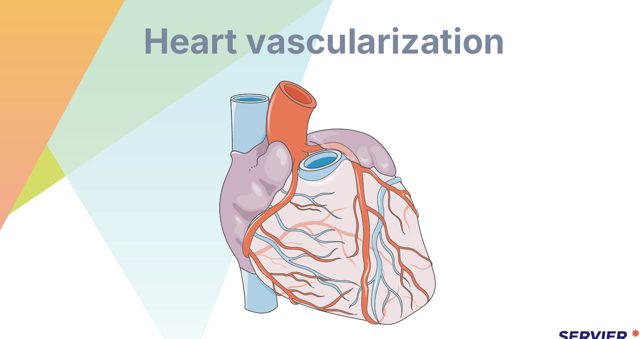
Anterior view of the heart showing the coronary arteries (red) and cardiac veins (blue) on its surface, with the aorta, pulmonary trunk and venae cavae
Anterior view of the heart showing the coronary arteries (red) and cardiac veins (blue) on its surface, with the aorta, pulmonary trunk and venae cavaeمنظر أمامي للقلب يُظهر الشرايين التاجية (بالأحمر) والأوردة القلبية (بالأزرق) على سطحه، مع الأبهر والجذع الرئوي والوريدين الأجوفينServier Medical Art · CC BY 4.0

11.9 · Murmurs, Activity and Going Home١١٫٩ · النفخات والنشاط والعودة للمنزل

A murmur found in a child is common and usually harmless, and the distinction is worth knowing because the conversation with the parent depends on it.

والنفخة المكتشَفة في طفل شائعة وحميدة عادةً والتمييز يستحقّ المعرفة فالحديث مع الوالد يعتمد عليه.

💚Innocent murmur
  • Soft, systolic, no thrill
  • Changes with position — often louder lying down
  • Louder with fever, anaemia or exertion
  • Otherwise well: normal growth, feeding, colour and pulses
نفخة بريئة — ناعمة انقباضية بلا رجفة؛ تتغيّر بالوضعية وكثيراً ما تكون أعلى في الاستلقاء؛ وتعلو مع الحمّى أو فقر الدم أو الجهد؛ والطفل بخير خلاف ذلك: نموّ ورضاعة ولون ونبض طبيعية.
⚠️Concerning murmur
  • Loud, harsh, or with a thrill
  • Diastolic, or continuous
  • With symptoms — poor feeding, poor growth, cyanosis, breathlessness
  • Abnormal pulses, especially weak femorals
نفخة مقلقة — عالية خشنة أو برجفة؛ انبساطية أو مستمرّة؛ مع أعراض: ضعف رضاعة وضعف نموّ وزُراق وضيق نفس؛ أو مع نبض شاذّ وبخاصّة ضعف النبضين الفخذيين.

The weak or absent femoral pulses deserve a line of their own: they suggest coarctation of the aorta, and checking them is a small routine act that occasionally finds something serious.

والنبض الفخذي الضعيف أو الغائب يستحقّ سطراً خاصّاً: فهو يوحي بتضيّق الأبهر وفحصه فعل روتيني صغير يجد أحياناً شيئاً خطيراً.

•Two things a cardiac family must be told — and often is not◆ أمران يجب إخبار أسرة الطفل المصاب بمرض قلبي بهما — وكثيراً ما لا تُخبَر بهما
Dental care and endocarditisCertain cardiac lesions carry a risk of infective endocarditis, so dental hygiene and regular dental review matter, and antibiotic prophylaxis is given where their cardiologist specifies it. Families often hear ‘heart condition’ and never connect it to teeth.العناية بالأسنان والتهاب الشغاف — تحمل بعض الآفات القلبية خطر التهاب الشغاف الخمجي، لذا تهمّ نظافة الفم والمراجعة المنتظمة لطبيب الأسنان، وتُعطى الوقاية بالمضادات الحيوية حيث يحدّدها طبيب القلب. وكثيراً ما تسمع الأسر عبارة «حالة قلبية» ولا تربطها بالأسنان أبداً.
ActivityMost children with cardiac conditions should be as active as they can be, with restrictions specified by the cardiologist rather than assumed by the family. Unnecessary restriction costs fitness, friendships and confidence.النشاط — ينبغي لمعظم الأطفال المصابين بحالات قلبية أن يكونوا نشطين قدر استطاعتهم، بقيود يحدّدها طبيب القلب لا تفترضها الأسرة؛ فالتقييد غير الضروري يكلّف اللياقة والصداقات والثقة.

What the family takes home matters more than what happens on the ward, because the ward ends. Every child with a chronic respiratory or cardiac condition should leave with the same set.

وما تأخذه الأسرة للمنزل يهمّ أكثر ممّا يحدث في الجناح فالجناح ينتهي. وكلّ طفل بحالة تنفّسية أو قلبية مزمنة ينبغي أن يغادر بالمجموعة نفسها.

1
A written action plan
What to do when he is worse, with specific trigger points — not ‘come if worried’.
خطة عمل مكتوبة — ماذا يُفعَل حين يسوء الطفل، بنقاط محدّدة تستدعي التصرّف، لا عبارة عامّة مثل «يُراجَع عند القلق».
2
Inhaler technique checked
Watch him do it — most technique is wrong and almost nobody checks. A spacer for a young child, always.
فحص تقنية البخّاخ — يُشاهَد الطفل وهو يستخدمه؛ فمعظم التقنيات خاطئة وقلّما يفحصها أحد. ومباعد للطفل الصغير دائماً.
3
Who to ring, and when
A named contact and a number that is answered.
بمن يُتّصل ومتى — جهة مسمّاة ورقم يُردّ عليه.
4
The school informed and equipped
Medication available at school, and staff who know the plan.
المدرسة مُخبَرة ومجهّزة — الدواء متاح في المدرسة وطاقم يعرف الخطة.
5
Follow-up arranged
A date, not an intention.
متابعة مُرتَّبة — تاريخ لا نيّة.

School is where a chronic condition is either managed or quietly abandoned. A child whose inhaler is locked in an office cannot use it; a child who is embarrassed to ask will not. So the plan is given to the school in writing, the medication is accessible, and the child is taught to use it himself as early as he is able.

والمدرسة حيث تُدبَّر الحالة المزمنة أو تُهجَر بهدوء. فالطفل الذي بخّاخه مقفل في مكتب لا يستطيع استخدامه؛ والذي يخجل من الطلب لن يفعل. فالخطة تُعطى للمدرسة مكتوبةً والدواء متاح والطفل يُعلَّم استخدامه بنفسه بأبكر ما يستطيع.

🔑
Memory aid
مفتاح للحفظ
An innocent murmur is soft, systolic, short, varies with position and occurs in a well child. A pathological one is diastolic, loud or harsh, has a thrill, comes with other findings, or is in an unwell infant.
النفخة البريئة ناعمة انقباضية قصيرة تتباين بالوضعية وتحدث في طفل بخير. والمرضية انبساطية أو عالية أو خشنة أو بها رجفة أو تأتي مع موجودات أخرى أو في رضيع متوعّك.
⭐
Key point
نقطة أساسية
Say plainly to a family with a cardiac child that brushing teeth is cardiac care — the mouth is the commonest source of infective endocarditis.
يُقال بوضوح لأسرة الطفل المصاب بمرض قلبي إن تنظيف الأسنان رعاية قلبية — فالفم أشيع مصدر لالتهاب الشغاف الخمجي.
⭐
Key point
نقطة أساسية
Most children with cardiac conditions should be as active as they want. Children reliably self-limit, and restricting one unnecessarily costs him fitness, confidence and friendships.
معظم الأطفال بحالات قلبية ينبغي أن يكونوا نشطين كما يريدون. فالأطفال يحدّون من نشاطهم ذاتياً بصورة موثوقة، وتقييد أحدهم دون داعٍ يكلّفه لياقته وثقته وصداقاته.
🚩
Watch out
تنبيه
Every child with a chronic respiratory or cardiac condition leaves with a written plan, not a conversation — a plan written at three in the morning by a frightened parent is not a plan.
كلّ طفل بحالة تنفّسية أو قلبية مزمنة يغادر بخطة مكتوبة لا محادثة — فالخطة التي يكتبها والد خائف في الثالثة فجراً ليست خطة.
⭐
Key point
نقطة أساسية
Use teach-back — ask them to say what they would do — rather than 'do you understand', which invites yes.
يُستخدَم التلقين العكسي — يُطلَب منهم قول ما سيفعلونه — لا عبارة «هل فهمتم؟» التي تستدعي الإجابة بنعم.
🚩
Watch out
تنبيه
A child who has to ask permission and wait for a key when he is wheezing is a child whose asthma is not being managed, whatever is written in his notes.
الطفل الذي عليه طلب إذن وانتظار مفتاح وهو يئزّ طفل لا يُدبَّر ربوه مهما كُتب في سجلّاته.

Test yourselfالاختبار الذاتي

Loading… جارٍ التحميل…

Medical disclaimer. The content of this platform is for education and exam preparation only. It is not medical advice and does not replace consultation with a qualified physician or other licensed healthcare professional, or current clinical guidelines. Do not use it to diagnose or treat any person. إخلاء المسؤولية الطبية: محتوى هذه المنصة مخصص للتعليم والتحضير للاختبار فقط، وليس نصيحة طبية، ولا يغني عن استشارة الطبيب المختص أو الممارس الصحي المرخّص، ولا عن الإرشادات السريرية الحالية. ولا يجوز استخدامه لتشخيص أي شخص أو علاجه.