اللَّهُمَّ انْفَعْنِي بِمَا عَلَّمْتَنِي، وَعَلِّمْنِي مَا يَنْفَعُنِي، وَزِدْنِي عِلْمًا“O Allah, benefit me by what You have taught me, teach me what benefits me, and increase me in knowledge.”
«رَبِّ زِدْنِي عِلْمًا»“My Lord, increase me in knowledge.” Qur’an, Ṭā-Hā 20:114 · سورة طه، الآية ١١٤
Glasgow Coma Scale (GCS)مقياس غلاسكو للغيبوبة (GCS)
Scores eye opening out of 4, verbal response out of 5 and motor response out of 6, with a minimum of 3 and a maximum of 15; the three components are recorded separately and the trend matters most.يُقيّم فتح العينين من 4 والاستجابة اللفظية من 5 والاستجابة الحركية من 6، بحدّ أدنى 3 وحدّ أقصى 15؛ وتُسجَّل المكوّنات الثلاثة منفصلةً ويكون الاتجاه العام هو الأهم.
Monro-Kellie principleمبدأ مونرو-كيلي
The skull is a rigid box holding brain tissue, blood and cerebrospinal fluid of fixed total volume, so if one increases another must decrease or the pressure rises; this explains why an expanding haematoma is tolerated at first and then decompensates suddenly.الجمجمة صندوق صلب يحوي نسيج الدماغ والدم والسائل الدماغي الشوكي بحجم كلّي ثابت، فإذا زاد أحدها وجب أن ينقص غيره وإلا ارتفع الضغط؛ وهذا يفسّر سبب تحمّل الورم الدموي المتمدّد في البداية ثم حدوث فشل التعويض فجأة.
Cushing's triadثلاثي كوشينغ
Late and ominous sign of raised intracranial pressure: hypertension with a widening pulse pressure, bradycardia and irregular respirations; it indicates brainstem compression and imminent herniation.علامة متأخرة منذرة لارتفاع الضغط داخل القحف: ارتفاع ضغط الدم مع اتساع ضغط النبض، وبطء القلب، وتنفس غير منتظم؛ وتدلّ على انضغاط جذع الدماغ وأن الانفتاق الدماغي وشيك.
An episode with the same features as a stroke that resolves completely; it is not benign but a warning, carrying a high short-term risk of a completed stroke, and is investigated urgently.نوبة لها سمات السكتة الدماغية نفسها وتزول زوالاً تاماً؛ وليست حميدة بل إنذار، إذ تحمل خطراً مرتفعاً قصير الأمد لحدوث سكتة مكتملة وتُستقصى بصورة عاجلة.
FASTاختبار FAST (الوجه، الذراعان، الكلام، الوقت)
Stroke recognition tool: Face (has it fallen on one side), Arms (can both be raised and held), Speech (slurred or garbled) and Time (note when symptoms began and call for emergency help).أداة للتعرّف إلى السكتة الدماغية: الوجه (هل تدلّى جانب منه)، والذراعان (هل يمكن رفعهما معاً وإبقاؤهما مرفوعتين)، والكلام (هل هو متداخل أو مبهم)، والوقت (تدوين وقت بدء الأعراض وطلب الإسعاف).
Thrombolysis with alteplaseحلّ الخثرة بالألتيبلاز
Treatment for ischaemic stroke given within a window of about 4.5 hours from onset (or last known well), only after imaging has excluded haemorrhage; the main complication is bleeding, including intracranial haemorrhage.علاج للسكتة الدماغية الإقفارية يُعطى خلال نافذة تبلغ نحو 4.5 ساعات من بدء الأعراض (أو من آخر وقت عُرف فيه المريض سليماً)، ولا يُعطى إلا بعد استبعاد النزف بالتصوير؛ وأهم مضاعفاته النزف، ومنه النزف داخل القحف.
Status epilepticusالحالة الصرعية
A seizure lasting five minutes or longer, or repeated seizures without recovery of consciousness between them; a medical emergency treated with airway, oxygen, glucose check and a benzodiazepine such as lorazepam or diazepam as first-line.نوبة اختلاجية تستمر خمس دقائق أو أكثر، أو نوبات متكررة دون استعادة الوعي بينها؛ وهي حالة طبية طارئة تُعالَج بتأمين المجرى الهوائي والأكسجين وفحص الغلوكوز وإعطاء بنزوديازيبين مثل لورازيبام أو ديازيبام كخط أول.
Extradural haematoma (lucid interval)الورم الدموي فوق الجافية (الفترة الصافية)
Arterial bleeding, classically from the middle meningeal artery after a temporal blow; the patient recovers and seems well for a period (the lucid interval) and then deteriorates rapidly as the haematoma expands.نزف شرياني، كلاسيكياً من الشريان السحائي المتوسط بعد ضربة صدغية؛ يفيق المريض ويبدو بخير مدة (الفترة الصافية) ثم يتدهور سريعاً مع تمدّد الورم الدموي.
Neurogenic shockالصدمة العصبية المنشأ
A circulatory problem after spinal cord injury caused by loss of sympathetic tone, giving hypotension with bradycardia and warm, dry, flushed skin below the lesion; distinct from spinal shock, which is a temporary loss of all reflex activity below the level of injury.مشكلة دورانية بعد إصابة النخاع الشوكي ناجمة عن فقدان التوتر الودّي، تعطي هبوط ضغط مع بطء قلب وجلداً دافئاً جافاً محمرّاً تحت مستوى الآفة؛ وتختلف عن الصدمة الشوكية التي هي فقدان مؤقت لكل النشاط المنعكس تحت مستوى الإصابة.
Autonomic dysreflexiaالخلل الانعكاسي الذاتي
A massive uncontrolled sympathetic discharge triggered by a noxious stimulus below an injury at T6 or above, giving pounding headache, severe hypertension, bradycardia and flushing above the lesion; the first step is to sit the patient upright, then loosen tight items and remove the trigger, commonly a blocked catheter.تفريغ ودّي هائل غير مضبوط يثيره منبّه مؤذٍ تحت مستوى إصابة عند T6 أو أعلى، فيسبّب صداعاً نابضاً وارتفاعاً شديداً في ضغط الدم وبطء قلب واحمراراً فوق مستوى الآفة؛ وتكون الخطوة الأولى إجلاس المريض منتصباً، ثم فكّ كل ما هو ضيّق وإزالة المحفّز، وأشيعه انسداد القسطرة.
Kernig's and Brudzinski's signsعلامتا كيرنيغ وبرودزينسكي
Signs of meningeal irritation in meningitis: with the hip flexed, straightening the knee produces pain and resistance (Kernig), and flexing the neck causes involuntary flexion of the hips and knees (Brudzinski); both may be absent, so their absence does not exclude the diagnosis.علامتان لتهيّج السحايا في التهاب السحايا: ففي علامة كيرنيغ يسبّب بسط الركبة مع ثني الورك ألماً ومقاومة، وفي علامة برودزينسكي يسبّب ثني العنق ثنياً لاإرادياً في الوركين والركبتين؛ وقد تغيب كلتاهما فلا يستبعد غيابهما التشخيص.
Guillain-Barré syndromeمتلازمة غيلان-باريه
Acute inflammatory polyneuropathy, often following an infection by one to three weeks, with symmetrical weakness ascending from the legs and loss of reflexes; vital capacity, not oxygen saturation, is monitored because the respiratory muscles can be reached.اعتلال أعصاب متعدّد التهابي حاد، يحدث غالباً بعد عدوى بأسبوع إلى ثلاثة أسابيع، مع ضعف متناظر صاعد من الساقين وغياب المنعكسات؛ ويُراقَب السعة الحيوية لا إشباع الأكسجين لأن العضلات التنفسية قد تُصاب.
Distinguish Bell palsy from stroke and recognise headache red flags.
التمييز بين شلل بل والسكتة وتمييز علامات الإنذار للصداع.
25
Apply the Saudi context: stroke risk, road traffic injury, Hajj vaccination and Ramadan.
تطبيق السياق السعودي: خطر السكتة وإصابات الطرق وتطعيم الحجّ ورمضان.
2
7.1 · Neurological Assessment٧٫١ · التقييم العصبي
The Glasgow Coma Scale scores three responses and the numbers are worth knowing exactly: eye opening out of 4, verbal response out of 5 and motor response out of 6. The minimum is 3, not 0, because even a completely unresponsive patient scores one in each category, and the maximum is 15. Record the three components separately — a total of 10 tells you far less than E3 V3 M4, and it is the trend that matters most.
مقياس غلاسكو للغيبوبة يسجّل ثلاث استجابات والأرقام تستحقّ المعرفة بدقّة: فتح العين من ٤ والاستجابة اللفظية من ٥ والاستجابة الحركية من ٦. والحدّ الأدنى ٣ لا صفر، فحتى المريض غير المستجيب تماماً يسجّل واحداً في كلّ فئة، والأقصى ١٥. وتُسجَّل المكوّنات الثلاثة منفصلةً — فالمجموع ١٠ يُعطي معلومات أقلّ بكثير من E3 V3 M4، والاتّجاه هو الأهمّ.
A falling level of consciousness is the earliest and most sensitive sign of neurological deterioration, and it appears before the pupils change and long before the blood pressure and pulse do. That single fact drives most of this chapter: a patient who was orientated and is now drowsy or confused has changed, and that change is reported rather than attributed to tiredness, medication or the hour of the night.
وانخفاض مستوى الوعي أبكر علامة وأكثرها حساسية للتدهور العصبي، ويظهر قبل تغيّر الحدقتين وقبل تغيّر ضغط الدم والنبض بكثير. وتلك الحقيقة وحدها تقود معظم هذا الفصل: فالمريض الذي كان موجّهاً وصار الآن ناعساً أو مشوّشاً قد تغيّر، وذلك التغيّر يُبلَّغ عنه لا يُنسَب للتعب أو الدواء أو ساعة الليل.
Pupils are assessed for size, equality, shape and reaction to light, and compared with each other. A new unilateral fixed dilated pupil is an emergency: it suggests the third cranial nerve is being compressed by a mass or by brain tissue herniating, and it is on the same side as the lesion. Bilateral fixed dilated pupils indicate severe global injury. Pinpoint pupils suggest opioids or a pontine lesion.
والحدقتان تُقيَّمان للحجم والتساوي والشكل والتفاعل مع الضوء وتُقارَنان ببعضهما. والحدقة الجديدة الثابتة المتوسّعة أحادية الجانب طارئ: فهي توحي بانضغاط العصب القحفي الثالث بكتلة أو بانفتاق نسيج دماغي، وهي في الجانب نفسه للآفة. والحدقتان الثابتتان المتوسّعتان معاً تدلّان على أذيّة شاملة شديدة. والحدقتان الدبّوسيتان توحيان بأفيونيات أو آفة جسرية.
Posturing appears when the patient does not localise or withdraw from pain, and the two patterns must be distinguished because one is worse. Decorticate posturing is flexion of the arms in towards the core with the legs extended — think of the arms drawn towards the core. Decerebrate posturing is extension of everything, with the arms straight and rotated inwards (pronated). Decerebrate is the more serious, indicating deeper brainstem involvement, and a patient who changes from decorticate to decerebrate is deteriorating.
والوضعية المرضية تظهر حين لا يحدّد المريض موضع الألم ولا ينسحب منه، ويجب تمييز النمطين فأحدهما أسوأ. فالوضعية الانثنائيةثني الذراعين نحو الجذع مع بسط الساقين — يُتخيَّل الذراعان مسحوبتين نحو الجذع. والوضعية الانبساطيةبسط كلّ شيء، فالذراعان مستقيمتان مدارتان للداخل (في وضعية الكبّ). والانبساطية أخطر وتدلّ على إصابة أعمق في جذع الدماغ، والمريض الذي يتحوّل من الانثنائية للانبساطية يتدهور.
Assess motor strength in all four limbs and compare sides; pronator drift — the arm drifting down and turning palm-down when both are held out with the eyes closed — detects subtle weakness. Test speech: dysarthria is slurred speech from weak muscles with normal language, while dysphasia or aphasia is a language problem — the patient cannot find words or cannot understand them. The distinction changes how you communicate.
وتُقيَّم القوّة الحركية في الأطراف الأربعة ويُقارَن بين الجانبين؛ وانجراف الكبّ — أي انجراف الذراع للأسفل ودورانها بالكفّ لأسفل عند مدّ الذراعين والعينان مغلقتان — يكشف ضعفاً خفياً. ويُختبَر الكلام: فعسر التلفّظ كلام متداخل من ضعف العضلات مع لغة طبيعية، أما الحبسة فمشكلة لغوية — فالمريض لا يجد الكلمات أو لا يفهمها. والتمييز يغيّر طريقة التواصل.
🔑
Memory aid
مفتاح للحفظ
Glasgow Coma Scale: Eyes 4, Verbal 5, Motor 6. Minimum 3, maximum 15. Record the three components, not just the total.
مقياس غلاسكو للغيبوبة: العين ٤، واللفظي ٥، والحركي ٦. والحدّ الأدنى ٣ والأقصى ١٥. وتُسجَّل المكوّنات الثلاثة لا المجموع فقط.
🚩
Watch out
تنبيه
A falling level of consciousness is the earliest and most sensitive sign of neurological deterioration. It changes before the pupils and long before the vital signs.
انخفاض مستوى الوعي أبكر علامة وأكثرها حساسية للتدهور العصبي. فهو يتغيّر قبل الحدقتين وقبل العلامات الحيوية بكثير.
🔑
Memory aid
مفتاح للحفظ
Decorticate — arms flexed toward the core. Decerebrate — everything extended, and it is the worse of the two.
الانثنائية — ذراعان مثنيّتان نحو الجذع. والانبساطية — كلّ شيء ممدود، وهي الأسوأ.
3
7.2 · Further Examination Findings٧٫٢ · موجودات فحص إضافية
The plantar response is elicited by stroking firmly along the lateral edge of the sole from heel to toes and across the ball of the foot. In a healthy adult the toes curl downwards. An upgoing great toe with fanning of the others — a positive Babinski sign — indicates an upper motor neurone lesion, that is, damage in the brain or spinal cord rather than in the peripheral nerve or muscle. It is a normal finding in infants until the nervous system matures, which is the exception worth knowing.
المنعكس الأخمصي يُستخرَج بحكّ الحافّة الوحشية للأخمص بحزم من الكعب للأصابع وعبر مشط القدم. ولدى البالغ السليم تنثني الأصابع للأسفل. وارتفاع إبهام القدم مع تروّح البقية — أي علامة بابنسكي الإيجابية — يدلّ على آفة عصبون حركي علوي، أي تلف في الدماغ أو النخاع الشوكي لا في العصب الطرفي أو العضل. وهي علامة طبيعية لدى الرضّع حتى ينضج الجهاز العصبي، وهذا الاستثناء يستحقّ المعرفة.
Cerebellar function is tested by looking for ataxia, nystagmus, slurred scanning speech, past-pointing on finger-to-nose testing, and dysdiadochokinesia — clumsiness on rapid alternating movements. The Romberg test is often confused with a cerebellar test and it is not one: the patient stands with the feet together and the eyes closed, and falling only when the eyes are shut indicates a problem with proprioception or the vestibular system, because vision was compensating. A patient with cerebellar disease sways with the eyes open as well.
ووظيفة المخيخ تُختبَر بالبحث عن الرنح والرأرأة وكلام متقطّع متداخل وتجاوز الهدف في اختبار الإصبع للأنف وخلل تناوب الحركات أي الخرق في الحركات المتناوبة السريعة. واختبار رومبرغ يُخلَط كثيراً باختبار مخيخي وهو ليس كذلك: فيقف المريض والقدمان متلاصقتان والعينان مغلقتان، والسقوط عند إغلاق العينين فقط يدلّ على مشكلة في حسّ الوضعة أو الجهاز الدهليزي، فالبصر كان يعوّض. أما المريض بمرض مخيخي فيترنّح والعينان مفتوحتان أيضاً.
For stroke, a standardised scale is used so that severity is recorded consistently and change over time is measurable. The National Institutes of Health Stroke Scale — NIHSS scores level of consciousness, gaze, visual fields, facial and limb weakness, ataxia, sensation, language, speech and neglect, and a higher score means a more severe stroke. It informs treatment decisions and, repeated, shows whether the patient is improving or deteriorating — which is the reason it is repeated rather than scored once.
وللسكتة يُستخدَم مقياس موحّد لتُسجَّل الشدّة باتّساق ويكون التغيّر عبر الوقت قابلاً للقياس. ومقياس السكتة للمعاهد الوطنية للصحّة — NIHSS يسجّل مستوى الوعي واتجاه النظر والساحات البصرية وضعف الوجه والأطراف والرنح والإحساس واللغة والكلام والإهمال، والدرجة الأعلى تعني سكتة أشدّ. وهو يوجّه قرارات العلاج، ومكرّراً يُظهر هل يتحسّن المريض أم يتدهور — وذلك سبب تكراره لا تسجيله مرّة واحدة.
🔑
Memory aid
مفتاح للحفظ
Toes down is normal in an adult. An upgoing toe — a positive Babinski — means an upper motor neurone lesion, and it is normal only in infants.
أصابع القدم للأسفل طبيعي لدى البالغ. وإبهام القدم الصاعد — بابنسكي إيجابي — يعني آفة عصبون حركي علوي، وهو طبيعي لدى الرضّع فقط.
⭐
Key point
نقطة أساسية
Romberg is not a cerebellar test. Falling only with the eyes closed points to proprioception or the vestibular system, because vision had been compensating.
رومبرغ ليس اختباراً مخيخياً. فالسقوط عند إغلاق العينين فقط يشير إلى حسّ الوضعة أو الجهاز الدهليزي، فالبصر كان يعوّض.
4
7.3 · Recording Observations Accurately٧٫٣ · تسجيل الملاحظات بدقّة
The Glasgow Coma Scale is often scored WRONGLY in exactly the patients who need it most, and the errors are avoidable.
مقياس غلاسكو للغيبوبة كثيراً ما يُدرَّج خطأً في المرضى الذين يحتاجون إليه أكثر، والأخطاء قابلة للتجنّب.
•The errors, and how to avoid each◆ الأخطاء وكيفية تجنّب كلٍّ منها
Scoring the BEST response, not the worstThe BEST motor response in ANY limb is scored — so a hemiplegic patient is scored on his good side, not his weak one.تسجيل أفضل استجابة لا أسوأها: تُدرَّج أفضل استجابة حركية في أيّ طرف — فالمريض المصاب بشلل نصفي تُدرَّج درجته بحسب جانبه السليم لا جانبه الضعيف.
Applying the painful stimulus properlyFingertip pressure first, then central — trapezius squeeze or supraorbital pressure, applied if there is no response or to confirm localisation, because a peripheral stimulus alone can produce a spinal reflex withdrawal that is not a brain response at all.يُطبَّق المنبّه المؤلم بالطريقة الصحيحة: ضغط على رأس الإصبع أولاً ثم منبّه مركزي — عصر العضلة شبه المنحرفة أو الضغط فوق الحجاج، عند غياب الاستجابة أو لتأكيد أنها تحدّد موضع المنبّه، لأن المنبّه الطرفي وحده قد يُحدث انسحاباً انعكاسياً شوكياً ليس استجابة دماغية على الإطلاق.
Recording a component as UNTESTABLE, not zeroAn intubated patient has no verbal score — recorded as V-T or ‘not testable’, never as 1, and never guessed.يُسجَّل المكوّن كغير قابل للاختبار لا صفراً — فالمريض المُنبَّب لا درجة كلامية له، وتُسجَّل V-T أو «غير قابل للاختبار»، وليس ١ أبداً، ولا تُخمَّن الدرجة أبداً.
And record the THREE components, not just the totalE3 V4 M5 says something a total of 12 does not — and a deterioration in one component is what is being looked for.وتُسجَّل المكوّنات الثلاثة لا المجموع فقط: فالدرجة E3 V4 M5 تدلّ على ما لا يدلّ عليه المجموع ١٢ — والمطلوب كشفه هو التدهور في أحد المكوّنات.
Plus: the TREND is the findingA drop of 2 points is significant and is escalated — and it is visible only if the same person scores it the same way each time.إضافةً إلى ذلك: الاتّجاه هو الموجود الذي يهمّ — فهبوط نقطتين ذو دلالة ويُصعَّد، ولا يظهر إلا إذا سجّل الشخص نفسه الدرجة بالطريقة نفسها في كلّ مرّة.
The rule that resolves all of these is the one already stated and it is worth repeating for a different reason: record the three components separately, and record explicitly why a component could not be tested rather than substituting a number. A total of 8 that includes an untestable verbal score means something entirely different from a genuine 8, and the person reading the chart at three in the morning cannot tell the difference unless you wrote it down.
والقاعدة التي تحلّ ذلك كلّه هي المذكورة سابقاً وتستحقّ التكرار لسبب مختلف: تُسجَّل المكوّنات الثلاثة منفصلةً، ويُسجَّل صراحةً سبب تعذّر اختبار أحد المكوّنات دون استبداله برقم. فالمجموع ٨ الذي يشمل درجة لفظية غير قابلة للاختبار يعني شيئاً مختلفاً تماماً عن ٨ حقيقي، ومن يقرأ مخطّط القياسات في الثالثة فجراً لا يستطيع التمييز إلا إذا دُوِّن ذلك.
Pupils are recorded as a MEASUREMENT, not an impression. Use the gauge printed on the observation chart to record the size in millimetres, the shape, and the reaction to light in each eye separately.
والحدقتان تُسجَّلان كقياس لا انطباع. يُستخدَم المقياس المطبوع على مخطّط القياسات لتسجيل الحجم بالمليمترات والشكل والاستجابة للضوء لكلّ عين على حدة.
A NEW unilateral dilated pupilsluggish or unreactive — a neurosurgical EMERGENCY: third nerve compression from herniationحدقة جديدة موسّعة أحادية الجانب بطيئة الاستجابة أو غير مستجيبة — حالة إسعافية جراحية عصبية: انضغاط العصب القحفي الثالث بسبب الانفتاق
Bilateral fixed and dilateda late and grave signحدقتان ثابتتان وموسّعتان ثنائياً — علامة متأخّرة وخطيرة
Pinpoint pupilsopioids or a pontine lesionحدقتان دبّوسيتان — أفيونيات أو آفة جسرية
Two practical points. Check for a pre-existing cause before escalating — a prosthetic eye, previous surgery, cataract, or eye drops — and record that you have. And the CHANGE is what matters: a pupil that was 3mm and reactive an hour ago and is now 5mm and sluggish is the finding, whatever the absolute number.
ونقطتان عمليتان. يُتحقَّق من وجود سبب سابق قبل التصعيد — عين اصطناعية أو جراحة سابقة أو ساد أو قطرات عينية — ويُوثَّق ذلك. والتغيّر هو ما يهمّ: فالحدقة التي كانت ٣ مم ومتفاعلة قبل ساعة وأصبحت الآن ٥ مم وبطيئة الاستجابة هي الموجود الذي يهمّ، أياً كان الرقم المطلق.
🚩
Watch out
تنبيه
In an intubated patient the verbal score is recorded as not testable, not as one. Scoring it as one produces a falsely low total and a false trend.
في المريض المنبَّب تُسجَّل الدرجة اللفظية على أنها غير قابلة للاختبار لا على أنها واحد. فتسجيلها واحداً يُنتج مجموعاً منخفضاً بصورة زائفة واتّجاهاً كاذباً.
⭐
Key point
نقطة أساسية
Record pupil size in millimetres using the chart gauge, not as small, medium or large. The value of the observation is entirely in detecting change.
يُسجَّل حجم الحدقة بالملّيمترات بالمقياس المطبوع على مخطّط القياسات لا صغيرة أو متوسّطة أو كبيرة. فقيمة الملاحظة كلّها في كشف التغيّر.
5
7.4 · Raised Intracranial Pressure٧٫٤ · ارتفاع الضغط داخل القحف
The skull is a rigid box containing three things — brain tissue, blood and cerebrospinal fluid — and their total volume is fixed. If one increases, another must decrease or the pressure rises. That is the Monro-Kellie principle, and it explains why a small expanding haematoma is tolerated at first and then decompensates suddenly.
الجمجمة صندوق صلب يحوي ثلاثة أشياء — نسيج الدماغ والدم والسائل الدماغي الشوكي — وحجمها الكلّي ثابت. فإن زاد أحدها وجب أن ينقص آخر وإلا ارتفع الضغط. وذلك مبدأ مونرو-كيلي، وهو يفسّر لماذا يُحتمَل ورم دموي صغير متمدّد في البداية ثم يفشل التعويض فجأةً.
Early signs: a declining level of consciousness, which is the most sensitive; headache that is worse in the morning, on lying flat, and on coughing or straining; vomiting that may be projectile and without preceding nausea; restlessness or irritability; and later papilloedema and pupil changes.
والعلامات المبكّرة: انخفاض مستوى الوعي وهو الأكثر حساسية؛ وصداع أسوأ صباحاً وعند الاستلقاء المسطّح وعند السعال أو الإجهاد؛ وتقيّؤ قد يكون قذفياً ودون غثيان سابق؛ وتململ أو تهيّج؛ ولاحقاً وذمة حليمة العصب البصري وتغيّرات الحدقتين.
Cushing's triad is the late and ominous sign, and it is the pattern the exam asks for: hypertension with a widening pulse pressure — the systolic rises while the diastolic does not — bradycardia, and irregular respirations. It indicates that the brainstem is being compressed and that herniation is imminent. Waiting for it is waiting too long.
وثلاثي كوشينغ العلامة المتأخّرة المنذرة، وهو النمط الذي يسأل عنه الامتحان: ارتفاع ضغط الدم مع اتّساع ضغط النبض — فالانقباضي يرتفع والانبساطي لا — وبطء نبض وتنفّس غير منتظم. ويدلّ على انضغاط جذع الدماغ وأن الانفتاق وشيك. وانتظار ظهوره يعني الانتظار أكثر ممّا ينبغي.
Nursing measures all aim at TWO things: helping venous blood DRAIN out of the head, and avoiding anything that RAISES pressure.
والتدابير التمريضية كلّها تهدف لأمرين: مساعدة الدم الوريدي على التصريف من الرأس وتجنّب ما يرفع الضغط.
1
Head of bed elevated 30 degrees
And the head kept MIDLINE — because turning the head kinks the jugular veins and obstructs drainage, which is the part most often undone by positioning for comfort.
رأس السرير مرفوع ٣٠ درجة — والرأس في الخطّ الأوسط — لأن تدوير الرأس يثني الأوردة الوداجية ويعيق التصريف، وهذا هو الجزء الذي يُنقَض غالباً عند تغيير الوضعية لأجل الراحة.
2
Avoid neck flexion and tight ties
Endotracheal tube ties and collars must not compress the neck veins.
يُتجنَّب انثناء العنق والأربطة الضيّقة — فيجب ألّا تضغط أربطة الأنبوب الرغامي ولا الأطواق على أوردة العنق.
3
Avoid hip flexion beyond 90 degrees
Which raises intra-abdominal and then intrathoracic pressure.
يُتجنَّب انثناء الورك فوق ٩٠ درجة — فهو يرفع الضغط داخل البطن ثم داخل الصدر.
4
Do NOT cluster care — space out interventions
Suctioning, turning and painful procedures each raise the pressure — so they are spaced, not batched, and suction is brief and pre-oxygenated.
لا تُجمَّع الرعاية بل تُباعَد التدخّلات — فالشفط والتقليب والإجراءات المؤلمة يرفع كلٌّ منها الضغط، لذلك تُباعَد ولا تُجمَّع، ويكون الشفط وجيزاً ومسبوقاً بالأكسجة.
5
Treat pain, agitation, fever, seizures and coughing
Each raises intracranial pressure, and each is treatable — fever in particular, because it raises cerebral metabolic demand.
يُعالَج الألم والهياج والحمّى والاختلاجات والسعال — فكلٌّ منها يرفع الضغط داخل القحف وكلٌّ منها قابل للعلاج، والحمّى خاصةً لأنها ترفع حاجة الدماغ الاستقلابية.
6
And prevent constipation and straining
Valsalva raises the pressure sharply — so laxatives are prophylactic here, not reactive.
ويُمنَع الإمساك والإجهاد — فمناورة فالسالفا ترفع الضغط بحدّة، ولذلك تكون الملينات وقائية هنا لا علاجية بعد وقوع المشكلة.
Medically, osmotic therapy with mannitol or hypertonic saline draws water out of the brain; monitor fluid balance, electrolytes and osmolality, and watch for the hypovolaemia that mannitol's diuresis produces. Hypotonic fluids are avoided because they move water into brain tissue. Cerebral perfusion pressure is the mean arterial pressure minus the intracranial pressure, which is why hypotension is as dangerous as raised pressure — both reduce the blood actually reaching the brain.
وطبياً العلاج التناضحي بالمانيتول أو المحلول الملحي مفرط التوتّر يسحب الماء من الدماغ؛ ويُراقَب ميزان السوائل والشوارد والأسمولية، ويُترقَّب نقص الحجم الذي يُنتجه إدرار المانيتول. وتُتجنّب السوائل ناقصة التوتّر فهي تنقل الماء لنسيج الدماغ. وضغط الإرواء الدماغي هو متوسّط الضغط الشرياني ناقص الضغط داخل القحف، ولهذا يكون هبوط ضغط الدم بخطورة ارتفاع الضغط داخل القحف — فكلاهما يقلّل الدم الواصل فعلاً إلى الدماغ.
🔑
Memory aid
مفتاح للحفظ
Head up 30 degrees, head midline, no neck flexion, no straining, spaced (not clustered) care, quiet room. Everything that helps venous blood leave the head.
الرأس مرفوع ٣٠ درجة وفي خطّ المنتصف، ولا ثني عنق ولا إجهاد، ورعاية متباعدة لا مجمّعة وغرفة هادئة. وكلّ ما يساعد الدم الوريدي على مغادرة الرأس.
🚩
Watch out
تنبيه
Cushing's triad — rising blood pressure with widening pulse pressure, bradycardia and irregular breathing — is a late sign of imminent herniation, not an early warning.
ثلاثي كوشينغ — ارتفاع ضغط الدم مع اتّساع ضغط النبض وبطء نبض وتنفّس غير منتظم — علامة متأخّرة لانفتاق وشيك لا إنذار مبكّر.
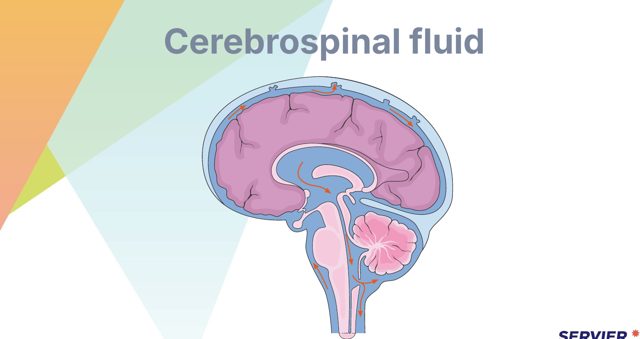
Circulation of cerebrospinal fluid, mid-sagittal section of the brain and upper spinal cord: the fluid (blue) flows from the ventricles into the subarachnoid space around the brain and spinal cord and is reabsorbed at the top of the head (arrows)دوران السائل الدماغي الشوكي في مقطع سهمي ناصف للدماغ والجزء العلوي من الحبل الشوكي: يجري السائل (بالأزرق) من البطينات إلى الحيّز تحت العنكبوتي المحيط بالدماغ والحبل الشوكي، ثم يُعاد امتصاصه في أعلى الرأس (الأسهم)Servier Medical Art · CC BY 4.0
6
7.5 · Monitoring Devices and Cervical Immobilisation٧٫٥ · أجهزة المراقبة وتثبيت العنق
An intracranial pressure monitor measures the pressure DIRECTLY rather than inferring it from signs.
مرقاب الضغط داخل القحف يقيسه مباشرةً لا يستنتجه من العلامات.
Normal ICProughly 5–15 mmHg in an adultالضغط الطبيعي داخل القحف لدى البالغ — نحو ٥ إلى ١٥ ملم زئبق
Sustained riseabove the threshold your unit specifies — treated, not observedارتفاع مستمرّ فوق العتبة التي تحدّدها الوحدة — يُعالَج لا يُراقَب
CPP = MAP − ICPcerebral perfusion pressure — which is what actually feeds the brainضغط الإرواء الدماغي = متوسّط الضغط الشرياني ناقص الضغط داخل القحف — وهو ما يغذّي الدماغ فعلاً
The relationship is the point: the brain is perfused by the DIFFERENCE between the arterial pressure pushing in and the intracranial pressure pushing back. So perfusion falls either when the intracranial pressure rises or when the blood pressure falls — which is why hypotension is dangerous in a head injury, and why lowering the blood pressure in a patient with raised intracranial pressure can do harm.
والعلاقة هي المقصد: أن الدماغ يُروى بالفرق بين الضغط الشرياني الدافع للداخل والضغط داخل القحف الدافع للخارج. فالإرواء يهبط إمّا برفع الضغط داخل القحف أو بهبوط ضغط الدم — ولهذا يكون هبوط ضغط الدم خطِراً في إصابة الرأس، ولهذا السبب نفسه قد يُسبّب خفض ضغط الدم ضرراً لدى المريض المصاب بارتفاع الضغط داخل القحف.
An external ventricular drain both MEASURES the pressure and DRAINS cerebrospinal fluid to relieve it. Its nursing care has one rule that governs everything else.
والمنزح البطيني الخارجي يقيس الضغط وينزح السائل الدماغي الشوكي لتخفيفه. ولرعايته التمريضية قاعدة واحدة تحكم كلّ ما عداها.
•The level — and why it decides everything◆ المستوى — ولماذا يحدّد كلّ شيء
It is levelled to a FIXED anatomical reference pointAnd re-levelled every time the bed position changes — or the patient moves.يُسوّى لنقطة مرجعية تشريحية ثابتة — ويُعاد تسويته مع كلّ تغيّر في وضعية السرير أو تحرّك المريض.
TOO LOW drains too muchCausing over-drainage, collapse of the ventricles and potentially a fatal herniation.أخفض من اللازم ينزح كثيراً — مسبّباً فرط نزح وانخماص البطينات وربما انفتاقاً مميتاً.
TOO HIGH drains too littleAllowing the pressure to rise — the opposite failure, and equally serious.أعلى من اللازم ينزح قليلاً — فيرتفع الضغط، وهو الإخفاق المعاكس ولا يقلّ خطورة.
CLAMP it before moving himAnd before sitting him up — then re-level and unclamp. Moving a patient with an unclamped, unlevelled drain is how over-drainage happens.يُغلَق المنزح قبل تحريك المريض وقبل إجلاسه — ثم تُعاد التسوية ويُفتح. فتحريك مريض بمنزح مفتوح وغير مسوّى هو ما يسبّب فرط النزح.
And strict ASEPSIS at every accessVentriculitis is a devastating complication, and the system is a direct line into the ventricles.وعقامة صارمة عند كلّ وصول — فالتهاب البطينات مضاعفة مدمّرة، والجهاز خطّ مباشر إلى البطينات.
1
Measure and record VOLUME each shift
And note a change in rate — a sudden increase or a sudden stop both matter.
Cerebrospinal fluid is normally CLEAR and colourless.
اللون والوضوح — السائل الدماغي الشوكي صافٍ عديم اللون عادةً.
3
Report CLOUDY fluid
Which suggests infection.
يُبلَّغ عن السائل العكر — يوحي بعدوى.
4
Report BLOOD-STAINED or increasingly bloody fluid
Which suggests fresh bleeding — and a change from clear to bloody is more significant than blood that was there from the start.
يُبلَّغ عن السائل المدمّى أو المتزايد الدموية — يوحي بنزف جديد، والتحوّل من الصافي إلى الدموي أهمّ من الدم الموجود منذ البداية.
5
And check the tubing SWINGS
A column that no longer oscillates with respiration or pulse suggests the drain is blocked — which means the pressure is rising unmeasured.
ويُفحَص تأرجح الأنبوب — فعمود السائل الذي لم يعد يتذبذب مع التنفّس أو النبض يوحي بانسداد المنزح، أي أن الضغط يرتفع دون أن يُقاس.
Cervical collar care matters because the COLLAR ITSELF causes harm if it is neglected.
ورعاية الطوق العنقي تهمّ لأن الطوق نفسه يسبّب أذىً إن أُهمل.
•What the collar does if nobody attends to it◆ ما يفعله الطوق إن لم يتعهّده أحد
PRESSURE ULCERSAt the occiput, chin, mandible, ears and shoulders — and they develop fast, within hours in an immobile patient. The skin under a collar is inspected regularly, with the collar held by a second person.قرح الضغط — عند القذال والذقن والفكّ السفلي والأذنين والكتفين: وتتطوّر بسرعة، خلال ساعات لدى المريض غير المتحرّك. ويُفحَص الجلد تحت الطوق بانتظام، مع إمساك الطوق من شخص ثانٍ.
The WRONG SIZE does not immobiliseToo small compresses; too large allows movement — so a collar that does not fit is not a safer compromise, it is neither of the two things it is for.الحجم الخاطئ لا يثبّت — الصغير يضغط والكبير يسمح بالحركة، فالطوق غير الملائم ليس حلاً وسطاً أكثر أماناً بل لا يحقّق أيّاً من الغرضين اللذين وُضع من أجلهما.
And it raises intracranial pressureBy obstructing jugular venous drainage — which matters in a patient who also has a head injury, and they frequently do.ويرفع الضغط داخل القحف — بإعاقة التصريف الوريدي الوداجي، وهذا مهمّ لدى المريض المصاب أيضاً بإصابة رأس، وهذا شائع.
So MANUAL IN-LINE stabilisation while it is offTwo people: one holds the head, one does the care — and the collar comes off only for care and only with the head held.فتثبيت يدوي على استقامة محور الجسم أثناء نزعه — شخصان: أحدهما يمسك الرأس والآخر يقدّم الرعاية، ولا يُنزَع الطوق إلا للرعاية وأثناء إمساك الرأس فقط.
And it comes off as soon as the spine is CLEAREDProlonged unnecessary immobilisation causes harm and no benefit — so clearing the spine is itself a priority.ويُنزَع بمجرّد استبعاد إصابة العمود الفقري — فالتثبيت المطوّل غير الضروري يضرّ ولا نفع منه، لذا فاستبعاد إصابة العمود الفقري أولوية بحدّ ذاته.
🚩
Watch out
تنبيه
Re-level an external ventricular drain every time the patient's position changes. Too low and it siphons fluid dangerously; too high and it drains nothing while the pressure climbs.
تُعاد تسوية المنزح البطيني الخارجي في كلّ مرّة تتغيّر فيها وضعية المريض. فالمنخفض جداً يسحب السائل بصورة خطرة؛ والعالي جداً لا يصرّف شيئاً بينما يرتفع الضغط.
⭐
Key point
نقطة أساسية
Keep the wrench attached to a halo vest, so the front can be released immediately if chest compressions become necessary.
يُبقى المفتاح مثبّتاً على صدرية الهالة، ليمكن تحرير الجزء الأمامي فوراً إن لزمت ضغطات صدرية.
Around 85% of strokes are ischaemic, from a thrombus or embolus blocking an artery, and the rest are haemorrhagic. The distinction cannot be made clinically and requires urgent imaging, because the treatments are opposite: giving a thrombolytic to a patient with a bleed would be catastrophic. A transient ischaemic attack has the same features but resolves completely; it is not benign but a warning, carrying a high short-term risk of a completed stroke, and it is investigated urgently.
نحو ٨٥٪ من السكتات إقفارية من خثرة أو صمّة تسدّ شرياناً، والباقي نزفية. ولا يمكن التمييز بينهما سريرياً ويحتاج إلى تصوير عاجل، فالعلاجان متعاكسان: فإعطاء حالّ خثرة لمريض بنزف سيكون كارثياً. والنوبة الإقفارية العابرة لها السمات نفسها لكنها تزول تماماً؛ وهي ليست حميدة بل إنذار يحمل خطراً قصير الأمد مرتفعاً لسكتة مكتملة، وتُستقصى عاجلاً.
Recognition uses FAST: Face — has the face fallen on one side, can he smile; Arms — can he raise both arms and keep them there; Speech — is it slurred or garbled, can he understand you; Time — note the time symptoms began and call for emergency help. The extended version adds Balance and Eyes, since posterior circulation strokes present with sudden loss of balance, vertigo or visual loss rather than facial droop.
ويعتمد التعرّف على أداة فاست: الوجه — هل تدلّى في جانب، هل يستطيع الابتسام؛ والذراعان — هل يستطيع رفعهما وإبقاءهما؛ والكلام — هل هو متداخل أو مبهم، هل يفهم ما يُقال له؛ والوقت — يُدوَّن وقت بدء الأعراض وتُطلَب مساعدة طارئة. والنسخة الموسّعة تضيف التوازن والعينين، فسكتات الدوران الخلفي تتظاهر بفقد توازن مفاجئ أو دوار أو فقد بصر لا بتدلّي الوجه.
The time of onset is the single most important piece of information you can obtain, because it determines eligibility for treatment. If the patient woke with symptoms, the time is when he was last known to be well, not when he woke. Ask a witness. Record it precisely and hand it over explicitly, because the whole pathway depends on it.
ووقت البدء أهمّ معلومة منفردة يمكن الحصول عليها، فهو يحدّد أهلية العلاج. وإن استيقظ المريض بالأعراض فالوقت هو آخر وقت عُلم فيه أنه بخير لا وقت استيقاظه. يُسأل شاهد. ويُسجَّل الوقت بدقّة ويُسلَّم صراحةً، فالمسار كلّه يعتمد عليه.
Thrombolysis with alteplase is given for ischaemic stroke within a window of about 4.5 hours from onset, after imaging has excluded haemorrhage and the exclusion criteria have been checked — recent surgery or major trauma, active bleeding, recent stroke or head injury, bleeding disorders and uncontrolled hypertension among them. Mechanical thrombectomy can retrieve a large-vessel clot within a longer window in selected patients. Either way, time is brain: the earlier it is given, the more tissue survives.
وحلّ الخثرة بالألتيبلاز يُعطى للسكتة الإقفارية خلال نافذة نحو ٤٫٥ ساعة من البدء، بعد أن يستبعد التصوير النزف وتُفحَص معايير الاستبعاد — ومنها جراحة أو رضّ كبير حديث ونزف نشط وسكتة أو إصابة رأس حديثة واضطرابات النزف وارتفاع ضغط الدم غير المضبوط. واستخراج الخثرة الميكانيكي يستطيع سحب خثرة وعاء كبير خلال نافذة أطول لدى مرضى مختارين. وفي الحالتين الوقت دماغ: فكلّما أُعطي أبكر نجا نسيج أكثر.
After thrombolysis the priority is bleeding. Perform frequent neurological observations and blood pressure monitoring at the intervals the protocol specifies, and report immediately any sudden severe headache, a fall in conscious level, new or worsening weakness, nausea and vomiting, or a sudden rise in blood pressure — these suggest intracranial haemorrhage. Avoid unnecessary needlesticks, arterial punctures and invasive procedures, and watch for bleeding from any site.
وبعد حلّ الخثرة تكون الأولوية النزف. تُجرى ملاحظات عصبية متكرّرة ومراقبة لضغط الدم بالفواصل التي يحدّدها البروتوكول، ويُبلَّغ فوراً عن أيّ صداع شديد مفاجئ أو انخفاض مستوى وعي أو ضعف جديد أو متفاقم أو غثيان وتقيّؤ أو ارتفاع مفاجئ في ضغط الدم — فهذه توحي بنزف داخل القحف. ويُتجنَّب وخز الإبر غير الضروري والبزل الشرياني والإجراءات الباضعة، ويُراقَب النزف من أيّ موقع.
⭐
Key point
نقطة أساسية
Establish the time the patient was last known to be well, not the time he woke or was found. That single figure is the starting point for judging treatment eligibility, alongside imaging and the other criteria.
يُحدَّد آخر وقت عُلم فيه أن المريض بخير لا وقت استيقاظه أو العثور عليه. فذلك الرقم نقطة البداية للحكم على أهلية العلاج، إلى جانب التصوير والمعايير الأخرى.
🚩
Watch out
تنبيه
A sudden severe headache with a falling conscious level after thrombolysis is intracranial haemorrhage until proved otherwise. Report it immediately.
الصداع الشديد المفاجئ مع انخفاض مستوى الوعي بعد حلّ الخثرة نزف داخل القحف حتى يثبت العكس. يُبلَّغ فوراً.
8
7.7 · Subarachnoid Haemorrhage and Cerebrovascular Surgery٧٫٧ · النزف تحت العنكبوتية وجراحة الأوعية الدماغية
Subarachnoid haemorrhage is usually caused by a ruptured berry aneurysm. Its hallmark is a thunderclap headache — sudden, reaching maximum intensity within seconds, and often described by the patient as the worst headache of his life — with neck stiffness, photophobia, vomiting, and often brief loss of consciousness or collapse. Any headache of that character is treated as subarachnoid haemorrhage until imaging says otherwise; a normal CT does not exclude it, and a lumbar puncture looking for xanthochromia may follow.
النزف تحت العنكبوتية يسبّبه عادةً تمزّق أمّ دم توتية. وسمته صداع الرعد — مفاجئ يبلغ أقصى شدّته خلال ثوانٍ ويصفه المريض غالباً بأنه أسوأ صداع في حياته — مع تيبّس العنق ورهاب الضوء وتقيّؤ وفقد وعي وجيز أو انهيار غالباً. وأيّ صداع بذلك الطابع يُعامَل كنزف تحت العنكبوتية حتى يقول التصوير غير ذلك؛ والتصوير المقطعي الطبيعي لا ينفيه، وقد يتبعه بزل قطني بحثاً عن التلوّن الأصفر.
Before the aneurysm is secured, the priority is preventing rebleeding, which is often fatal. Nursing measures are the same principles as for raised intracranial pressure but applied strictly: a quiet, darkened room, minimal stimulation and limited visitors, bed rest with the head elevated, effective analgesia and antiemetics, stool softeners to prevent straining, and tight blood pressure control. The aneurysm is then secured by endovascular coiling or surgical clipping.
وقبل تأمين أمّ الدم تكون الأولوية منع إعادة النزف وهي مميتة غالباً. والتدابير التمريضية هي مبادئ ارتفاع الضغط داخل القحف نفسها لكن مطبَّقة بصرامة: غرفة هادئة معتمة وتنبيه أدنى وزوّار محدودون وراحة فراش مع رفع الرأس ومسكّن فعّال ومضادّات قيء ومليّنات براز لمنع الإجهاد وضبط ضغط الدم بإحكام. ثم تُؤمَّن أمّ الدم باللفّ داخل الوعاء أو التشبيك الجراحي.
The complication to watch for afterwards is CEREBRAL VASOSPASM: the arteries constrict in response to blood in the subarachnoid space, causing delayed cerebral ischaemia — and it is the commonest cause of death and disability in someone who SURVIVED the initial bleed.
والمضاعفة الواجب مراقبتها بعدها التشنّج الوعائي الدماغي: فالشرايين تتقبّض استجابةً للدم في الحيّز تحت العنكبوتي مسبّبةً إقفاراً دماغياً متأخّراً — وهو أشيع سبب للوفاة والعجز لدى من نجا من النزف الأوّلي.
Days 4–14the typical window — peaking around day 7الأيام ٤ إلى ١٤ هي النافذة النموذجية — والذروة نحو اليوم السابع
The signa NEW neurological deficit or a fall in conscious level in a patient who was improvingالعلامة — عجز عصبي جديد أو هبوط وعي في مريض كان يتحسّن
Preventionnimodipine, and adequate hydration — never fluid restrictionالوقاية — نيموديبين وإماهة كافية: لا تقييد سوائل أبداً
The nursing point that is examined: nimodipine is given regularly and ON TIME, and is not omitted for a low blood pressure without discussing it — and fluid restriction, which instinct suggests for a brain problem, is exactly wrong here. Plus hourly neurological observation through the vasospasm window, because the deficit is detected by a nurse before it is detected by anything else.
والنقطة التمريضية المُختبَرة: أن النيموديبين يُعطى بانتظام وفي وقته ولا يُحذَف بسبب انخفاض ضغط الدم دون مناقشة وتقييد السوائل الذي يقترحه الحدس لمشكلة دماغية خاطئ تماماً هنا. وتُضاف ملاحظة عصبية كلّ ساعة طوال نافذة التشنّج الوعائي، لأن الطاقم التمريضي يكتشف العجز قبل أيّ وسيلة أخرى.
Carotid endarterectomy removes plaque from a stenosed carotid artery to prevent stroke. The post-operative priorities are specific and time-critical.
واستئصال باطنة الشريان السباتي يُزيل اللويحة من شريان سباتي متضيّق لمنع السكتة. وأولويات ما بعد الجراحة محدّدة وحرجة زمنياً.
1
NECK SWELLING or a haematoma
Which can compress the AIRWAY — and it happens fast. Report increasing swelling, difficulty swallowing or breathing, or a change in voice IMMEDIATELY, and keep the emergency equipment to hand.
تورّم العنق أو ورم دموي — قد يضغط على المجرى الهوائي، ويحدث ذلك بسرعة: يُبلَّغ فوراً عن زيادة التورّم أو صعوبة البلع أو التنفّس أو تغيّر الصوت، وتُبقى معدّات الطوارئ في المتناول.
2
BLOOD PRESSURE within a narrow range
Too high risks bleeding and hyperperfusion; too low risks thrombosis of the repaired artery — so it is tightly controlled to a specified target, not simply observed.
ضغط الدم ضمن مدى ضيّق — فالمرتفع يخاطر بالنزف وفرط الإرواء، والمنخفض بتخثّر الشريان المُصلَح — لذا يُضبط بإحكام إلى هدف محدّد ولا يُكتفى بمراقبته.
3
Frequent NEUROLOGICAL observation
A new deficit means the artery has occluded or embolised — which is a return to theatre, not a wait.
ملاحظات عصبية متكرّرة — فعجز جديد يعني انسداد الشريان أو انصمامه، وهذا يستدعي العودة إلى غرفة العمليات لا الانتظار.
4
Cranial NERVE assessment
Nerves running near the operative field can be injured — check the tongue, the smile, the shoulder shrug and the voice, and document them.
تقييم الأعصاب القحفية — فالأعصاب القريبة من الحقل الجراحي قد تُصاب: يُفحَص اللسان والابتسامة ورفع الكتفين والصوت، ويُوثَّق ذلك.
5
And the wound and the drain
With the neck position kept neutral.
والجرح والمنزح — مع إبقاء وضعية العنق محايدة.
🚩
Watch out
تنبيه
Vasospasm after subarachnoid haemorrhage peaks between day four and day fourteen — exactly when the patient seems to be improving. A new deficit or falling conscious level in that window is vasospasm until proved otherwise.
يبلغ التشنّج الوعائي بعد النزف تحت العنكبوتية ذروته بين اليوم الرابع واليوم الرابع عشر — وهو بالضبط حين يبدو المريض متحسّناً. والعجز الجديد أو انخفاض الوعي في تلك النافذة تشنّج وعائي حتى يثبت العكس.
🚩
Watch out
تنبيه
After carotid endarterectomy, neck swelling is an airway emergency. Check the neck as well as the neurological observations.
بعد استئصال باطنة الشريان السباتي يكون تورّم العنق طارئاً يهدّد المجرى الهوائي. يُفحَص العنق إلى جانب الملاحظات العصبية.
9
7.8 · Living After a Stroke: Deficits and Nursing Care٧٫٨ · الحياة بعد السكتة: أوجه العجز والرعاية التمريضية
DYSPHAGIA is the deficit that KILLS, through aspiration pneumonia.The rule is absolute.
عسر البلع هو العجز الذي يقتل عبر الالتهاب الرئوي الاستنشاقي. والقاعدة قطعية.
•The swallow rule, and the trap inside it◆ قاعدة البلع، والفخّ الكامن فيها
NIL BY MOUTH until a swallow screen is passedIncluding no oral medication and no sips of water — and this applies from the moment of arrival, before anyone has assessed anything.لا شيء بالفم حتى اجتياز فحص البلع — بما في ذلك الأدوية الفموية ورشفات الماء، وينطبق ذلك منذ لحظة الوصول وقبل أن يقيّم أحد أيّ شيء.
‘Just a sip of water’ is how it goes wrongGiven by a relative, or by a nurse who did not know — so the status is signed clearly above the bed and the family are told WHY, not just told not to.«رشفة ماء فقط» هي طريقة حدوث الخطأ — تُعطى من قريب أو من أحد أفراد التمريض لا يعلم، لذا تُوضَع علامة واضحة بالحالة فوق السرير ويُخبَر الأهل بالسبب لا بالمنع فقط.
And SILENT aspiration existsAspiration WITHOUT coughing — so a patient who does not cough has not necessarily passed the swallow test, and the absence of a cough is not reassurance.والاستنشاق الصامت موجود — استنشاق دون سعال: فالمريض الذي لا يسعل ليس بالضرورة قد اجتاز اختبار البلع، وغياب السعال ليس مطمئناً.
The signs to watch during and after eatingCoughing, a wet or gurgly voice, drooling, food pocketing in the cheek, a slow or effortful swallow, and a chest that keeps getting infected.العلامات التي تُراقَب أثناء الأكل وبعده — سعال، وصوت رطب أو قرقري، وسيلان لعاب، واحتباس الطعام في الخدّ، وبلع بطيء أو مجهد، وعدوى صدرية متكرّرة.
And the practical careSit fully upright, small amounts, unhurried, no talking while eating, mouth cleared between mouthfuls, and sit upright for a period afterwards — plus meticulous mouth care, which reduces pneumonia independently of the swallow.والرعاية العملية — الجلوس منتصباً تماماً، وكمّيات صغيرة، دون استعجال، ودون كلام أثناء الأكل، مع تفريغ الفم بين اللقمات، والبقاء جالساً منتصباً لفترة بعد الأكل — إضافةً إلى العناية الدقيقة بالفم التي تقلّل الالتهاب الرئوي بمعزل عن البلع.
UNILATERAL NEGLECT is failure to ATTEND to one side of the body and space — usually the LEFT after a RIGHT-sided stroke. It is not a visual field defect and not weakness: he can see and move, but the side does not exist for him.
والإهمال أحادي الجانب إخفاق في الانتباه لأحد جانبي الجسم والحيّز المحيط — الأيسر بعد سكتة يمنى عادةً. وهو ليس عيباً في الساحة البصرية ولا ضعفاً: فهو يرى ويتحرّك لكن الجانب غير موجود بالنسبة له.
👀What it looks like
Eats food from only one side of the plate
Shaves or washes only one side of the face
Bumps into things on the neglected side
Reads only one half of a page
And may deny the affected limb is his
كيف يبدو — يأكل الطعام من جانب واحد فقط من الطبق، ويحلق أو يغسل جانباً واحداً فقط من الوجه، ويصطدم بالأشياء الموجودة على الجانب المُهمَل، ويقرأ نصف الصفحة فقط، وقد ينكر أن الطرف المصاب يخصّه.
✅What to do about it
SAFETY first — he is at high risk of injury and falls on that side
Approach from the UNAFFECTED side initially, so he can engage with you
Then progressively encourage attention TO the neglected side
Place food, the call bell and belongings so he must scan across
Teach him to turn his head and scan deliberately, and remind him — he cannot notice what he does not notice
ما الإجراء المناسب — السلامة أولاً، فالمريض معرّض بشدّة للإصابة والسقوط على ذلك الجانب؛ ويُقترَب منه من الجانب السليم في البداية ليتمكّن من التفاعل، ثم يُشجَّع تدريجياً على الانتباه إلى الجانب المُهمَل؛ وتوضع الأطعمة وجرس النداء والمتعلّقات بحيث يضطرّ إلى المسح بنظره عبر الجسم؛ ويُعلَّم أن يدير رأسه ويمسح بتعمّد ويُذكَّر بذلك — فهو لا يستطيع ملاحظة ما لا يلاحظه.
🗣️EXPRESSIVE — Broca’s
UNDERSTANDS but cannot PRODUCE speech
Speech is effortful, halting, telegraphic
He KNOWS what he wants to say and cannot say it
Which is intensely frustrating — and he is aware of the errors
Give TIME, use yes/no questions, and a communication board
تعبيري — بروكا: يفهم ولا يستطيع إنتاج الكلام؛ والكلام مجهد ومتقطّع وبرقي؛ ويعرف ما يريد قوله ولا يستطيع قوله، وهذا محبط للغاية، وهو واعٍ بأخطائه. يُعطى الوقت، وتُستخدم أسئلة نعم/لا ولوحة تواصل.
👂RECEPTIVE — Wernicke’s
Speech is FLUENT but does not make sense
He does NOT understand what is said to him
And is often UNAWARE that his own speech is meaningless
Short simple sentences, gestures, demonstration and pictures
Do not shout — it is not a hearing problem
استقبالي — فيرنيكه: كلام طليق لكنه بلا معنى، ولا يفهم ما يُقال له، وغالباً لا يدرك أن كلامه نفسه بلا معنى. تُستخدم جمل قصيرة بسيطة وإيماءات وتوضيح عملي وصور. ولا يُرفع الصوت — فليست المشكلة في السمع.
The single most important thing for both: aphasia is a LANGUAGE problem, not an intelligence problem. Do not talk about him over his head, do not talk to the relative instead of to him, and do not raise your voice — and speak to him as an adult, because he understands the tone even when he does not follow the words.
وأهمّ شيء لكليهما: أن الحبسة مشكلة لغة لا ذكاء. لا يُتحدَّث عنه فوق رأسه، ولا يُخاطَب القريب بدلاً منه، ولا يُرفع الصوت — ويُخاطَب كشخص بالغ، لأنه يفهم نبرة الكلام حتى وإن لم يتابع الكلمات.
Homonymous hemianopia is loss of the same half of the visual field in both eyes, so the patient does not see anything on the affected side. Teach him to turn his head to scan, and place items within his intact field while he learns. Hemiplegia requires careful positioning to prevent contracture and shoulder injury: support the affected arm, avoid pulling on it during transfers, and follow the physiotherapy positioning plan. Watch for shoulder subluxation in a flaccid arm.
وعمى الشقّ المتماثل فقد النصف نفسه من الساحة البصرية في العينين، فلا يرى المريض شيئاً في الجانب المصاب. يُعلَّم المريض إدارة رأسه للمسح البصري، وتوضع الأغراض داخل ساحته السليمة ريثما يتعلّم. والفالج يتطلّب وضعية دقيقة لمنع التقفّع وإصابة الكتف: تُسنَد الذراع المصابة ويُتجنَّب شدّها أثناء النقل وتُتَّبع خطة وضعية العلاج الطبيعي. ويُراقَب خلع الكتف الجزئي في ذراع رخوة.
Secondary prevention is where the next stroke is avoided, and it is largely nursing work: blood pressure control, which matters more than anything else; antiplatelet therapy for ischaemic stroke, or anticoagulation where atrial fibrillation is the cause as Chapter 01 sets out; a statin; glycaemic control; smoking cessation; weight, diet and activity. Add mood: depression after stroke is common, under-recognised, and it undermines rehabilitation, so it is screened for rather than assumed to be an understandable reaction.
والوقاية الثانوية حيث تُتجنّب السكتة التالية، وهي عمل تمريضي إلى حدّ بعيد: ضبط ضغط الدم وهو الأهمّ من كلّ شيء؛ ومضادّ الصفيحات للسكتة الإقفارية أو مضادّ التخثّر حيث يكون الرجفان الأذيني السبب كما يبيّن الفصل الأول؛ وستاتين؛ وضبط السكّر؛ وإقلاع عن التدخين؛ ووزن وحمية ونشاط. ويُضاف المزاج: فالاكتئاب بعد السكتة شائع ويُغفَل غالباً ويقوّض إعادة التأهيل، فيُجرى الكشف عنه ولا يُفترَض أنه ردّ فعل مفهوم.
🚩
Watch out
تنبيه
Nil by mouth — including tablets and sips of water — until a swallow screen has been done. Aspiration pneumonia is the commonest preventable killer after stroke.
لا شيء بالفم — بما في ذلك الأقراص ورشفات الماء — حتى يُجرى فحص البلع. فالالتهاب الرئوي الاستنشاقي أشيع قاتل قابل للمنع بعد السكتة الدماغية.
⭐
Key point
نقطة أساسية
A patient with neglect is not being careless. He genuinely does not perceive that side, so the answer is training awareness, not reminding him to try.
المريض بالإهمال ليس مهملاً. فهو لا يُدرك ذلك الجانب فعلاً، فالجواب تدريب الوعي لا تذكيره بالمحاولة.
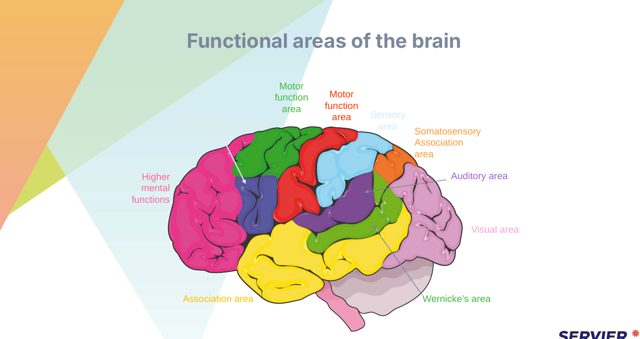
Functional areas of the left cerebral hemisphere: higher mental functions at the front of the frontal lobe, motor and sensory areas, somatosensory association, auditory, visual and association areas, Wernicke's area in the temporal lobe, and Broca's area (dark blue, lower frontal lobe)المناطق الوظيفية لنصف الكرة المخية الأيسر: الوظائف العقلية العليا في مقدّمة الفص الجبهي، والمناطق الحركية والحسّية، ومنطقة الترابط الحسّي الجسدي، والمناطق السمعية والبصرية والترابطية، ومنطقة فيرنيكه في الفص الصدغي، ومنطقة بروكا (باللون الأزرق الداكن في الجزء السفلي من الفص الجبهي)Servier Medical Art · CC BY 4.0
10
7.9 · Apraxia, Agnosia and Rehabilitation Approaches٧٫٩ · اللاأداء واللاعرفان ونُهج إعادة التأهيل
🧩APRAXIA
Cannot carry out a learned purposeful MOVEMENT
Despite intact strength, sensation and comprehension
He can hold a toothbrush and cannot work out what to do with it
Break the task into single steps, demonstrate, and start the movement for him
Do not keep repeating the instruction — the problem is not that he did not hear it
اللاأداء — لا يستطيع أداء حركة هادفة متعلَّمة رغم سلامة القوّة والإحساس والفهم؛ فهو يستطيع الإمساك بفرشاة الأسنان ولا يعرف ماذا يفعل بها. تُقسَّم المهمّة إلى خطوات مفردة، وتُعرَض عملياً، وتُبدأ الحركة له. ولا يُكرَّر التوجيه مراراً — فالمشكلة ليست أنه لم يسمعه.
👁️AGNOSIA
Cannot RECOGNISE objects, people or sounds
Despite intact senses
He sees the comb and does not know it is a comb
Use another sense — let him feel it, or name it aloud
And label things, and keep the environment consistent
اللاعرفان — لا يميّز الأشياء أو الأشخاص أو الأصوات رغم سلامة الحواسّ؛ فهو يرى المشط ولا يعرف أنه مشط. يُستخدَم حسّ آخر — يُترك ليلمسه أو يُسمّى بصوت عالٍ، وتُوضَع بطاقات تعريفية على الأشياء، وتُبقى البيئة ثابتة.
Both are easily mistaken for confusion, non-compliance or dementia — and a patient repeatedly asked to do something he physically cannot process is being set up to fail, which is why naming the deficit changes how the whole team behaves towards him.
وكلاهما يُخلَط بالتشوّش أو عدم الامتثال أو الخرف بسهولة — والمريض الذي يُطلَب منه مراراً فعل ما لا يستطيع معالجته يُهيَّأ للإخفاق، ولذلك فإن تسمية العجز تغيّر طريقة تعامل الفريق كلّه معه.
Agnosia is failure to recognise objects, sounds or faces despite intact sensory function — the patient sees the fork perfectly well but does not know what it is for. Both apraxia and agnosia are cognitive consequences of the stroke, not a failure of cooperation, and labelling a patient as unmotivated when he has one of these is a real and common injustice.
واللاعرفان فشل في التعرّف على الأشياء أو الأصوات أو الوجوه رغم سلامة الوظيفة الحسّية — فالمريض يرى الشوكة جيّداً لكنه لا يعرف فيمَ تُستخدَم. وكلّ من اللاأداء واللاعرفان عاقبة إدراكية للسكتة لا فشل تعاون، ووصف المريض بأنه غير متحفّز وهو مصاب بأحدهما ظلم حقيقي شائع.
Rehabilitation works on the principle that the brain can REORGANISE — so repetition and task-specific practice, practising the actual task rather than an abstract exercise, is what drives recovery.
وإعادة التأهيل تقوم على أن الدماغ يستطيع إعادة التنظيم — فالتكرار والتدريب الخاصّ بالمهمّة — أي التدرّب على المهمّة الفعلية لا على تمرين مجرّد — هو ما يقود التعافي.
1
Practise the ACTUAL task
Getting dressed, not a shoulder exercise — which is what transfers to life.
يُتدرَّب على المهمّة الفعلية — ارتداء الملابس لا تمرين الكتف، فهذا هو ما ينتقل أثره إلى الحياة اليومية.
2
Repetition, and a lot of it
Far more repetitions than feel necessary — which is why every contact with a nurse is a rehabilitation opportunity.
تكرار وكثير منه — أكثر بكثير ممّا يبدو ضرورياً، ولذلك فكلّ تماسّ مع التمريض فرصة لإعادة التأهيل.
3
Consistency across the WHOLE team
Everyone doing the transfer the same way, using the same words and the same cues — because inconsistency undoes the learning.
اتّساق عبر الفريق كلّه — الجميع يؤدّي النقل بالطريقة نفسها وبالكلمات نفسها والإشارات نفسها، لأن التناقض يُبطل ما جرى تعلّمه.
4
Do FOR him only what he cannot do
Doing things for a patient because it is quicker is the commonest way rehabilitation is undermined on a ward — and it is done kindly, which is why nobody stops it.
يُفعَل للمريض ما لا يستطيع فعله فقط — فالفعل عنه لأنه أسرع أشيع ما يقوّض التأهيل في الجناح، ويُفعَل بدافع اللطف، ولذلك لا يوقفه أحد.
5
And set goals HE wants
Getting to the mosque, holding a grandchild, making tea — which is what sustains months of effort in a way a range-of-movement target does not.
وتُوضَع أهداف يريدها هو — الوصول إلى المسجد أو حمل حفيد أو إعداد الشاي — فهذا ما يديم جهد أشهر بما لا يفعله هدف مدى الحركة.
Sexual function after a stroke or spinal cord injury is commonly affected and is almost never raised by the patient. Physical change, altered sensation, fatigue, spasticity, continence concerns, medication effects and altered body image all contribute, and the anxiety is often about whether intimacy is safe at all. Raise it in a private, matter-of-fact way at an appropriate point, state that it is a normal concern after this kind of injury, answer what you can and refer to the specialist team for the rest.
والوظيفة الجنسية بعد السكتة أو إصابة النخاع تتأثّر كثيراً ولا يطرحها المريض تقريباً أبداً. فالتغيّر الجسدي وتبدّل الإحساس والتعب والتشنّج ومخاوف الاستمساك وآثار الأدوية وتغيّر صورة الجسد كلّها تسهم، والقلق غالباً حول ما إذا كانت الحميمية آمنة أصلاً. يُطرَح الموضوع بخصوصية وواقعية في وقت مناسب، ويُذكَر أنه شاغل طبيعي بعد هذا النوع من الإصابة، ويُجاب عمّا يمكن الإجابة عنه ويُحال الباقي إلى الفريق المختصّ.
⭐
Key point
نقطة أساسية
A patient with apraxia understands and has the strength but cannot organise the movement. Demonstrate rather than instruct, and never record him as uncooperative.
المريض باللاأداء يفهم ولديه القوّة لكنه لا يستطيع تنظيم الحركة. يُعرَض عملياً ولا يُوجَّه لفظياً، ولا يُسجَّل غير متعاون أبداً.
11
7.10 · Seizures and Status Epilepticus٧٫١٠ · الاختلاجات والحالة الصرعية
Seizures divide broadly into focal, arising in one area and sometimes progressing, and generalised, involving both hemispheres from the start. A generalised tonic-clonic seizure has a tonic phase of stiffening, often with a cry as air is forced out and with cyanosis, followed by a clonic phase of rhythmic jerking, then a post-ictal phase of drowsiness, confusion, headache and sometimes incontinence. An absence seizure is a brief blank episode, easily mistaken for daydreaming.
الاختلاجات تنقسم بصورة عامة إلى بؤرية تنشأ في منطقة واحدة وقد تتقدّم، ومعمّمة تشمل نصفي الكرة من البداية. والاختلاج المعمّم التوتّري الرمعي له طور توتّري من التصلّب مع صرخة غالباً بدفع الهواء ومع زرقة، يتبعه طور رمعي من النفضات الإيقاعية، ثم طور تالٍ للنوبة من نعاس وتشوّش وصداع وسلس أحياناً. ونوبة الغياب نوبة شرود وجيزة يسهل خلطها بأحلام اليقظة.
During a seizure the nursing actions are largely about protection and observation. Stay with the patient. Protect the head, move furniture and hard objects away, loosen tight clothing at the neck, and note the time the seizure started. Do not restrain the limbs, and do not put anything in the mouth — the old teaching about a tongue depressor or spoon is wrong and causes broken teeth, airway obstruction and injury to the person doing it. Give oxygen and have suction available.
وأثناء الاختلاج تكون الإجراءات التمريضية للحماية والملاحظة أساساً. يُلازَم المريض. ويُحمى الرأس وتُبعَد قطع الأثاث والأشياء الصلبة وتُرخى الملابس الضيّقة عند العنق ويُدوَّن وقت بدء الاختلاج. ولا تُقيَّد الأطراف، ولا يُوضَع شيء في الفم — فالتعليم القديم عن خافض اللسان أو الملعقة خاطئ ويسبّب كسر أسنان وانسداد مجرى وإصابة لمن يفعله. ويُعطى الأكسجين ويُبقى الشفط متاحاً.
1
Recovery position, on his side
So secretions and vomit drain and the tongue falls forward.
وضعية الإفاقة على جانبه — كي تُصرَّف الإفرازات والقيء ويسقط اللسان للأمام.
2
Suction and oxygen if needed
And check the airway is clear.
شفط وأكسجين إن لزم — ويُتحقَّق من أن المجرى الهوائي سالك.
3
Check blood GLUCOSE
Which is treatable in seconds and is the step most often skipped.
يُفحَص سكّر الدم — قابل للعلاج في ثوانٍ وأكثر خطوة تُتخطّى.
4
Full observations, and stay with him
He will be confused, frightened and may be aggressive in the post-ictal phase — which is not deliberate and is not managed by restraint.
قياسات كاملة ويُلازَم المريض — سيكون مشوّشاً وخائفاً وقد يكون عدوانياً في الطور التالي للنوبة، وليس ذلك متعمّداً ولا يُعالَج بالتقييد.
5
Reorientate him gently, repeatedly
Where he is, what happened, that he is safe — and give him privacy, because it is a public and humiliating thing to have happened.
يُعاد توجيه المريض برفق ومراراً — أين هو وماذا حدث وأنه بأمان — وتُوفَّر له الخصوصية، لأن ما حدث أمر علني ومُهين.
6
And DOCUMENT what you actually saw
The time it started and stopped, what the movements were and where they began, eye deviation, incontinence, tongue biting, the post-ictal state and its duration — because you are the only person who saw it, and the diagnosis depends on your description.
ويُوثَّق ما شوهد فعلاً — وقت البدء والانتهاء، ونوع الحركات ومكان بدئها، وانحراف العينين، والسلس، وعضّ اللسان، والحالة التالية للنوبة ومدّتها — لأن من شاهد النوبة هو الشاهد الوحيد عليها، والتشخيص يعتمد على وصفه.
Status epilepticus is a seizure lasting five minutes or longer, or repeated seizures without recovery of consciousness between them. It is a medical emergency with a real mortality, because prolonged seizure activity causes hypoxia, acidosis, hyperthermia and permanent neuronal damage. Management: airway, oxygen, monitoring, intravenous access, check the glucose, and a benzodiazepine such as lorazepam or diazepam as first-line, followed by a longer-acting antiepileptic. Do not wait for it to stop on its own.
والحالة الصرعية اختلاج يدوم خمس دقائق أو أكثر، أو اختلاجات متكرّرة دون استعادة الوعي بينها. وهي طارئ طبي بوفيات حقيقية، فالنشاط الاختلاجي المطوّل يسبّب نقص أكسجة وحماضاً وارتفاع حرارة وتلفاً عصبونياً دائماً. والتدبير: مجرى الهواء والأكسجين والمراقبة ومدخل وريدي وفحص السكّر وبنزوديازيبين كاللورازيبام أو الديازيبام خطّاً أول، يتبعه مضادّ اختلاج أطول مفعولاً. ولا يُنتظَر توقّفه تلقائياً.
•Antiepileptic drugs — the specific teaching points◆ مضادّات الاختلاج — نقاط التعليم الخاصة
PHENYTOIN — narrow therapeutic rangeNeeds level monitoring. Causes GUM HYPERTROPHY — so meticulous oral hygiene and regular dental review are part of the prescription. Signs of toxicity: nystagmus, ataxia, slurred speech and confusion. And intravenous phenytoin must be given SLOWLY with cardiac monitoring, because rapid administration causes arrhythmia and hypotension.الفينيتوين — مدى علاجي ضيّق: يتطلّب مراقبة مستواه في الدم. يسبّب تضخّم اللثة — لذا فالنظافة الفموية الدقيقة والمراجعة السنّية المنتظمة جزء من الوصفة. علامات السمّية: رأرأة ورنح وكلام متداخل وتشوّش. ويجب إعطاء الفينيتوين الوريدي ببطء مع مراقبة قلبية، لأن الإعطاء السريع يسبّب اضطراب النظم وهبوط ضغط الدم.
SODIUM VALPROATETeratogenic — which makes contraception and pre-pregnancy discussion part of prescribing it to any woman of reproductive age. Monitor liver function, and it causes weight gain and tremor.فالبروات الصوديوم — مُسبِّب لتشوّه الأجنّة: لذا فمنع الحمل ومناقشة ما قبل الحمل جزء من وصفه لأيّ امرأة بسنّ الإنجاب. تُراقَب وظائف الكبد، ويسبّب زيادة الوزن والرعاش.
CARBAMAZEPINE and LAMOTRIGINEBoth can cause serious skin reactions — a new rash is reported and the drug is not simply continued. Lamotrigine is titrated up SLOWLY for exactly that reason, and a dose escalated too fast is a recognised cause of it.الكاربامازيبين واللاموتريجين — قد يسبّبان تفاعلات جلدية خطيرة: يُبلَّغ عن أيّ طفح جديد ولا يُستمَرّ بالدواء ببساطة. ويُرفَع اللاموتريجين تدريجياً وببطء لهذا السبب تحديداً، ورفع الجرعة بسرعة كبيرة سبب معروف لهذه التفاعلات.
And the rule for ALL of themNEVER stop abruptly — which precipitates status epilepticus. Adherence, consistent timing, and not running out are the whole of the nursing message, and a missed supply is a clinical emergency, not an administrative one.والقاعدة لكلّها — لا تُوقَف فجأةً أبداً: فذلك يُحدث حالة صرعية. والالتزام بالدواء وانتظام مواعيده وعدم نفاده هو الرسالة التمريضية كلّها، ونفاد الإمداد طارئ سريري لا إداري.
🚩
Watch out
تنبيه
Never restrain a seizing patient and never put anything in the mouth. Both cause injury, and the tongue cannot be swallowed.
لا يُقيَّد مريض مختلج ولا يُوضَع شيء في فمه أبداً. فكلاهما يسبّب إصابة، واللسان لا يمكن ابتلاعه.
⭐
Key point
نقطة أساسية
Status epilepticus is a seizure lasting five minutes or more, or repeated seizures without recovery between them. First-line treatment is a benzodiazepine.
الحالة الصرعية اختلاج يدوم خمس دقائق أو أكثر، أو اختلاجات متكرّرة دون تعافٍ بينها. وعلاج الخط الأول هو أحد البنزوديازيبينات.
🚩
Watch out
تنبيه
Phenytoin is never mixed with dextrose and is given slowly with cardiac monitoring. It causes gum hypertrophy, so oral hygiene is part of the teaching.
الفينيتوين لا يُخلَط مع الدكستروز أبداً ويُعطى ببطء مع مراقبة قلبية. ويسبّب تضخّم اللثة، فالنظافة الفموية جزء من التعليم.
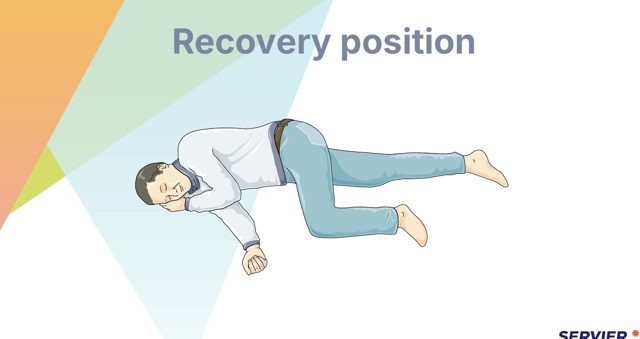
Recovery (lateral) position: lying on the side with the upper hand under the cheek and the upper leg bent at the hip and kneeوضعية الإفاقة (الوضعية الجانبية): الاستلقاء على الجانب مع وضع اليد العليا تحت الخدّ وثني الساق العليا عند الورك والركبةServier Medical Art · CC BY 4.0
12
7.11 · Other Seizure Presentations and Refractory Epilepsy٧٫١١ · تظاهرات اختلاجية أخرى والصرع المعند
Non-epileptic attack disorder — sometimes called dissociative seizures — produces episodes that LOOK like seizures but have NO epileptic activity in the brain. They are a psychological response, not feigned, and the patient is not pretending.
اضطراب النوبات غير الصرعية — ويُسمّى أحياناً النوبات الانشقاقية — يُنتج نوبات تبدو صرعية بلا نشاط صرعي في الدماغ. وهي استجابة نفسية غير مفتعَلة والمريض لا يتظاهر.
•Why it matters clinically◆ لماذا يهمّ ذلك سريرياً
They are frequently treated as epilepsy for yearsWith antiepileptic drugs that do not work and cause side effects — and with intubation for ‘status’ that was never status.كثيراً ما تُعالَج كصرع سنوات — بأدوية مضادّة للاختلاج لا تعمل وتسبّب آثاراً جانبية، وبالتنبيب لـ«حالة صرعية» لم تكن حالة صرعية أصلاً.
So the response is calm and non-confrontationalKeep him safe, do not restrain, do not give repeated benzodiazepines, and do not challenge or accuse — which makes it worse and ends the relationship.فالاستجابة هادئة غير مواجِهة — يُحفَظ المريض آمناً ولا يُقيَّد، ولا تُعطى جرعات متكرّرة من البنزوديازيبينات، ولا يُتحدَّى أو يُتَّهم — فذلك يزيد الأمر سوءاً وينهي العلاقة العلاجية.
And the diagnosis is a relief, not an insultGiven properly, it opens the door to treatment that works — psychological therapy. Given badly, as ‘there is nothing wrong with you’, it is heard as an accusation and the person disengages entirely.والتشخيص ارتياح لا إهانة — فإذا أُعطي على نحو سليم فتح باب علاج ينجح، هو العلاج النفسي. أما إذا أُعطي على نحو سيّئ، بعبارة «لا شيء فيك»، فيُسمَع كاتّهام ويقطع الشخص تواصله تماماً.
A febrile convulsion occurs in a young child with a fever, typically between about six months and five or six years, and is usually brief and benign. The nursing response is the same protective care as any seizure, plus treating the fever and finding its cause — and reassuring parents, who are frequently terrified and believe the child is dying. Explain that most children outgrow them and that a febrile convulsion is not epilepsy, while making clear which features would need review.
والاختلاج الحموي يحدث لدى طفل صغير مع حمّى، بين نحو ستّة أشهر وخمس أو ستّ سنوات عادةً، وهو وجيز وحميد عادةً. والاستجابة التمريضية هي الرعاية الحمائية نفسها كأيّ اختلاج، مع معالجة الحمّى وإيجاد سببها — وطمأنة الوالدين وهما مرعوبان غالباً ويظنّان أن الطفل يحتضر. ويُشرَح أن معظم الأطفال يتجاوزونها وأن الاختلاج الحموي ليس صرعاً، مع توضيح السمات التي تستوجب المراجعة.
•Options for refractory epilepsy — patients ask about these◆ خيارات الصرع المعنّد — يسأل المرضى عنها
Vagus nerve stimulatorAn implanted device that stimulates the vagus nerve to reduce seizure frequency — and it can often be activated by the patient or a carer with a magnet when an aura begins.محفّز العصب المبهم — جهاز مزروع يحفّز العصب المبهم لتقليل تواتر النوبات، وغالباً يمكن للمريض أو مقدّم الرعاية تنشيطه بمغناطيس عند بدء الأورة.
Epilepsy SURGERYWhere a single, identifiable and resectable focus is found — which requires extensive assessment, and is under-offered because people assume it is not an option.جراحة الصرع — حيث توجد بؤرة واحدة محدّدة قابلة للاستئصال، وهذا يتطلّب تقييماً موسّعاً، ولا تُعرَض بالقدر الكافي لأن الناس يفترضون أنها ليست خياراً.
The ketogenic dietUsed particularly in children with refractory epilepsy — effective, demanding, and requires dietetic supervision, not improvisation.الحمية الكيتونية — تُستخدَم خاصّةً لدى الأطفال المصابين بصرع معنّد، وهي فعّالة وشاقّة وتتطلّب إشرافاً غذائياً لا ارتجالاً.
And the point behind all three‘Refractory’ means the drugs have not worked — not that nothing will. So a patient whose seizures continue on two appropriate drugs is referred to a specialist centre, rather than having a third and fourth drug added indefinitely.والنقطة وراء الثلاثة — «معنّد» يعني أن الأدوية لم تنجح لا أن لا شيء سينجح. لذا يُحال المريض الذي تستمرّ نوباته رغم دواءين مناسبين إلى مركز متخصّص، بدلاً من إضافة دواء ثالث ورابع إلى ما لا نهاية.
Epilepsy in pregnancy requires planning rather than reaction. Sodium valproate is highly teratogenic and is avoided in women of childbearing potential; other drugs carry lower but real risk. High-dose folic acid is recommended before conception. The crucial teaching is that a woman must not stop her antiepileptic drug on discovering she is pregnant — uncontrolled seizures are dangerous to both mother and baby — but should contact her specialist urgently. Pre-conception counselling is offered to every woman of childbearing age on these drugs.
والصرع في الحمل يتطلّب تخطيطاً لا ردّ فعل. فالبروات الصوديوم شديد التشويه للأجنّة ويُتجنّب لدى النساء في سنّ الإنجاب؛ والأدوية الأخرى تحمل خطراً أقلّ لكنه حقيقي. ويُوصى بحمض الفوليك بجرعة عالية قبل الحمل. والتعليم الحاسم أن المرأة يجب ألّا تُوقف مضادّ اختلاجها عند اكتشاف الحمل — فالاختلاجات غير المضبوطة خطرة على الأمّ والجنين — بل تتواصل مع أخصّائيها عاجلاً. وتُعرَض استشارة ما قبل الحمل على كلّ امرأة في سنّ الإنجاب تتناول هذه الأدوية.
⭐
Key point
نقطة أساسية
A non-epileptic attack is not deliberate and the patient is not in control of it. Treating him with suspicion is both wrong and harmful.
النوبة غير الصرعية ليست متعمّدة والمريض لا يتحكّم بها. ومعاملته بالريبة خاطئة وضارّة.
🚩
Watch out
تنبيه
A woman who discovers she is pregnant must not stop her antiepileptic drug. Uncontrolled seizures are dangerous to both her and the baby — she contacts her specialist urgently instead.
المرأة التي تكتشف أنها حامل يجب ألّا تُوقف مضادّ اختلاجها. فالاختلاجات غير المضبوطة خطرة عليها وعلى الجنين — بل تتواصل مع أخصّائيها عاجلاً.
13
7.12 · Conditions That Mimic Stroke and Seizure٧٫١٢ · حالات تحاكي السكتة والاختلاج
Twitching can occur and does not make it a seizure
Often situational — standing, pain, heat, coughing
الغشي — بادرة من دوخة وغثيان وشعور بالحرارة وتحوّل الرؤية إلى الرمادي، مع شحوب وتعرّق قبله؛ قصير الأمد مع تعافٍ سريع كامل؛ وقد تحدث ارتعاشات لا تجعله اختلاجاً؛ وغالباً مرتبط بظرف معيّن — الوقوف أو الألم أو الحرارة أو السعال.
⚡SEIZURE
Aura or no warning at all
Tongue biting — particularly the SIDE of the tongue
Incontinence
Prolonged POST-ICTAL confusion — minutes to hours
And muscle aches afterwards
النوبة الاختلاجية — أورة أو بلا إنذار على الإطلاق؛ وعضّ اللسان، وخاصةً جانب اللسان؛ وسلس؛ وتشوّش مطوّل تالٍ للنوبة يدوم من دقائق إلى ساعات؛ وآلام عضلية بعدها.
The distinction is usually made on the HISTORY, not on the event — and the most useful witness is whoever was there. Which makes a nurse who documents what she actually saw the person who supplies the diagnosis. And the discriminator worth carrying: rapid full recovery points to syncope; prolonged confusion points to a seizure.
والتمييز يُجرى بالقصّة عادةً لا بالحدث — وأنفع شاهد من كان حاضراً، ممّا يجعل أحد أفراد التمريض الذي يوثّق ما شاهده فعلاً هو من يقدّم مادة التشخيص. والمميّز الجدير بالحمل: أن التعافي السريع الكامل يشير للغشي والتشوّش المطوّل للنوبة.
Todd's paralysis is transient focal weakness following a seizure, affecting the part of the body that was involved, and it resolves over minutes to hours. It matters because it mimics a stroke exactly in a patient who may be found confused with one-sided weakness — and the history of a preceding seizure is what distinguishes them. It is not a reason to withhold stroke assessment, but it is a reason to establish whether a seizure occurred.
وشلل تودضعف بؤري عابر يتبع اختلاجاً، يصيب جزء الجسم الذي شارك في الاختلاج، ويزول خلال دقائق إلى ساعات. وهو يهمّ لأنه يحاكي السكتة تماماً لدى مريض قد يُوجَد مشوّشاً بضعف أحادي الجانب — وقصّة اختلاج سابق هي ما يميّز بينهما. وليس سبباً لحجب تقييم السكتة، لكنه سبب لتحديد هل وقع اختلاج.
Transient global amnesia is a striking and alarming episode in which the patient suddenly cannot form new memories: he asks the same question repeatedly, does not retain the answer, and does not know how he got there — yet he knows who he is, behaves normally otherwise and has no other neurological deficit. It resolves within about 24 hours and is usually benign, but it needs assessment to exclude stroke and seizure, and the family need explanation because the repetitive questioning is deeply distressing to watch.
وفقد الذاكرة الشامل العابر نوبة لافتة مفزعة يعجز فيها المريض فجأةً عن تكوين ذكريات جديدة: فيسأل السؤال نفسه مراراً ولا يحتفظ بالجواب ولا يعرف كيف وصل — لكنه يعرف من هو ويتصرّف طبيعياً عدا ذلك ولا عجز عصبي آخر لديه. وتزول خلال نحو ٢٤ ساعة وهي حميدة عادةً، لكنها تحتاج تقييماً لاستبعاد السكتة والاختلاج، والأسرة تحتاج شرحاً فالسؤال المتكرّر مؤلم للغاية لمن يشاهده.
Normal pressure hydrocephalus produces a triad that is worth memorising because the condition is potentially reversible with a shunt and is otherwise mistaken for irreversible dementia: gait disturbance, characteristically a slow, broad-based, shuffling or magnetic gait as though the feet are stuck to the floor, which usually comes first; urinary incontinence; and cognitive decline. The traditional summary is wet, wobbly and wacky. An older patient with that combination deserves investigation rather than being written off as demented.
واستسقاء الرأس سويّ الضغط يُنتج ثلاثياً يستحقّ الحفظ، فالحالة قد تكون قابلة للعكس بتحويلة ويُخطَأ فيها عادةً على أنها خرف لا رجعة فيه: اضطراب المشية، وهو في صورته المميّزة مشية بطيئة واسعة القاعدة مجرجرة أو مغناطيسية كأن القدمين ملتصقتان بالأرض، ويأتي أولاً عادةً؛ وسلس بولي؛ وتدهور إدراكي. والملخّص التقليدي مبتلّ ومترنّح ومشوّش. والمريض المسنّ بهذه المجموعة من الأعراض يستحقّ استقصاءً لا شطبه كمصاب بخرف.
⭐
Key point
نقطة أساسية
Brief jerking can occur in syncope and witnesses often report it as a fit. The recovery distinguishes them — syncope recovers rapidly without confusion; a seizure has a prolonged post-ictal phase.
النفضات الوجيزة قد تحدث في الغشي ويُبلّغ عنها الشهود كنوبة اختلاجية غالباً. والتعافي يميّز بينهما — فالغشي يتعافى بسرعة دون تشوّش؛ والاختلاج له طور تالٍ مطوّل.
🚩
Watch out
تنبيه
Todd's paralysis after a seizure mimics a stroke exactly. Establish whether a seizure occurred — but do not let that delay stroke assessment.
شلل تود بعد الاختلاج يحاكي السكتة تماماً. يُحدَّد ما إذا كان اختلاج قد وقع — لكن دون السماح لذلك بتأخير تقييم السكتة.
🔑
Memory aid
مفتاح للحفظ
Normal pressure hydrocephalus: wet, wobbly and wacky — incontinence, a magnetic gait and cognitive decline. It is potentially reversible with a shunt.
استسقاء الرأس سويّ الضغط: مبتلّ ومترنّح ومشوّش — سلس ومشية مغناطيسية وتدهور إدراكي. وقد يكون قابلاً للعكس بتحويلة.
14
7.13 · Head Injury٧٫١٣ · إصابة الرأس
A concussion is a transient disturbance of brain function after a blow, with or without brief loss of consciousness, giving headache, confusion, amnesia around the event, dizziness, nausea and difficulty concentrating. Most recover, but teach the warning signs that must bring the patient back: worsening headache, repeated vomiting, increasing drowsiness or difficulty waking, confusion, weakness, seizure, unequal pupils, or clear fluid from the nose or ear.
الارتجاج اضطراب عابر في وظيفة الدماغ بعد ضربة، مع فقد وعي وجيز أو دونه، ويعطي صداعاً وتشوّشاً وفقد ذاكرة حول الحدث ودوخة وغثياناً وصعوبة تركيز. ويتعافى معظمهم، لكن تُعلَّم علامات الإنذار التي تستوجب عودة المريض: تفاقم الصداع أو تقيّؤ متكرّر أو ازدياد النعاس أو صعوبة الإيقاظ أو تشوّش أو ضعف أو اختلاج أو حدقتان غير متساويتين أو سائل صافٍ من الأنف أو الأذن.
An extradural haematoma is arterial bleeding, classically from the middle meningeal artery after a temporal blow. Its hallmark is the lucid interval: the patient is knocked out briefly, recovers and seems well for a period, then deteriorates rapidly as the haematoma expands. That deceptive well period is exactly why a patient with a head injury who seems fine still needs observation, and why a change is acted on immediately.
والورم الدموي فوق الجافية نزف شرياني، وكلاسيكياً من الشريان السحائي الأوسط بعد ضربة صدغية. وسمته الفترة الصافية: فيفقد المريض وعيه وجيزاً ويتعافى ويبدو بخير مدّةً ثم يتدهور بسرعة مع تمدّد الورم الدموي. وتلك الفترة الخادعة من العافية هي بالضبط سبب حاجة مريض إصابة الرأس الذي يبدو بخير للمراقبة، وسبب التصرّف الفوري عند أيّ تغيّر.
A subdural haematoma is venous bleeding from bridging veins and is slower. The chronic form is a particular trap: it occurs in older people and those on anticoagulants or with alcohol dependence, often after trauma so minor it is forgotten, and presents weeks later with headache, gradual confusion, drowsiness, personality change or unsteadiness — a picture easily mistaken for dementia or delirium. Ask about any head injury in the preceding weeks in an older patient with new confusion.
والورم الدموي تحت الجافية نزف وريدي من أوردة جسرية وهو أبطأ. والشكل المزمن مصيدة خاصّة: فهو يحدث لدى كبار السنّ ومن هم على مضادّات التخثّر أو المعتمدين على الكحول، بعد رضّ ضئيل ينسى غالباً، ويتظاهر بعد أسابيع بصداع وتشوّش تدريجي ونعاس وتغيّر شخصية أو عدم اتّزان — وهي صورة يسهل خلطها بالخرف أو الهذيان. يُسأل عن أيّ إصابة رأس في الأسابيع السابقة لدى مريض مسنّ بتشوّش جديد.
Raccoon eyesperiorbital bruisingعينا الراكون — تكدّم حول الحجاج
Battle signbruising over the mastoid, behind the earعلامة باتل — تكدّم فوق الخشّاء، خلف الأذن
CSF from nose or earrhinorrhoea or otorrhoea — clear or blood-stainedسائل دماغي شوكي من الأنف أو الأذن — سيلان أنفي أو أذني، صافٍ أو مدمّى
Haemotympanumblood behind the eardrumتدمّي الطبل — دم خلف طبلة الأذن
•What a basal skull fracture FORBIDS — and this is the examined part◆ ما يمنعه كسر قاعدة الجمجمة — وهذا هو الجزء الذي يُمتحَن
NO nasogastric tubeIt can pass through the fracture into the CRANIAL CAVITY — an orogastric tube is used instead.لا أنبوب أنفي معدي — قد يمرّ عبر الكسر إلى تجويف القحف؛ ويُستعمَل بدلاً منه أنبوب فمي معدي.
NO nasal suction, and NO nasopharyngeal airwayFor the same reason.لا شفط أنفي ولا مجرى هوائي بلعومي أنفي — للسبب نفسه.
Do not pack the ear or noseLet it drain, and place a loose absorbent pad — packing raises intracranial pressure and traps infection.لا تُحشى الأذن أو الأنف — يُترك السائل ليُصرَّف، ويوضع ضماد ماصّ فضفاض — فالحشو يرفع الضغط داخل القحف ويحبس العدوى.
And tell him not to blow his noseOr to sneeze with the mouth closed — which can force air into the cranium.ويُطلَب من المريض ألّا يتمخّط وألّا يعطس والفم مغلق — فقد يدفع ذلك الهواء إلى داخل القحف.
The halo signBlood-stained CSF on a gauze forms a central blood spot with a clear ring around it — suggestive, not diagnostic, and worth knowing because it is what a nurse notices first.علامة الهالة — السائل الدماغي الشوكي المدمّى على الشاش يشكّل بقعة دم مركزية تحيط بها حلقة صافية — علامة موحية لا تشخيصية، وتستحقّ المعرفة لأنها أول ما يلاحظه التمريض.
🚩
Watch out
تنبيه
A patient who was knocked out, recovered and seems well may be in the lucid interval of an extradural haematoma. Seeming fine is not reassurance after a head injury.
المريض الذي فقد وعيه ثم تعافى ويبدو بخير قد يكون في الفترة الصافية لورم دموي فوق الجافية. فالظهور بخير ليس طمأنة بعد إصابة رأس.
🚩
Watch out
تنبيه
With a suspected basal skull fracture, never pass a nasogastric tube through the nose. It can enter the cranial cavity through the fracture.
عند الاشتباه بكسر قاعدة الجمجمة لا يُمرَّر أنبوب أنفي معدي عبر الأنف أبداً. فقد يدخل تجويف القحف عبر الكسر.
Spinal cord sectionsمقاطع النخاع الشوكيServier Medical Art · CC BY 4.0
The level of injury determines the function lost, and a few landmarks are worth holding: injury above roughly C4 threatens the diaphragm and therefore breathing; C6 to C7 leaves some arm and hand function; a thoracic injury spares the arms and gives paraplegia; and lumbar and sacral injuries affect the legs, bladder and bowel. A complete injury means no motor or sensory function below the level; an incomplete injury preserves some, and the pattern varies.
مستوى الإصابة يحدّد الوظيفة المفقودة، وبضعة معالم تستحقّ الحفظ: فالإصابة فوق نحو C4 تهدّد الحجاب الحاجز ومن ثمّ التنفّس؛ وC6 إلى C7 تُبقي بعض وظيفة الذراع واليد؛ والإصابة الصدرية تُعفي الذراعين وتعطي شللاً سفلياً؛ والإصابات القطنية والعجزية تصيب الساقين والمثانة والأمعاء. والإصابة التامّة تعني غياب أيّ وظيفة حركية أو حسّية تحت المستوى؛ وغير التامّة تُبقي بعضها والنمط متباين.
⏸️SPINAL shock
TEMPORARY loss of ALL reflex activity below the level
Flaccid paralysis, areflexia, loss of sensation
Not a circulatory problem
Resolves over days to weeks
And the true extent of injury cannot be judged until it does
الصدمة الشوكية — فقد مؤقّت لكلّ نشاط منعكس تحت المستوى: شلل رخو وغياب المنعكسات وفقد الإحساس؛ وليست مشكلة دورانية؛ وتزول خلال أيام إلى أسابيع؛ ولا يمكن الحكم على المدى الحقيقي للإصابة قبل زوالها.
🩸NEUROGENIC shock
A CIRCULATORY problem — loss of sympathetic tone
HYPOTENSION with BRADYCARDIA
Warm, dry, flushed skin below the lesion
The bradycardia is the discriminator — other shock states give tachycardia
Treated with fluids, vasopressors and atropine, not fluids alone
الصدمة العصبية — مشكلة دورانية: فقدان المقوّية الودّية؛ هبوط ضغط مع بطء قلب؛ جلد دافئ جافّ متورّد تحت مستوى الآفة؛ وبطء القلب هو الفارق، إذ تعطي حالات الصدمة الأخرى تسرّع قلب؛ وتُعالَج بالسوائل ومقبّضات الأوعية والأتروبين لا بالسوائل وحدها.
The point that saves a life: hypotension with BRADYCARDIA in a spinal injury is neurogenic shock — but haemorrhage must still be excluded first, because a trauma patient can have both, and assuming neurogenic shock and missing a bleed is the error.
النقطة التي تنقذ حياةً: أن هبوط الضغط مع بطء القلب في إصابة شوكية صدمة عصبية — لكن يجب استبعاد النزف أولاً فمريض الرضّ قد يكون لديه الاثنان، والخطأ هو افتراض الصدمة العصبية وإغفال النزف.
Autonomic dysreflexia occurs in injuries at T6 or above, usually after spinal shock has resolved. A noxious stimulus below the level of injury triggers a massive uncontrolled sympathetic discharge. The picture: a sudden pounding headache, severe hypertension, bradycardia, and — the distinguishing feature — flushing and profuse sweating above the level of the lesion with pale, cold, dry skin below it, with nasal congestion, blurred vision and anxiety. Untreated it causes seizure, stroke and death.
الخلل الانعكاسي الذاتي يحدث في إصابات T6 وما فوق بعد زوال الصدمة الشوكية عادةً. فمنبّه مؤذٍ تحت مستوى الإصابة يُطلق تفريغاً ودّياً هائلاً غير مضبوط. والصورة: صداع نابض مفاجئ وارتفاع شديد في ضغط الدم وبطء القلب، إضافةً إلى — وهي السمة الفارقة — تورّد وتعرّق غزير فوق مستوى الآفة مع جلد شاحب بارد جافّ تحتها، مع احتقان أنفي وتشوّش رؤية وقلق. وبلا علاج يسبّب اختلاجاً وسكتة دماغية وموتاً.
Autonomic dysreflexia — the response has a FIXED ORDER, and the first step is the one that saves him.
الخلل الانعكاسي الذاتي — للاستجابة ترتيب ثابت والخطوة الأولى هي التي تنقذه.
1
1 — SIT HIM UPRIGHT IMMEDIATELY
Head of the bed to about 90 degrees, and lower his legs — which uses gravity to drop the blood pressure at once, before any drug.
١ — إجلاس المريض منتصباً فوراً: يُرفَع رأس السرير إلى نحو ٩٠ درجة وتُنزَل ساقاه — فهذا يستخدم الجاذبية لخفض ضغط الدم فوراً، قبل أيّ دواء.
A blocked or kinked catheter is the commonest by far; then a full bladder, constipation or faecal impaction, a pressure ulcer, an ingrown toenail, tight clothing, or any noxious stimulus below the lesion.
٣ — إيجاد المُحفِّز وإزالته — القسطرة المسدودة أو الملتوية أشيعها بكثير؛ ثم المثانة الممتلئة والإمساك أو الانحشار البرازي وقرحة الضغط وظفر القدم الغائر والملابس الضيّقة وأيّ منبّه مؤذٍ تحت مستوى الآفة.
4
4 — Monitor the blood pressure every few minutes
And give antihypertensive treatment as prescribed if it does not settle.
٤ — مراقبة ضغط الدم كلّ دقائق قليلة — وإعطاء العلاج الخافض للضغط كما هو موصوف إن لم يهدأ.
5
And know why it is an emergency
The blood pressure can rise high enough to cause a stroke, seizure or death — in a patient whose baseline blood pressure is often LOW, so a ‘normal’ reading may already be a dangerous rise for him.
ومعرفة سبب كونها حالة إسعافية — فالضغط قد يرتفع بما يكفي لحدوث سكتة دماغية أو اختلاج أو وفاة، لدى مريض يكون ضغطه الأساسي منخفضاً غالباً، فقد تكون قراءة «طبيعية» ارتفاعاً خطراً بالنسبة له.
The warning symptoms he will describe: a pounding headache, sweating and flushing ABOVE the level, goosebumps, nasal congestion, blurred vision and anxiety — with cold, pale skin BELOW it. And many patients know exactly what is happening and what triggers it: listen to him.
الأعراض المنذرة التي سيصفها: صداع نابض وتعرّق وتورّد فوق المستوى واقشعرار الجلد واحتقان أنف وتشوّش بصر وقلق — مع جلد بارد شاحب تحته. وكثير من المرضى يعرفون بالضبط ما يحدث وما يُطلقه: ويُصغى إلى المريض.
Ongoing care after spinal cord injury covers immobilisation and log rolling until the spine is cleared and stabilised; respiratory care, since a high injury weakens the diaphragm and cough — monitor vital capacity and assist with clearance; bladder and bowel programmes, since retention and impaction are both dangerous and are the commonest triggers of dysreflexia; skin care, because sensation is lost and pressure injury develops unnoticed; thromboprophylaxis; range of motion to prevent contractures; and the psychological work of adjusting to a permanent change.
الرعاية المستمرّة بعد إصابة النخاع تغطّي التثبيت والدحرجة الجذعية حتى يُستبعَد أذى العمود ويُثبَّت؛ والرعاية التنفّسية، فالإصابة العالية تُضعف الحجاب الحاجز والسعال — تُراقَب السعة الحيوية ويُساعَد على التصريف؛ وبرامج المثانة والأمعاء، فالاحتباس والانحشار كلاهما خطر وهما أشيع محفّزات الخلل الانعكاسي؛ والعناية بالجلد إذ يُفقَد الإحساس وتنشأ قرح الضغط دون ملاحظة؛ والوقاية من الخثار؛ ومدى الحركة لمنع التقفّعات؛ والعمل النفسي للتكيّف مع تغيّر دائم.
🔑
Memory aid
مفتاح للحفظ
Autonomic dysreflexia: sit him up, loosen anything tight, then find the trigger — bladder first, then bowel, then skin.
الخلل الانعكاسي الذاتي: يُجلَس المريض، ويُرخى كلّ ما هو ضيّق، ثم يُبحَث عن المُحفِّز — المثانة أولاً ثم الأمعاء ثم الجلد.
⭐
Key point
نقطة أساسية
Neurogenic shock is hypotension with bradycardia and warm dry skin — the opposite of hypovolaemic shock, which gives tachycardia with cold clammy skin.
الصدمة العصبية هبوط ضغط مع بطء نبض وجلد دافئ جافّ — عكس صدمة نقص الحجم التي تعطي تسرّع نبض وجلداً بارداً رطباً.
Sympathetic (thoracolumbar) nervous system: outflow from the thoracic and upper lumbar spinal cord through the sympathetic chain beside the spine to the pupils, salivary glands, heart, bronchi, liver, stomach, intestines, adrenal gland, kidney, rectum, bladder and genitalsالجهاز العصبي الودّي (الصدري القطني): أليافٌ تخرج من النخاع الشوكي الصدري والقطني العلوي عبر السلسلة الودّية المحاذية للعمود الفقري إلى الحدقتين والغدد اللعابية والقلب والقصبات والكبد والمعدة والأمعاء والغدة الكظرية والكلية والمستقيم والمثانة والأعضاء التناسليةServier Medical Art · CC BY 4.0
16
7.15 · Meningitis and Neurological Infection٧٫١٥ · التهاب السحايا والعدوى العصبية
Bacterial meningitis is a medical emergency; viral meningitis is usually self-limiting. The classic triad is fever, neck stiffness and altered mental state, with severe headache, photophobia, nausea and vomiting. Two signs are tested: Kernig's sign — with the hip flexed, straightening the knee produces pain and resistance — and Brudzinski's sign — flexing the neck causes involuntary flexion of the hips and knees. Both reflect meningeal irritation, and both may be absent, so their absence does not exclude the diagnosis.
التهاب السحايا الجرثومي طارئ طبي؛ والفيروسي محدود ذاتياً عادةً. والثلاثي الكلاسيكي حمّى وتيبّس رقبة وتغيّر الحالة الذهنية، مع صداع شديد ورهاب الضوء وغثيان وتقيّؤ. وعلامتان تُختبَران: علامة كيرنيغ — فمع ثني الورك يُنتج بسط الركبة ألماً ومقاومة — وعلامة برودزينسكي — فثني العنق يسبّب ثنياً لاإرادياً للوركين والركبتين. وكلتاهما تعكس تهيّجاً سحائياً وقد تغيبان، فغيابهما لا ينفي التشخيص.
Meningococcal disease adds a non-blanching purpuric rash that does not fade when pressed — tested with a glass tumbler — and it can progress to septic shock within hours. Any feverish, unwell patient with a non-blanching rash is an emergency. Antibiotics are given urgently, and where there is delay to lumbar puncture they are not withheld waiting for it.
داء المكوّرات السحائية يضيف طفحاً فرفرياً لا يزول بالضغط ولا يبهت عند الضغط عليه — ويُختبَر بكأس زجاجية — وقد يتقدّم لصدمة إنتانية خلال ساعات. وأيّ مريض محموم متوعّك بطفح لا يزول بالضغط طارئ. وتُعطى المضادات الحيوية عاجلاً، وحيث يتأخّر البزل القطني لا تُحجَب انتظاراً له.
Droplet precautions are applied for suspected meningococcal meningitis and continued until 24 hours of effective antibiotic treatment have been given, as Part 01 Chapter 05 sets out. Close contacts are identified for prophylaxis. Nursing care also includes a quiet, dimly lit room because of the photophobia, analgesia, antipyretics, careful neurological observation, seizure precautions, and fluid balance.
احتياطات الرذاذ تُطبَّق في التهاب السحايا بالمكوّرات السحائية المشتبه به وتستمرّ حتى مرور ٢٤ ساعة من علاج بمضادات حيوية فعّالة كما يبيّن الفصل الخامس من الجزء الأول. ويُحدَّد المخالطون القريبون للوقاية. والرعاية التمريضية تشمل أيضاً غرفة هادئة خافتة الإضاءة بسبب رهاب الضوء ومسكّناً وخافضات حرارة ومراقبة عصبية دقيقة واحتياطات اختلاج وميزان سوائل.
1
Beforehand — confirm consent and position him
On his side with the knees drawn up, or sitting leaning forward — and hold him there, because the position is the whole of the technique.
قبلها — يُتأكَّد من الموافقة ويوضَع المريض على جانبه بركبتين مثنيتين، أو جالساً منحنياً إلى الأمام — ويُثبَّت في هذه الوضعية لأنها التقنية كلّها.
2
Check for RAISED intracranial pressure first
Papilloedema, focal signs or a reduced conscious level — because lumbar puncture in raised pressure can cause CONING. Imaging first where indicated.
يُفحَص ارتفاع الضغط داخل القحف أولاً: وذمة حليمة العصب البصري أو علامات بؤرية أو انخفاض مستوى الوعي — فالبزل القطني في ارتفاع الضغط قد يسبّب الانفتاق الدماغي. ويُجرى التصوير أولاً حيثما يُشار إليه.
3
Support him throughout
It is frightening, and he cannot see what is happening — so someone stays at his head and tells him each step.
يُدعَم المريض طوال الوقت — فالإجراء مخيف ولا يستطيع المريض رؤية ما يحدث، لذا يبقى شخص عند رأسه ويخبره بكلّ خطوة.
4
Label the bottles IN ORDER, and send them promptly
The numbering matters for interpretation, and delay affects the cell count and the glucose.
تُوسَم القوارير بالترتيب وتُرسَل فوراً — فالترقيم مهمّ للتفسير، والتأخير يؤثّر في تعداد الخلايا وفي سكّر السائل.
5
Afterwards — lie him flat, fluids, and observe the site
And watch for post-dural-puncture headache: worse SITTING OR STANDING, better LYING FLAT — which is the postural feature that identifies it.
بعدها — يُضجَع المريض مسطّحاً، وتُعطى السوائل، ويُراقَب موضع البزل؛ ويُترصَّد الصداع التالي للبزل القطني: يسوء بالجلوس أو الوقوف ويتحسّن بالاستلقاء — وهذه هي السمة الوضعية التي تحدّده.
6
And do not delay ANTIBIOTICS for the procedure
In suspected bacterial meningitis, antibiotics are given first — the culture may be affected; the patient will not be.
ولا تُؤخَّر المضادات الحيوية بسبب الإجراء — ففي التهاب السحايا الجرثومي المشتبه تُعطى أولاً: فقد يتأثّر الزرع، أمّا المريض فلن يتأثّر.
🚩
Watch out
تنبيه
A non-blanching rash in a feverish unwell patient is meningococcal disease until proved otherwise, and it can progress to shock within hours.
الطفح الذي لا يزول بالضغط لدى مريض محموم متوعّك داء المكوّرات السحائية حتى يثبت العكس، وقد يتطوّر إلى صدمة خلال ساعات.
⭐
Key point
نقطة أساسية
Droplet precautions continue until 24 hours of effective antibiotic treatment have been given.
احتياطات الرذاذ تستمرّ حتى مرور ٢٤ ساعة من علاج بمضادات حيوية فعّالة.
Meningitis: the brain with patches of inflammation on its surface (left), and a block of skull, meninges and cortex showing the inflamed meninges covering the brain (right)التهاب السحايا: الدماغ وعلى سطحه بقع من الالتهاب (يسارًا)، ومقطع مجسَّم من الجمجمة والسحايا والقشرة الدماغية يُظهر السحايا الملتهبة المغطّية للدماغ (يمينًا)Servier Medical Art · CC BY 4.0
17
7.16 · Encephalitis and Other Central Nervous System Infection٧٫١٦ · التهاب الدماغ وعدوى الجهاز العصبي المركزي الأخرى
Encephalitis is inflammation of the brain tissue itself, and it is distinguished from meningitis by what it does to the brain. Meningitis inflames the membranes and gives fever, headache and neck stiffness with consciousness relatively preserved; encephalitis gives altered mental state, personality and behavioural change, confusion, seizures and focal neurological deficits, with fever. In practice the two overlap as meningoencephalitis. The critical point is that herpes simplex encephalitis is treatable and untreated it has a very high mortality, so intravenous aciclovir is started empirically on suspicion rather than after confirmation.
التهاب الدماغ التهاب في نسيج الدماغ نفسه، ويُميَّز عن التهاب السحايا بما يفعله بالدماغ. فالتهاب السحايا يُلهب الأغشية ويعطي حمّى وصداعاً وتيبّس رقبة مع بقاء الوعي نسبياً؛ والتهاب الدماغ يعطي تغيّر الحالة الذهنية وتغيّر الشخصية والسلوك وتشوّشاً واختلاجات وعجوزات عصبية بؤرية مع حمّى. وعملياً يتداخل الاثنان كالتهاب سحايا ودماغ. والنقطة الحرجة أن التهاب الدماغ بالحلأ البسيط قابل للعلاج وبلا علاج وفياته عالية جداً، فيُبدَأ الأسيكلوفير الوريدي تجريبياً عند الاشتباه لا بعد التأكيد.
A brain abscess is a collection of pus within the brain, arising from spread from the ear, sinuses or teeth, from penetrating injury, or haematogenously. It presents with headache, fever, focal deficits and features of raised intracranial pressure, and it is treated with prolonged antibiotics and often surgical drainage.
خرّاج الدماغ تجمّع قيح داخل الدماغ ينشأ من انتشار من الأذن أو الجيوب أو الأسنان أو من إصابة نافذة أو عبر الدم. ويتظاهر بصداع وحمّى وعجوزات بؤرية وسمات ارتفاع الضغط داخل القحف، ويُعالَج بمضادات حيوية مطوّلة وتصريف جراحي غالباً.
Tetanus follows contamination of a wound and produces muscle spasm and rigidity — classically trismus or lockjaw, a fixed grimace, and painful generalised spasms provoked by minimal stimulation such as noise, light or touch. Care is in a quiet, darkened environment with minimal handling, alongside wound care, antitoxin, antibiotics and respiratory support. Prevention is the whole point: tetanus prophylaxis for every contaminated wound, as Chapter 06 sets out for open fractures.
الكزاز يتبع تلوّث جرح ويُنتج تشنّجاً وصلابة عضلية — وكلاسيكياً ضزز أو انغلاق الفكّ وتكشيرة ثابتة وتشنّجات معمّمة مؤلمة يُثيرها تنبيه ضئيل كضجيج أو ضوء أو لمس. والرعاية في بيئة هادئة معتمة بأقلّ تعامل، مع عناية بالجرح ومضادّ ذيفان ومضادات حيوية ودعم تنفّسي. والوقاية هي المقصود كلّه: وقاية الكزاز لكلّ جرح ملوّث كما يبيّن الفصل السادس عن الكسور المفتوحة.
•Two infections recognised by their HISTORY◆ حالتان من العدوى يُتعرَّف عليهما من قصّتهما
RABIESFollows a bite or scratch from an infected mammal — and once symptoms appear it is almost universally fatal. Which is why POST-EXPOSURE PROPHYLAXIS is the whole of the management and it is URGENT: wash the wound thoroughly with soap and water for at least 15 minutes, then vaccine and immunoglobulin per protocol. The wound washing is not a preliminary — it substantially reduces the risk on its own.داء الكلب — يتبع عضّة أو خدشاً من حيوان ثديي مصاب، وهو قاتل تقريباً دوماً متى ظهرت الأعراض. لذلك فالوقاية بعد التعرّض هي التدبير كلّه وهي عاجلة: يُغسَل الجرح جيداً بالماء والصابون مدة ١٥ دقيقة على الأقل، ثم يُعطى اللقاح والغلوبولين المناعي وفق البروتوكول. وغسل الجرح ليس خطوة تمهيدية — فهو يقلّل الخطر كثيراً بمفرده.
TETANUSFollows a contaminated wound, particularly a deep puncture or one with soil. It causes muscle spasm, trismus (lockjaw) and opisthotonos, and spasms are triggered by light, noise and touch — so the nursing is a quiet, dark room with minimal stimulation and clustered care. Prevention is immunisation status checked at every wound presentation, which is the routine step that prevents it.الكزاز — يتبع جرحاً ملوّثاً، ولا سيما الجرح الوخزي العميق أو الملوّث بالتراب. يسبّب تشنّجاً عضلياً وضززاً (انغلاق الفكّ) وتقوّس الظهر والرأس إلى الخلف، والتشنّجات تُثيرها الأضواء والأصوات واللمس — لذا فالتمريض غرفة هادئة معتمة بأقلّ تنبيه ورعاية مجمّعة. والوقاية بفحص حالة التمنيع عند كلّ مراجعة بجرح، وهي الخطوة الروتينية التي تمنع المرض.
🚩
Watch out
تنبيه
Suspected herpes simplex encephalitis is treated with intravenous aciclovir empirically. Waiting for confirmation costs lives, because untreated mortality is very high.
التهاب الدماغ بالحلأ البسيط المشتبه يُعالَج بالأسيكلوفير الوريدي تجريبياً. فانتظار التأكيد يكلّف أرواحاً، لأن الوفيات بلا علاج عالية جداً.
⭐
Key point
نقطة أساسية
Meningitis inflames the membranes and largely preserves consciousness; encephalitis inflames the brain and changes behaviour, thinking and consciousness.
التهاب السحايا يُلهب الأغشية ويحفظ الوعي إلى حدّ بعيد؛ والتهاب الدماغ يُلهب الدماغ ويغيّر السلوك والتفكير والوعي.
Parkinson’s diseaseداء باركنسونServier Medical Art · CC BY 4.0
Parkinson disease has four cardinal features: a resting tremor — classically pill-rolling, present at rest and reduced by movement; rigidity, often described as cogwheel; bradykinesia, slowness and poverty of movement with a mask-like face and small handwriting; and postural instability. The gait is shuffling with reduced arm swing, difficulty starting — freezing — and a tendency to accelerate forward. The greatest safety risk is falling, from the postural instability and freezing combined.
داء باركنسون له أربع سمات أساسية: رعاش الراحة — وكلاسيكياً على هيئة لفّ الحبوب، موجود في الراحة ويقلّ بالحركة؛ والصلابة وتُوصَف بالتروسية غالباً؛ وبطء الحركة أي بطء وفقر الحركة مع وجه كالقناع وخطّ يد صغير؛ وعدم الاستقرار الوضعي. والمشية مجرجرة بنقص أرجحة الذراع وصعوبة البدء — التجمّد — وميل للتسارع للأمام. وأكبر خطر على السلامة السقوط من اجتماع عدم الاستقرار الوضعي والتجمّد.
Levodopa, given with carbidopa, is the mainstay and the timing of the doses matters more than for almost any other drug: a late dose leaves the patient rigid and immobile, so doses are given on time, not at the ward drug round's convenience. Protein can compete with its absorption, so timing relative to meals is planned. Long-term use produces on-off fluctuations and dyskinesias. Teach patients to rise slowly because of postural hypotension.
الليفودوبا يُعطى مع الكاربيدوبا وهو العماد، وتوقيت الجرعات يهمّ أكثر من أيّ دواء آخر تقريباً: فالجرعة المتأخّرة تترك المريض متصلّباً عاجزاً عن الحركة، فتُعطى الجرعات في وقتها لا وفق ما يلائم جولة الأدوية في الجناح. والبروتين قد ينافس امتصاصه، فيُخطَّط التوقيت نسبةً للوجبات. والاستخدام طويل الأمد يُنتج تذبذبات تشغيل وإطفاء وخلل حركة. ويُعلَّم المرضى النهوض ببطء بسبب هبوط الضغط الانتصابي.
Two groups of drugs are avoided because they block dopamine and worsen the disease sharply: typical antipsychotics such as haloperidol, and metoclopramide, the antiemetic covered in Chapter 05. Prescribing either to a patient with Parkinson disease can precipitate severe rigidity, and it is a common and preventable error.
مجموعتان من الأدوية تُتجنّبان لأنهما تحصران الدوبامين وتفاقمان المرض بحدّة: مضادّات الذهان النمطية كالهالوبيريدول، والميتوكلوبراميد وهو مضادّ القيء المشروح في الفصل الخامس. ووصف أيّهما لمريض باركنسون قد يُحدث صلابة شديدة، وهو خطأ شائع قابل للمنع.
Multiple sclerosis is DEMYELINATION of the central nervous system, most often relapsing and remitting, affecting young adults and more women.
التصلّب المتعدّد زوال الميالين في الجهاز العصبي المركزي غالباً ناكس وهاجع، ويصيب البالغين الشباب، والنساء أكثر.
•The features, and the two nursing points that change life most◆ السمات، ونقطتا التمريض اللتان تغيّران الحياة أكثر من غيرهما
How it presentsVisual disturbance including optic neuritis, sensory symptoms, weakness and spasticity, ataxia, bladder dysfunction, and FATIGUE.كيف يتظاهر — اضطراب بصري يشمل التهاب العصب البصري، وأعراض حسّية، وضعف وتشنّج، ورنح، وخلل وظيفة المثانة، والتعب.
FATIGUE is the most disabling symptomPatients rate it above everything else, and it is the least treated — it is not ordinary tiredness and is not relieved by rest. Managed with pacing, energy conservation and planning the day around it — and by believing him.التعب أشدّ الأعراض إعاقةً — يصنّفه المرضى فوق كلّ عَرَض آخر وهو الأقلّ علاجاً؛ وليس تعباً عادياً ولا يزول بالراحة. ويُعالَج بتنظيم الجهد وحفظ الطاقة وتخطيط اليوم حوله — وبتصديق المريض.
HEAT worsens the symptomsUhthoff phenomenon — a rise in body temperature temporarily worsens the neurological signs. Which matters enormously in this climate: hot weather, a hot bath, a fever or exercise can make him appear to relapse when he has not. Cooling, air conditioning, cool drinks and avoiding the heat of the day are treatment, not comfort.الحرارة تسوّئ الأعراض — ظاهرة أوتهوف: ارتفاع حرارة الجسم يسوّئ العلامات العصبية مؤقّتاً. وهذا يهمّ كثيراً في هذا المناخ: فالطقس الحارّ والحمّام الساخن والحمّى والتمارين قد تجعل المريض يبدو كأنه انتكس وهو لم ينتكس. والتبريد والتكييف والمشروبات الباردة وتجنّب حرّ النهار علاج لا مجرّد راحة.
And a relapse is distinguished from a pseudo-relapseAn infection, especially urinary, or heat can worsen existing symptoms WITHOUT new demyelination — so a deterioration prompts a look for infection before it is called a relapse.والانتكاس يُميَّز عن الانتكاس الكاذب — فالعدوى، ولا سيما البولية، أو الحرارة تسوّئ الأعراض القائمة دون زوال ميالين جديد، لذا يستدعي التدهور البحث عن عدوى قبل أن يُسمّى انتكاساً.
🚩
Watch out
تنبيه
Give levodopa on time. A late dose leaves the patient rigid and unable to move, and drug rounds are not a reason to delay it.
يُعطى الليفودوبا في وقته. فالجرعة المتأخّرة تترك المريض متصلّباً عاجزاً عن الحركة، وجولات الأدوية ليست سبباً لتأخيره.
🚩
Watch out
تنبيه
Avoid haloperidol and metoclopramide in Parkinson disease. Both block dopamine and can precipitate severe rigidity.
يُتجنَّب الهالوبيريدول والميتوكلوبراميد في داء باركنسون. فكلاهما يحصر الدوبامين وقد يُحدث صلابة شديدة.
⭐
Key point
نقطة أساسية
In multiple sclerosis, heat transiently worsens symptoms. Avoiding hot baths, hot weather and untreated fever is practical teaching that patients can act on.
في التصلّب المتعدّد تُفاقم الحرارة الأعراض مؤقّتاً. وتجنّب الحمّامات الساخنة والطقس الحارّ والحمّى غير المعالَجة تعليم عملي يستطيع المرضى تطبيقه.
19
7.18 · Neuromuscular Disease٧٫١٨ · الأمراض العصبية العضلية
Myasthenia gravis is an autoimmune disorder of the neuromuscular junction producing fatigable weakness — muscles that work at first and weaken with use, recovering with rest. It characteristically affects the eyes first with ptosis and diplopia, then bulbar muscles causing difficulty chewing, swallowing and speaking, and is worse towards the end of the day. The dangerous complication is weakness of the respiratory muscles.
الوهن العضلي الوبيل اضطراب مناعي ذاتي في الوصل العصبي العضلي يُنتج ضعفاً قابلاً للإنهاك — عضلات تعمل في البداية وتضعف بالاستخدام وتتعافى بالراحة. ويصيب على نحو مميّز العينين أولاً بإطراق وشفع، ثم العضلات البصلية فتسبّب صعوبة مضغ وبلع وكلام، وهو أسوأ في آخر النهار. والمضاعفة الخطرة ضعف عضلات التنفّس.
Pyridostigmine is the mainstay in myasthenia gravis, and its TIMING is the teaching point: it is given about 30 to 60 minutes BEFORE meals, so that the peak effect coincides with eating and swallowing — which is what prevents aspiration in a patient whose swallow fatigues.
البيريدوستيغمين الأساس في الوهن العضلي الوبيل وتوقيته النقطة التعليمية: يُعطى قبل الوجبات بنحو ٣٠ إلى ٦٠ دقيقة كي يتزامن أثره الأقصى مع الأكل والبلع — وهذا ما يمنع الاستنشاق لدى مريض يتعب بلعه.
⬇️MYASTHENIC crisis
TOO LITTLE medication, or a trigger — infection, surgery, stress
Severe weakness with RESPIRATORY failure
Often after a missed dose or an illness
Treated with respiratory support and more treatment
الأزمة الوهنية — دواء قليل جداً، أو عامل مُحرِّض كالعدوى أو الجراحة أو الإجهاد؛ ضعف شديد مع قصور تنفّسي؛ وتحدث غالباً بعد نسيان جرعة أو بعد مرض؛ وتُعالَج بالدعم التنفّسي ومزيد من العلاج.
⬆️CHOLINERGIC crisis
TOO MUCH medication
Also severe weakness — which is why they are confused
But PLUS muscarinic excess: SLUDGE — salivation, lacrimation, urination, diarrhoea, gastrointestinal cramps, emesis
Plus miosis, bradycardia and fasciculations
The excess secretions are the discriminator
الأزمة الكولينية — دواء كثير جداً؛ ضعف شديد أيضاً — ولهذا يُخلط بين الأزمتين — لكن مع فائض مسكاريني إضافي: SLUDGE — سيلان اللعاب، وإدماع، وتبوّل، وإسهال، وتقلّصات في الجهاز الهضمي، وقيء؛ إضافة إلى تضيّق الحدقة وبطء القلب وتحزّمات عضلية؛ والإفرازات الزائدة هي العامل المميِّز.
Both give severe weakness, and both can cause respiratory failure — so the priority in either is the same: assess the RESPIRATORY function, not the strength of the grip. Monitor the vital capacity, watch for a weak cough, difficulty swallowing and a rising respiratory rate, and escalate early — because oxygen saturation stays normal until very late in neuromuscular respiratory failure.
كلتاهما تعطي ضعفاً شديداً وكلتاهما قد تسبّب قصوراً تنفّسياً — فالأولوية واحدة: يجب تقييم الوظيفة التنفّسية لا قوّة القبضة. وتُراقَب السعة الحيوية، ويُرصَد ضعف السعال وصعوبة البلع وارتفاع معدّل التنفّس، ويُصعَّد الأمر مبكراً — لأن تشبّع الأكسجين يبقى طبيعياً حتى وقت متأخّر جداً في القصور التنفّسي العصبي العضلي.
Guillain-Barré syndrome is an acute inflammatory polyneuropathy, often following an infection by one to three weeks.
متلازمة غيلان باريه اعتلال أعصاب متعدّد التهابي حادّ يعقب عدوى غالباً بعد أسبوع إلى ثلاثة أسابيع.
1
It is ASCENDING
Symmetrical weakness beginning in the LEGS and moving UPWARD, with loss of reflexes.
هي صاعدة — ضعف متناظر يبدأ في الساقين ويصعد مع فقد المنعكسات.
2
Which makes the danger predictable
If it keeps ascending it reaches the RESPIRATORY muscles — and that is what kills.
ما يجعل الخطر متوقّعاً — فإن واصل الصعود بلغ العضلات التنفّسية — وهذا ما يودي بالحياة.
3
So monitor RESPIRATORY function regularly
Vital capacity, not oxygen saturation — because the saturation stays normal until he is about to arrest. A falling vital capacity is the warning, and it is measured at set intervals, not when he looks breathless.
فتُراقَب الوظيفة التنفّسية بانتظام — السعة الحيوية لا تشبّع الأكسجين، لأن التشبّع يبقى طبيعياً حتى يوشك المريض على توقّف القلب والتنفّس. وهبوط السعة الحيوية هو الإنذار، وتُقاس على فترات محدّدة لا عندما يبدو المريض لاهثاً.
4
Watch the BULBAR muscles too
Swallow, cough and speech — and a weak cough is as serious as a weak breath.
تُراقَب العضلات البصلية أيضاً — البلع والسعال والكلام — وضعف السعال لا يقلّ خطورة عن ضعف التنفّس.
5
And AUTONOMIC involvement
Wildly labile blood pressure, arrhythmia, and urinary retention — so cardiac monitoring, and do not assume a swing is an artefact.
وإصابة الجهاز العصبي الذاتي — ضغط دم متقلّب بشدّة واضطراب نظم واحتباس بولي؛ ولذلك تلزم مراقبة القلب، ولا يُفترَض أن التذبذب ناتج عن خلل في القياس.
6
Plus the nursing that determines the outcome
He is fully AWARE throughout — pressure area care, thromboprophylaxis, pain (which is often severe and neuropathic), communication, and explaining that most people recover, which is true and is what gets him through it.
مع التمريض الذي يحدّد النتيجة — فالمريض واعٍ تماماً طوال الوقت: رعاية مناطق الضغط، والوقاية من الخثار، وتدبير الألم (الذي يكون غالباً شديداً وعصبي المنشأ)، والتواصل، وشرح أن معظم المصابين يتعافون، وهو أمر صحيح وهو ما يعينه على اجتياز المرض.
Motor neurone disease is progressive degeneration of motor neurones, giving weakness, wasting, fasciculations and spasticity, with sensation and usually cognition preserved — the patient is fully aware throughout, which shapes the whole approach to care. Bulbar involvement causes dysarthria and dysphagia. Care is palliative from early on as Part 01 Chapter 06 sets out, with attention to communication aids, nutrition and respiratory support, and to advance care planning while the patient can participate.
مرض العصبون الحركي تنكّس تقدّمي للعصبونات الحركية، يعطي ضعفاً وضموراً وتحزّمات وتشنّجاً، مع بقاء الإحساس والإدراك عادةً — فالمريض واعٍ تماماً طوال الوقت، وذلك يشكّل نهج الرعاية كلّه. والإصابة البصلية تسبّب عسر تلفّظ وعسر بلع. والرعاية تلطيفية من وقت مبكّر كما يبيّن الفصل السادس من الجزء الأول، مع انتباه لمعينات التواصل والتغذية والدعم التنفّسي وللتخطيط المسبق للرعاية ما دام المريض يستطيع المشاركة.
⭐
Key point
نقطة أساسية
In Guillain-Barré, monitor vital capacity and escalate on a falling figure. The oxygen saturation falls late and waiting for it is waiting too long.
في غيلان-باريه تُراقَب السعة الحيوية ويُصعَّد الأمر عند هبوط الرقم. فتشبّع الأكسجين ينخفض متأخّراً وانتظاره انتظارٌ أطول من اللازم.
🔑
Memory aid
مفتاح للحفظ
Pyridostigmine 30 to 60 minutes before meals, so swallowing is strongest when he eats. Myasthenic crisis is too little drug; cholinergic crisis is too much, with salivation, sweating and small pupils.
البيريدوستيغمين قبل الوجبات بـ٣٠ إلى ٦٠ دقيقة ليكون البلع أقوى حين يأكل. والأزمة الوهنية قلّة دواء؛ والكولينية كثرته مع سيلان اللعاب وتعرّق وحدقتين صغيرتين.
Parasympathetic (craniosacral) nervous system: outflow from the brainstem and sacral spinal cord to the pupils, salivary glands, heart, bronchi, liver, stomach, intestines, rectum, bladder and genitals; excess stimulation of this system produces the muscarinic signs of a cholinergic crisisالجهاز العصبي نظير الودّي (القحفي العجزي): أليافٌ تخرج من جذع الدماغ والنخاع الشوكي العجزي إلى الحدقتين والغدد اللعابية والقلب والقصبات والكبد والمعدة والأمعاء والمستقيم والمثانة والأعضاء التناسلية؛ ويُحدث فرطُ تنبيه هذا الجهاز العلاماتِ المسكارينية للأزمة الكولينيةServier Medical Art · CC BY 4.0
20
7.19 · Other Neurological Conditions٧٫١٩ · حالات عصبية أخرى
Bell's palsy is a sudden lower motor neurone facial weakness of one side, and the crucial distinction from stroke is the forehead: in Bell's palsy the whole side including the forehead is affected, so the patient cannot raise that eyebrow or close the eye, whereas a stroke spares the forehead because of dual innervation. Nursing priority is eye protection — artificial tears, an eye pad or taping at night — because the eye cannot close and the cornea dries and ulcerates. Most recover.
شلل بل ضعف وجهي مفاجئ بعصبون حركي سفلي في جانب واحد، والتمييز الحاسم عن السكتة الدماغية هو الجبهة: ففي شلل بل يُصاب الجانب كلّه بما فيه الجبهة، فلا يستطيع المريض رفع ذلك الحاجب ولا إغلاق العين، أما السكتة الدماغية فتُعفي الجبهة بسبب التعصيب المزدوج. والأولوية التمريضية حماية العين — دموع صنعية ورفادة عين أو لصق ليلاً — فالعين لا تُغلَق والقرنية تجفّ وتتقرّح. ويتعافى معظمهم.
Trigeminal neuralgia gives sudden, brief, severe, electric-shock-like facial pain in the distribution of the trigeminal nerve, triggered by light touch, chewing, talking, cold air or brushing the teeth. Patients may avoid eating and washing because of it. Carbamazepine is the usual first-line drug.
ألم العصب مثلّث التوائم يعطي ألماً وجهياً مفاجئاً وجيزاً شديداً كالصدمة الكهربائية في توزّع العصب مثلّث التوائم، يُطلقه لمس خفيف أو مضغ أو كلام أو هواء بارد أو تفريش الأسنان. وقد يتجنّب المرضى الأكل والغسل بسببه. والكاربامازيبين دواء الخط الأول المعتاد.
Headache is usually benign, but the red flags matter: a sudden severe headache reaching maximum intensity within seconds — thunderclap — suggests subarachnoid haemorrhage and is an emergency; headache with fever and neck stiffness suggests meningitis; headache that is worse in the morning, on lying flat or on straining, with vomiting, suggests raised intracranial pressure; a new headache over the age of fifty, particularly with scalp tenderness or jaw pain, raises giant cell arteritis; and any headache with new neurological signs is investigated.
الصداع حميد عادةً، لكن علامات الإنذار تهمّ: فالصداع الشديد المفاجئ الذي يبلغ أقصى شدّته خلال ثوانٍ — صداع الرعد — يوحي بنزف تحت العنكبوتية وهو طارئ؛ والصداع مع حمّى وتيبّس رقبة يوحي بالتهاب سحايا؛ والصداع الأسوأ صباحاً أو عند الاستلقاء المسطّح أو الإجهاد مع تقيّؤ يوحي بارتفاع الضغط داخل القحف؛ والصداع الجديد فوق الخمسين خاصّةً مع إيلام فروة الرأس أو ألم فكّ يرفع احتمال التهاب الشرايين ذي الخلايا العملاقة؛ وأيّ صداع مع علامات عصبية جديدة يُستقصى.
Brain tumours present with RAISED INTRACRANIAL PRESSURE, SEIZURES, PROGRESSIVE FOCAL DEFICITS or PERSONALITY CHANGE, depending on site — and the last of these is the one families report and clinicians discount.
أورام الدماغ تتظاهر بارتفاع الضغط داخل القحف واختلاجات وعجز بؤري تقدّمي أو تغيّر شخصية بحسب الموضع — وهذا الأخير هو ما تبلّغ عنه الأسر ويستخفّ به الممارسون السريريون.
•The presentation patterns worth recognising◆ أنماط العرض السريري التي تستحقّ التعرّف عليها
The headache of raised pressureWorse in the MORNING, worse on lying flat, coughing or straining, and with vomiting — which is the pattern that distinguishes it from an ordinary headache.صداع الضغط المرتفع — أسوأ صباحاً، وأسوأ عند الاستلقاء المسطّح أو السعال أو الإجهاد، ومع تقيّؤ — وهو النمط الذي يميّزه عن الصداع العادي.
A FIRST seizure in an adultIs investigated — it is not assumed to be epilepsy.نوبة اختلاجية أولى في بالغ — تُستقصى ولا تُفترَض صرعاً.
PERSONALITY or behaviour changeParticularly with a frontal lesion — and it is frequently attributed to stress, depression or ageing for months, because the family notice it and nobody asks them.تغيّر الشخصية أو السلوك — خاصّةً مع آفة جبهية — وغالباً ما يُعزى إلى الإجهاد أو الاكتئاب أو التقدّم في السن أشهراً، لأن الأسرة تلاحظه ولا يسألها أحد.
So ask the FAMILY what has changedThey see it first — and ‘he is just not himself’ from someone who has known him thirty years is a clinical finding.تُسأل الأسرة عمّا تغيّر — فهم يرونه أولاً، وقول من عرفه ثلاثين عاماً «إنه ببساطة ليس على طبيعته» هو علامة سريرية.
🔑
Memory aid
مفتاح للحفظ
Bell's palsy affects the forehead; a stroke spares it. If he cannot raise the eyebrow on that side, it is a lower motor neurone lesion.
شلل بل يصيب الجبهة؛ والسكتة الدماغية تُعفيها. فإن عجز عن رفع الحاجب في ذلك الجانب فالآفة بعصبون حركي سفلي.
🚩
Watch out
تنبيه
A thunderclap headache reaching maximum intensity within seconds suggests subarachnoid haemorrhage. It is an emergency, not a migraine.
صداع الرعد الذي يبلغ أقصى شدّته خلال ثوانٍ يوحي بنزف تحت العنكبوتية. وهو طارئ لا شقيقة.
Common headache types and their typical pain sites: migraine (one side of the head), tension-type (a band around the head), sinus, cluster (around one eye), allergy and exertional; 'sinus' and 'allergy' headache are lay labels rather than formal diagnosesأنواع الصداع الشائعة ومواضع ألمها المعتادة: الشقيقة (جانب واحد من الرأس)، والصداع التوتّري (كالطوق حول الرأس)، والجيبي، والعنقودي (حول عين واحدة)، والتحسّسي، والجهدي؛ وتسميتا «الجيبي» و«التحسّسي» تسميتان شائعتان لا تشخيصان رسميانServier Medical Art · CC BY 4.0
Compression or irritation of a nerve ROOT as it leaves the spine
Symptoms in a recognisable DERMATOMAL pattern — a band or stripe
Pain, numbness, tingling and weakness in that distribution
Often worse on coughing, sneezing or straining
Sciatica is the familiar example
اعتلال الجذور — انضغاط جذر عصبي أو تهيّجه لدى خروجه من العمود الفقري: أعراض بنمط قطاعي جلدي (درماتومي) يمكن التعرّف عليه — حزام أو شريط؛ ألم وخدر ووخز وضعف ضمن ذلك التوزّع؛ وهي غالباً أسوأ عند السعال أو العطاس أو الإجهاد؛ وعرق النسا مثال مألوف.
🧦PERIPHERAL NEUROPATHY
SYMMETRICAL numbness, tingling, burning pain and weakness
Beginning in the FEET and progressing upward
‘GLOVE AND STOCKING’ distribution
Diabetes is the commonest cause
Also B12 deficiency, alcohol, drugs and renal disease
اعتلال الأعصاب الطرفية — خدر ووخز وألم حارق وضعف تناظري يبدأ في القدمين ويتقدّم صعوداً: توزيع القفّاز والجورب؛ والسكّري هو السبب الأشيع؛ ومن الأسباب الأخرى نقص الفيتامين B12 والكحول والأدوية وأمراض الكلى.
The nursing that matters for neuropathy is foot care, because the loss of PROTECTIVE SENSATION is what causes the damage: inspect the feet daily including between the toes and the soles with a mirror, never walk barefoot, check inside shoes before putting them on, test water temperature with the elbow, and report any break in the skin the same day — because he will not feel the injury that starts the ulcer.
التمريض المهمّ لاعتلال الأعصاب رعاية القدمين ففقد الإحساس الواقي هو ما يسبّب التلف: تُفحص القدمان يومياً بما في ذلك ما بين الأصابع والأخمصين بمرآة، ويجب ألّا يمشي المريض حافياً أبداً، ويُفحص داخل الحذاء قبل ارتدائه، وتُختبر حرارة الماء بالكوع، ويُبلَّغ عن أيّ انقطاع في سلامة الجلد في اليوم نفسه — لأن المريض لن يشعر بالإصابة التي تبدأ منها القرحة.
PERIPHERAL NEUROPATHY typically gives SYMMETRICAL numbness, tingling, burning pain and weakness beginning in the FEET and progressing upward — the ‘glove and stocking’ distribution. Diabetes is the commonest cause; also B12 deficiency, alcohol, drugs and renal disease.
اعتلال الأعصاب الطرفية يعطي خدراً ووخزاً وألماً حارقاً وضعفاً متناظراً يبدأ في القدمين ويصعد — توزيع القفّاز والجورب. والسكّري السبب الأشيع؛ ومن الأسباب الأخرى نقص الفيتامين B12 والكحول والأدوية وأمراض الكلى.
1
Inspect the feet DAILY
Including between the toes and the soles, with a mirror if needed — or by someone else.
تُفحص القدمان يومياً — ويشمل ذلك ما بين الأصابع والأخمصين، بمرآة عند الحاجة أو بمساعدة شخص آخر.
2
NEVER walk barefoot
Indoors or outdoors — and that includes on hot ground, which is a specific hazard in this climate.
يجب ألّا يمشي المريض حافياً أبداً — داخل المنزل أو خارجه، بما في ذلك على الأرض الساخنة، وهو خطر خاص في هذا المناخ.
3
Check INSIDE shoes before putting them on
A stone or a fold he cannot feel is what starts the ulcer.
يُفحص داخل الحذاء قبل ارتدائه — فحصاة أو ثنية لا يشعر بها المريض هي ما تبدأ به القرحة.
4
Test water temperature with the ELBOW
Not the foot — because the protective sensation that would warn him is the thing that has gone.
تُختبر حرارة الماء بالكوع — لا بالقدم، لأن الإحساس الواقي الذي كان سينبّه المريض هو ما فُقد.
5
And report ANY break in the skin the same day
He will not feel the injury, so the rule is about looking, not about waiting for pain — which is why the daily inspection is the whole intervention.
ويُبلَّغ عن أيّ انقطاع في سلامة الجلد في اليوم نفسه — فالمريض لن يشعر بالإصابة، ولذلك تقوم القاعدة على النظر لا على انتظار الألم، ولهذا فالفحص اليومي هو التدخّل كلّه.
Benign paroxysmal positional vertigo is the COMMONEST cause of vertigo, and it is worth recognising because it is TREATABLE — usually in a single appointment.
دوار الوضعة الانتيابي الحميد أشيع أسباب الدوار ويستحقّ التمييز لأنه قابل للعلاج — في موعد واحد عادةً.
1
BRIEF episodes — seconds, not hours
Which is the first discriminator.
نوبات قصيرة — ثوانٍ لا ساعات — وهذا هو الفارق الأول.
2
Triggered by a CHANGE OF HEAD POSITION
Rolling over in bed, looking up, lying down, bending forward.
يُثيرها تغيّر وضعية الرأس — التقلّب في السرير والنظر للأعلى والاستلقاء والانحناء للأمام.
3
A true spinning sensation
The room moving — not light-headedness, which is something else entirely.
إحساس دوران حقيقي — الغرفة تتحرّك: لا دوخة، وهي شيء مختلف تماماً.
4
With NO hearing loss and NO neurological signs
Which is what separates it from the serious causes.
بلا فقد سمع ولا علامات عصبية — ما يفصله عن الأسباب الخطيرة.
5
And it is treated by a REPOSITIONING manoeuvre
Not by drugs — vestibular sedatives suppress the symptom and delay the recovery. Refer for the manoeuvre, which works quickly and is under-used.
ويُعالَج بمناورة إعادة التوضيع — لا بأدوية: فالمهدّئات الدهليزية تكبت العَرَض وتؤخّر الشفاء. ويُحال المريض إلى المناورة، فهي تنجح سريعاً ولا يُستفاد منها بما يكفي.
And the red flags that mean it is not this: vertigo with any neurological sign, with new hearing loss, with severe headache, with double vision or difficulty swallowing, or that is CONSTANT rather than positional — all of which need urgent assessment for a central cause.
وعلامات الإنذار التي تعني أنه ليس هذا: دوار مع أيّ علامة عصبية أو فقد سمع جديد أو صداع شديد أو ازدواج رؤية أو صعوبة بلع، أو دوار مستمرّ لا وضعي — وكلّها تستدعي تقييماً عاجلاً بحثاً عن سبب مركزي.
🔑
Memory aid
مفتاح للحفظ
Radiculopathy is nerve root compression with pain and weakness in that root's distribution. Myelopathy is cord compression with upper motor neurone signs and a sensory level.
Peripheral neuropathy means injury and burns go unnoticed. Inspect the feet daily, check water temperature by hand, and report any wound promptly.
اعتلال الأعصاب الطرفية يعني أن الإصابات والحروق لا تُلاحَظ. تُفحص القدمان يومياً وتُختبر حرارة الماء باليد ويُبلَّغ عن أيّ جرح فوراً.
🚩
Watch out
تنبيه
Positional vertigo is not treated with long-term vestibular sedatives, which prolong it by preventing compensation. It responds to a repositioning manoeuvre.
الدوار الوضعي لا يُعالَج بمهدّئات دهليزية طويلة الأمد، فهي تطيله بمنع التعويض. بل يستجيب لمناورة إعادة التوضيع.
22
7.21 · Neurological Procedures and Drugs٧٫٢١ · الإجراءات والأدوية العصبية
⚡CT
FAST — and the FIRST study in acute stroke and head injury
Principally to identify or EXCLUDE haemorrhage
Because that decision determines whether thrombolysis can be given
Widely available, and works in an unstable patient
التصوير المقطعي — سريع وأول دراسة في السكتة الدماغية الحادّة وإصابة الرأس؛ يهدف أساساً إلى تحديد النزف أو استبعاده، لأن هذا القرار يحدّد إمكانية إعطاء حلّ الخثرة؛ وهو متاح على نطاق واسع ويصلح لمريض غير مستقرّ.
🔍MRI
Greater detail, particularly of soft tissue, the posterior fossa and the cord
Better for early ischaemia, tumour, demyelination and infection
Slower, noisier, and requires him to lie still
SAFETY CHECKLIST is mandatory — pacemakers, implants, metal fragments, and anything ferromagnetic in the room
Which is a nursing responsibility, and a fatal one to get wrong
الرنين المغناطيسي — تفصيل أكبر، ولا سيما للنسيج الرخو والحفرة الخلفية والنخاع الشوكي؛ وهو أفضل للإقفار المبكر والأورام وزوال الميالين والعدوى؛ لكنه أبطأ وأكثر ضجيجاً ويتطلّب أن يبقى المريض ساكناً؛ وقائمة السلامة إلزامية — منظّمات ضربات القلب والغرسات والشظايا المعدنية وأيّ جسم فرومغناطيسي في الغرفة — وهي مسؤولية تمريضية، والخطأ فيها قد يكون قاتلاً.
An EEG records electrical activity and is used in epilepsy. Preparation usually includes washing the hair without oils or conditioner, avoiding stimulants such as caffeine as the department directs, and — importantly — antiepileptic drugs are not stopped unless specifically instructed. Sleep deprivation is sometimes requested to provoke abnormalities. Reassure the patient that the test only records and does not deliver any current.
تخطيط الدماغ الكهربائي يسجّل النشاط الكهربائي ويُستخدَم في الصرع. والتحضير يشمل عادةً غسل الشعر دون زيوت أو بلسم وتجنّب المنبّهات كالكافيين كما يوجّه القسم، ومن المهمّ ألّا تُوقَف مضادّات الاختلاج إلا بتوجيه محدّد. ويُطلَب حرمان النوم أحياناً لاستثارة الشذوذات. ويُطمأَن المريض إلى أن الاختبار يسجّل فقط ولا يوصّل أيّ تيار.
1
Neurological observation at CLOSE intervals
To detect rising intracranial pressure or a new bleed — and a fall of 2 points on the GCS is escalated, not watched.
مراقبة عصبية بفواصل قريبة — لكشف ارتفاع الضغط داخل القحف أو نزف جديد؛ وانخفاض درجتين في مقياس غلاسكو للغيبوبة يستدعي التصعيد لا الاكتفاء بالمراقبة.
2
POSITION as specified by the surgeon
Which depends on the operation — and after a large bone flap removal he must NOT lie on the operated side. Check the instruction; do not assume 30 degrees head-up applies to everyone.
الوضعية كما يحدّدها الجرّاح — فهي تعتمد على العملية، وبعد إزالة رفرف عظمي كبير يجب ألّا يستلقي المريض على الجهة التي أُجريت عليها العملية. يُراجَع التوجيه، ولا يُفترَض أن رفع الرأس ٣٠ درجة ينطبق على الجميع.
احتياطات الاختلاج والوقاية منه كما تُوصَف — مع إبقاء حواجز السرير والشفط والأكسجين في متناول اليد.
5
Pain, temperature, glucose and fluid balance
Fever raises cerebral metabolic demand; hyperglycaemia worsens outcome — so both are treated rather than tolerated.
الألم والحرارة والسكّر وتوازن السوائل — فالحمّى تزيد الطلب الاستقلابي الدماغي، وفرط سكّر الدم يسوّئ النتيجة، ولذلك يُعالَج كلاهما ولا يُكتفى بتحمّلهما.
6
And a HELMET where a bone flap has been removed
The brain is unprotected — which the family must understand before he goes home.
وخوذة حيث أُزيل رفرف عظمي — فالدماغ غير محمي، وهذا ما يجب أن تفهمه الأسرة قبل عودة المريض إلى المنزل.
•The drug points to carryالنقاط الدوائية الواجب تذكّرها
MANNITOL and hypertonic saline — for raised intracranial pressureBoth draw water out of the brain. Nursing: strict fluid balance, electrolytes and osmolality monitored, and a urinary catheter — because mannitol causes a large diuresis and the resulting hypovolaemia lowers cerebral perfusion, which undoes the benefit.المانيتول والمحلول الملحي مفرط التوتّر — لارتفاع الضغط داخل القحف؛ كلاهما يسحب الماء من الدماغ. التمريض: توازن سوائل صارم، ومراقبة الشوارد والأسمولية، وقسطرة بولية — لأن المانيتول يسبّب إدراراً غزيراً، ونقص الحجم الناتج يخفض التروية الدماغية ويُبطل الفائدة.
NIMODIPINE — for vasospasm after subarachnoid haemorrhageGiven regularly and ON TIME, and not omitted for a low blood pressure without discussion.النيموديبين — لتشنّج الأوعية بعد النزف تحت العنكبوتية: يُعطى بانتظام وفي وقته، ولا يُغفَل بسبب انخفاض ضغط الدم دون مناقشة.
LEVETIRACETAM and PHENYTOIN — for seizuresPhenytoin intravenously must be given SLOWLY with cardiac monitoring, and flushed with SALINE only, because it precipitates in dextrose.الليفيتيراسيتام والفينيتوين — للاختلاجات؛ يجب إعطاء الفينيتوين وريدياً ببطء مع مراقبة قلبية، وغسل الخط بمحلول ملحي فقط لأنه يترسّب في الدكستروز.
And DEXAMETHASONE — for tumour-related oedemaNot for the cytotoxic oedema of stroke or trauma, where it does not help. Watch for hyperglycaemia and gastric protection, and never stop it abruptly.والديكساميثازون — لوذمة الورم، لا للوذمة السمّية الخلوية في السكتة الدماغية أو الرضّ حيث لا يفيد. يُراقَب فرط سكّر الدم وتُؤمَّن حماية المعدة، ولا يُوقَف فجأة أبداً.
⭐
Key point
نقطة أساسية
Do not stop antiepileptic drugs before an EEG unless specifically instructed. Patients often assume they should.
لا تُوقَف مضادّات الاختلاج قبل تخطيط الدماغ إلا بتوجيه محدّد. فالمرضى يفترضون ذلك غالباً.
23
7.22 · Severe Brain Injury and the Limits of Recovery٧٫٢٢ · إصابة الدماغ الشديدة وحدود التعافي
In critical care, sedation is interrupted daily where it is safe to do so, precisely because sedation masks the neurological examination — a sedated patient cannot demonstrate a falling conscious level, which is the earliest sign of deterioration. The interruption allows assessment and shortens ventilation time, as Chapter 02 notes for the ventilator care bundle.
في العناية الحرجة تُقطَع التهدئة يومياً حيث يكون ذلك آمناً، تحديداً لأن التهدئة تحجب الفحص العصبي — فالمريض المهدَّأ لا يستطيع إظهار انخفاض مستوى الوعي وهو أبكر علامة للتدهور. والقطع يتيح التقييم ويقصّر زمن التهوية كما يذكر الفصل الثاني عن حزمة رعاية جهاز التنفّس.
A persistent vegetative state is a condition of wakefulness without awareness: the patient opens his eyes and has sleep-wake cycles but shows no evidence of purposeful response or awareness of himself or his surroundings. It is distinguished from a minimally conscious state, where there is inconsistent but definite evidence of awareness. Families find this extraordinarily difficult, because the patient appears awake, and repeated, patient explanation is part of the care.
الحالة النباتية المستمرّة حالة يقظة دون وعي: فيفتح المريض عينيه وله دورات نوم ويقظة لكن لا دليل على استجابة هادفة أو وعي بنفسه أو بمحيطه. وتُميَّز عن حالة الوعي الأدنى حيث يوجد دليل غير متّسق لكنه أكيد على الوعي. والأسر تجد ذلك صعباً للغاية فالمريض يبدو مستيقظاً، والشرح المتكرّر الصبور جزء من الرعاية.
Brain death is the IRREVERSIBLE CESSATION OF ALL FUNCTIONS OF THE BRAIN INCLUDING THE BRAINSTEM, and it is a legal and clinical determination of DEATH — not a very deep coma, and not a prognosis.
الموت الدماغي توقّف لا رجعة فيه لكلّ وظائف الدماغ بما فيه جذع الدماغ وهو تحديد قانوني وسريري للوفاة — وليس غيبوبة عميقة جداً، وليس تنبّؤاً بالمآل.
•What that means in practice◆ ما يعنيه ذلك عملياً
Reversible causes must be EXCLUDED firstHypothermia, drugs and sedation, metabolic and endocrine disturbance — and the testing is done by defined, appropriately qualified people, usually twice.يجب استبعاد الأسباب العكوسة أولاً — انخفاض حرارة الجسم، والأدوية والتهدئة، والاضطراب الاستقلابي والصماوي — ويُجري الاختبار أشخاص محدَّدون مؤهَّلون تأهيلاً مناسباً، وعادةً مرّتين.
The ventilator makes it hard for a family to acceptHe is warm, his chest is moving and his heart is beating — which is why the explanation must be clear, repeated and unhurried, and why ‘life support’ is an unhelpful phrase here: it is supporting an organ in a person who has died.جهاز التنفّس الاصطناعي يصعّب على الأسرة القبول — فهو دافئ وصدره يتحرّك وقلبه ينبض؛ ولذلك يجب أن يكون الشرح واضحاً ومتكرّراً وغير متعجَّل، وعبارة «دعم الحياة» غير مفيدة هنا: فالجهاز إنما يدعم عضواً لدى شخص قد توفّي.
And the nurse’s partBe present for the testing if the family wish it, use the word DIED rather than euphemisms, allow time and privacy, and make room for religious observance — including facing the qiblah and prompt release for burial, which matters a great deal here.ودور التمريض — الحضور أثناء الاختبار إن رغبت الأسرة في ذلك، واستخدام كلمة «توفّي» بدلاً من العبارات الملطِّفة، ومنح الوقت والخصوصية، وإتاحة المجال للشعائر الدينية — بما في ذلك التوجّه نحو القبلة وسرعة تسليم الجثمان للدفن، وهو أمر بالغ الأهمية هنا.
Organ donation is raised SEPARATELYBy the appropriate team, and after the family have understood the death — never in the same breath.التبرّع بالأعضاء يُطرَح منفصلاً — من قِبل الفريق المناسب، وبعد أن تكون الأسرة قد فهمت الوفاة، ولا يُطرَح أبداً في اللحظة نفسها.
Organ donation may be raised in this context, and it is handled by the specialist team according to national procedure, with the nurse's role being to care for the family, to avoid giving inaccurate information, and to ensure the specialist team is involved at the right time. Families frequently hold misconceptions and questions, and directing them to accurate information and to the specialist service is more useful than either advocating or discouraging.
التبرّع بالأعضاء قد يُطرَح في هذا السياق، ويتولّاه الفريق المختصّ وفق الإجراء الوطني، ويكون دور الممرضة رعاية الأسرة وتجنّب إعطاء معلومات غير دقيقة والتأكّد من إشراك الفريق المختصّ في الوقت الصحيح. وكثيراً ما تحمل الأسر مفاهيم خاطئة وأسئلة، وتوجيههم لمعلومات دقيقة وللخدمة المختصّة أنفع من التشجيع أو التثبيط.
⭐
Key point
نقطة أساسية
Brain death is a determination that death has already occurred, not a prediction about the future. Families need that stated plainly and repeatedly.
موت الدماغ تحديد بأن الوفاة وقعت بالفعل لا تنبّؤ بالمستقبل. والأسر تحتاج إلى أن يُقال لها ذلك بوضوح وتكراراً.
Communicating with an aphasic patient is a CLINICAL SKILL, not a courtesy.
التواصل مع مريض حبسي مهارة سريرية لا مجرّد مجاملة.
1
Reduce background noise, and face him
Gain his attention before speaking — he cannot filter what he cannot process.
يُقلَّل الضجيج الخلفي ويُواجَه المريض — ويُلفَت انتباهه قبل الكلام، فهو لا يستطيع ترشيح ما لا يستطيع معالجته.
2
Short, simple sentences — ONE idea at a time
And do not shout: it is not a hearing problem, and volume makes it harder.
جمل قصيرة بسيطة — فكرة واحدة كلّ مرّة، ولا يُرفَع الصوت: فالمشكلة ليست في السمع، ورفع الصوت يزيد الأمر صعوبة.
3
Give TIME — far more than feels comfortable
And do not finish his sentences, which is the kindest-feeling and most undermining thing you can do.
يُمنَح وقت — أكثر بكثير ممّا يبدو مريحاً — ولا تُكمَل جمله، فذلك أكثر ما يبدو لطيفاً وأشدّ ما يُضعف المريض.
4
Use gestures, writing, pictures and a communication board
Yes/no questions where speech fails — and check the answer, because yes/no is where errors hide.
تُستخدَم الإيماءات والكتابة والصور ولوح التواصل — وأسئلة نعم/لا حيث يعجز الكلام، مع التحقّق من الجواب، لأن الأخطاء تختبئ في نعم/لا.
5
And speak to HIM, as an adult
Not to the relative about him — he understands tone even when the words do not land.
ويُخاطَب المريض نفسه بوصفه بالغاً — لا القريب بشأنه، فهو يدرك النبرة حتى حين لا تصل الكلمات.
Mood after a neurological event deserves active attention. Depression after stroke is common and under-recognised, and it directly reduces engagement with rehabilitation, so it is screened for rather than assumed to be understandable. Emotional lability — sudden crying or laughing out of proportion to the situation — occurs after stroke and in some neurological diseases, and explaining to the patient and family that it is a consequence of the brain injury rather than a loss of self-control relieves a great deal of distress.
المزاج بعد حدث عصبي يستحقّ انتباهاً فاعلاً. فالاكتئاب بعد السكتة الدماغية شائع ولا يُتعرَّف عليه بالقدر الكافي ويقلّل مباشرةً الانخراط في إعادة التأهيل، فيُجرى الكشف عنه ولا يُفترَض أنه أمر مفهوم. والتقلّب الانفعالي — بكاء أو ضحك مفاجئ غير متناسب مع الموقف — يحدث بعد السكتة الدماغية وفي بعض الأمراض العصبية، وشرح ذلك للمريض والأسرة — بأنه نتيجة أذيّة الدماغ لا فقد ضبط النفس — يخفّف كرباً كبيراً.
Carers in neurological disease carry an unusually heavy load, often for years and often a spouse or an adult daughter, and the burden is physical, emotional, social and financial. Ask the carer directly how she is managing, rather than only asking about the patient. Identify what practical help exists, teach the skills she actually needs — transferring, feeding, managing seizures, giving medicines on time — and raise respite and support services before she reaches breaking point. A carer who becomes unwell is a clinical problem for the patient as well.
القائمون بالرعاية في المرض العصبي يحملون عبئاً ثقيلاً بشكل غير معتاد، لسنوات غالباً، وكثيراً ما يكون القائم بالرعاية زوجاً أو زوجة أو ابنة بالغة، والعبء بدني وعاطفي واجتماعي ومالي. تُسأل القائمة بالرعاية مباشرةً كيف تتدبّر أمرها، لا عن المريض فقط. ويُحدَّد ما يوجد من مساعدة عملية، وتُعلَّم المهارات التي تحتاجها فعلاً — النقل والإطعام وتدبير الاختلاجات وإعطاء الأدوية في وقتها — وتُطرَح خدمات الإراحة والدعم قبل بلوغها نقطة الانهيار. فالقائمة بالرعاية التي تمرض مشكلة سريرية للمريض أيضاً.
⭐
Key point
نقطة أساسية
Allow far more time than feels comfortable when an aphasic patient is searching for a word. Interrupting to finish the sentence is the commonest and least helpful reflex.
يُسمَح بوقت أطول بكثير ممّا يبدو مريحاً بينما يبحث مريض حبسي عن كلمة. فالمقاطعة لإكمال الجملة أشيع المنعكسات وأقلّها نفعاً.
25
7.24 · Teaching Families and the Rehabilitation Team٧٫٢٤ · تعليم الأسر وفريق إعادة التأهيل
A family living with someone who has seizures needs to know EXACTLY what to do, and teaching them is a NURSING TASK rather than an optional extra.
الأسرة التي تعيش مع من لديه نوبات تحتاج معرفة ما تفعله بالضبط وتعليمها مهمّة تمريضية لا إضافة اختيارية.
✅DO
Note the TIME it starts
Protect his head — something soft under it
Move dangerous objects away
Loosen anything tight at the neck
Recovery position AFTER the movements stop
Stay with him and reassure him as he comes round
ما يُفعَل — تسجيل وقت البدء، وحماية الرأس بوضع شيء ليّن تحته، وإبعاد الأشياء الخطرة، وفكّ كلّ ما يضيّق العنق، ووضع المريض في وضعية الإفاقة بعد توقّف الحركات، والبقاء معه وطمأنته أثناء إفاقته.
❌Do NOT
Do not restrain him
Do not put ANYTHING in his mouth
Do not move him unless he is in danger
Do not give anything to eat or drink until he is fully alert
And do not crowd him as he comes round
ما لا يُفعَل — عدم تقييده، وعدم وضع أيّ شيء في فمه، وعدم تحريكه إلا إن كان في خطر، وعدم إعطائه أيّ شيء ليأكله أو يشربه حتى يصحو تماماً، وعدم التزاحم حوله أثناء إفاقته.
And when to call an ambulance — WRITTEN DOWN, not remembered: a seizure lasting longer than the stated time, one seizure following another without full recovery between, a FIRST-ever seizure, injury during it, difficulty breathing afterwards, or a seizure IN WATER. Plus rescue medication where prescribed — with the family shown how and having practised, not just handed a box.
ومتى يُستدعى الإسعاف — مكتوباً لا محفوظاً: نوبة أطول من الوقت المذكور، أو نوبة تتبعها أخرى دون تعافٍ كامل بينهما، أو نوبة أولى في العمر، أو إصابة أثناءها، أو صعوبة في التنفّس بعدها، أو نوبة في الماء. إضافةً إلى الدواء المنقذ حيث يُوصَف — مع إراءة الأسرة كيفية استعماله وتدريبها عليه، لا الاكتفاء بتسليمها علبة.
Neurological rehabilitation is delivered by a TEAM, and the patient is asked constantly who does what — so knowing the roles is part of being useful to him.
إعادة التأهيل العصبي يقدّمها فريق والمريض يُسأل باستمرار من يفعل ماذا — فمعرفة الأدوار جزء من القدرة على نفعه.
1
PHYSIOTHERAPY
Movement, strength, balance, transfers and walking — and the positioning that prevents contractures.
العلاج الطبيعي — الحركة والقوّة والتوازن والنقل والمشي، ووضعيات الجسم التي تمنع التقفّعات.
2
OCCUPATIONAL THERAPY
The activities of daily living — washing, dressing, eating, cooking — plus equipment, home assessment and adaptation, and return to work.
العلاج الوظيفي — أنشطة الحياة اليومية كالاغتسال وارتداء الملابس والأكل والطبخ، إضافةً إلى المعدّات وتقييم المنزل وتكييفه، والعودة إلى العمل.
3
SPEECH AND LANGUAGE THERAPY
Communication AND SWALLOWING — the second of which is the one people forget it covers, and it is the one that prevents aspiration.
علاج النطق واللغة — التواصل والبلع: والثاني يُنسى أنه يشمله، وهو الذي يمنع الاستنشاق.
4
DIETETICS, psychology, social work and pharmacy
Nutrition and feeding route; mood, adjustment and cognition; discharge, benefits and care at home; and the medication review.
التغذية العلاجية وعلم النفس والخدمة الاجتماعية والصيدلة — التغذية وطريق التغذية؛ والمزاج والتكيّف والإدراك؛ والتخريج والإعانات والرعاية في المنزل؛ ومراجعة الأدوية.
5
And the NURSE, who is there for all of it
Reinforcing every therapy between sessions — which is where most of the repetition actually happens, and the reason consistency across the team matters more than any single discipline.
والممرضة الحاضرة لكلّ ذلك — تعزّز كلّ علاج بين الجلسات — فبينها يحدث معظم التكرار فعلاً، ولهذا فاتّساق الفريق أهمّ من أيّ تخصّص منفرد.
🔑
Memory aid
مفتاح للحفظ
Family seizure teaching: stay, time it, cushion the head, nothing in the mouth, no restraint, recovery position afterwards. Call for help at five minutes, repeated seizures, injury, water, or a first seizure.
تعليم الأسرة للاختلاج: البقاء مع المريض وتوقيت النوبة وتبطين الرأس، ولا شيء في الفم ولا تقييد، ووضعية إفاقة بعدها. وتُستدعى المساعدة عند خمس دقائق أو تكرار أو إصابة أو ماء أو اختلاج أول.
⭐
Key point
نقطة أساسية
Speech and language therapy covers both communication and swallowing. The two roles are frequently confused, and the swallow assessment is theirs.
علاج النطق واللغة يغطّي التواصل والبلع معاً. والدوران يُخلَطان كثيراً وتقييم البلع من اختصاصه.
26
7.25 · Safety at Home and Difficult Conversations٧٫٢٥ · السلامة في المنزل والأحاديث الصعبة
Seizure safety at home is practical teaching that PREVENTS DEATHS, and the BATHROOM is the most important part of it.
السلامة أثناء النوبات في المنزل تعليم عملي يمنع وفيات، والحمّام أهمّ جزء فيه.
1
SHOWERS, not baths
Drowning in a bath during a seizure is a leading cause of death in epilepsy — and it is entirely preventable by this one change.
الاستحمام بالدشّ لا في حوض الاستحمام — فالغرق في حوض الاستحمام أثناء النوبة سبب رئيس للوفاة في الصرع، ويمكن تجنّبه كلياً بهذا التغيير الواحد.
2
Bathroom door UNLOCKED, opening OUTWARD
So someone can get to him — and tell someone he is going in.
باب الحمّام غير مقفل ويُفتَح للخارج — كي يستطيع أحد الوصول إليه، مع إخبار أحدهم بدخول المريض.
3
Water temperature set at the tap
To prevent scalding if he seizes.
حرارة الماء مضبوطة عند الصنبور — لمنع الحرق إن اختلج.
4
In the kitchen
Back rings on the cooker, pan handles turned inward, a microwave rather than a hob where possible, and not carrying hot liquids across the room.
في المطبخ — استخدام الشعلات الخلفية للموقد، وتوجيه مقابض المقالي إلى الداخل، واستخدام المايكروويف بدلاً من الموقد حيثما أمكن، وعدم حمل السوائل الساخنة عبر الغرفة.
5
Around the house
Guards on fires and radiators, avoid glass furniture and sharp corners, and no smoking alone.
حول المنزل — واقيات على المدافئ والمشعّات، وتجنّب الأثاث الزجاجي والزوايا الحادّة، وعدم التدخين منفرداً.
6
And swimming and heights
Never swim alone, and the companion must know what to do; and avoid ladders and unprotected heights.
والسباحة والمرتفعات — يجب ألّا يسبح المريض وحده أبداً، وأن يعرف مرافقه ما يجب فعله؛ وتُتجنَّب السلالم والأماكن المرتفعة غير المحميّة.
•Three practical things he takes with himثلاثة أمور عملية يأخذها المريض معه
MEDICAL ALERT identificationA card, bracelet or pendant stating the diagnosis and medication — so that someone who finds him confused after a seizure knows it is not intoxication, which is what is otherwise assumed.بطاقة تنبيه طبّية — بطاقة أو سوار أو قلادة تذكر التشخيص والدواء، كي يعرف من يجد المريض مشوَّشاً بعد نوبة أن الأمر ليس سُكراً أو تسمّماً بمادة، وهو ما يُفترَض عادةً لولا ذلك.
The DRIVING rulesWhich apply to him and are a legal requirement, not advice — with a defined seizure-free period before driving may resume, and the obligation to notify the licensing authority. Say it plainly and record that you did, because it is the piece patients most often did not know.قواعد القيادة — تنطبق عليه وهي شرط قانوني لا نصيحة، مع فترة محدّدة خالية من النوبات قبل استئناف القيادة، والتزام بإبلاغ الجهة المرخِّصة. ويُقال ذلك بوضوح ويُسجَّل أنه قيل، لأنه أكثر ما لا يعرفه المرضى غالباً.
And a SEIZURE DIARYDate, time, type, duration, likely trigger, and what happened afterwards — which is what allows treatment to be adjusted on evidence, and it is the patient’s own record, not the clinic’s.ومفكّرة نوبات — التاريخ والوقت والنوع والمدّة والمُحفِّز المرجّح وما حدث بعدها، وهي ما يتيح تعديل العلاج بناءً على الأدلة، وهي سجلّ المريض نفسه لا سجلّ العيادة.
Neurology involves a great deal of BAD NEWS, and giving it badly causes lasting harm.
طب الأعصاب ينطوي على كثير من الأخبار السيّئة وإعطاؤها بسوء يسبّب أذىً دائماً.
1
PREPARE
Know the facts, arrange a private room with enough time, and turn off the bleep.
الاستعداد — معرفة الوقائع، وترتيب غرفة خاصّة بوقت كافٍ، وإغلاق جهاز النداء.
2
Ask who he wants there
And find out what he ALREADY knows and how much he WANTS to know — two separate questions.
يُسأل المريض عمّن يريده حاضراً — ويُعرَف ما يعرفه أصلاً وكم يريد أن يعرف، وهما سؤالان منفصلان.
3
A brief warning, then the news in PLAIN words
Small pieces, and stop after each one.
تحذير موجز ثم الخبر بكلمات بسيطة — على قطع صغيرة مع التوقّف بعد كلٍّ منها.
4
Then STOP and allow the reaction
Silence, tears, anger or nothing — and he will not hear the next sentence, so do not deliver the plan into it.
ثم التوقّف وإتاحة ردّ الفعل — صمتاً أو بكاءً أو غضباً أو لا شيء — فلن يسمع المريض الجملة التالية، ولذلك لا تُقدَّم الخطة في تلك اللحظة.
5
Do NOT give false reassurance, and do not remove hope
Both are avoidable — hope can be reframed around what CAN be achieved rather than around cure.
عدم إعطاء طمأنة كاذبة وعدم إزالة الأمل — كلاهما يمكن تجنّبه، إذ يمكن إعادة صياغة الأمل حول ما يمكن تحقيقه لا حول الشفاء.
6
And close with something CONCRETE
A next step, a named contact, a time — and a second conversation, because he retained almost nothing of the first.
والختم بشيء ملموس — خطوة تالية وجهة اتّصال مسمّاة ووقت — وحديث ثانٍ، لأن المريض لم يحتفظ من الأول إلا بالقليل جداً.
Family presence during resuscitation or an acute crisis is increasingly supported where the family wish it and a staff member can be assigned to stay with them, explain what is happening and answer questions. It should be offered rather than imposed, and it is not appropriate if the family cannot be supported or if their presence would compromise care. Whatever is decided, someone should stay with the family — being left alone in a corridor while a relative is resuscitated is remembered for years.
حضور الأسرة أثناء الإنعاش أو أزمة حادّة صار مدعوماً أكثر حيث ترغب الأسرة ويمكن تكليف موظّف بالبقاء معهم وشرح ما يحدث والإجابة عن الأسئلة. وينبغي عرضه لا فرضه، وهو غير مناسب إن تعذّر دعم الأسرة أو كان حضورهم يعيق الرعاية. ومهما تقرّر فينبغي أن يبقى أحد مع الأسرة — فترك الأسرة وحيدةً في ممرّ بينما يُنعَش أحد أقاربها أمر يبقى في الذاكرة سنوات.
🚩
Watch out
تنبيه
Advise showers rather than baths and an unlocked bathroom door. Drowning during a seizure in a bath is a recognised cause of death in epilepsy.
يُنصَح بالدشّ لا حوض الاستحمام وبباب حمّام غير مقفل. فالغرق أثناء اختلاج في الحوض سبب معروف للوفاة في الصرع.
⭐
Key point
نقطة أساسية
After giving bad news, stop and allow the silence. The pause belongs to the patient, and filling it with more information is the commonest error.
بعد إعطاء الخبر السيّئ يُتوقَّف ويُسمَح بالصمت. فالوقفة ملك للمريض، وملؤها بمزيد من المعلومات أشيع خطأ.
27
7.26 · Neurological Health in the Saudi Setting٧٫٢٦ · الصحّة العصبية في السياق السعودي
Stroke sits on the same risk profile described in earlier chapters: the Kingdom has a high prevalence of diabetes, hypertension, obesity and physical inactivity, and strokes here occur at a YOUNGER average age than in many other populations.
السكتة الدماغية تقع على ملفّ الخطر نفسه الموصوف في فصول سابقة: فللمملكة انتشار عالٍ للسكّري وارتفاع ضغط الدم والسمنة والخمول البدني، وتحدث السكتات هنا في عمر وسطي أصغر منه في كثير من المجتمعات الأخرى.
•What the younger age changes◆ ما الذي يغيّره صغر السنّ
A stroke is not excluded on the basis of ageSudden focal deficit in a 45-year-old is a stroke until proved otherwise — and delay is what costs the thrombolysis window.السكتة الدماغية لا تُستبعَد على أساس العمر — فالعجز البؤري المفاجئ لدى شخص في الخامسة والأربعين سكتة إلى أن يثبت العكس، والتأخير هو ما يُضيّع نافذة حلّ الخثرة.
And the burden falls on working-age peopleWith dependants, employment and decades of disability ahead — which makes rehabilitation and return-to-work planning central, not optional.والعبء يقع على من هم في سنّ العمل — بمُعالين ووظائف وعقود من الإعاقة أمامهم، ما يجعل التأهيل والتخطيط للعودة إلى العمل أمراً محورياً لا اختيارياً.
So the prevention message is the whole pointBlood pressure, glucose, lipids, weight, smoking and shisha, and activity — raised opportunistically at every contact, because most of these patients are seen for something else first.فرسالة الوقاية هي المقصد كلّه — ضغط الدم والسكّر والدهون والوزن والتدخين والشيشة والنشاط البدني — تُثار اغتناماً للفرصة في كلّ لقاء، لأن معظم هؤلاء المرضى يُرَون أولاً لسبب آخر.
Road traffic accidents are a leading cause of head and spinal cord injury here, and they affect young men disproportionately, as the fracture pattern in Chapter 06 also showed. The practical consequences for nursing are the trauma priorities already covered — spinal immobilisation until the spine is cleared, the primary survey, neurological observation — and the long rehabilitation and lifelong disability that follow a cervical cord injury in a twenty-year-old. Prevention advice about seat belts, speed and mobile telephone use is legitimate health promotion, not an aside.
حوادث الطرق سبب رئيس لإصابة الرأس والنخاع الشوكي هنا، وتصيب الرجال الشباب بشكل غير متناسب كما أظهر نمط الكسور في الفصل السادس أيضاً. والعواقب العملية للتمريض هي أولويات الرضّ المشروحة سابقاً — تثبيت العمود الفقري حتى استبعاد إصابته والمسح الأولي والملاحظة العصبية — وإعادة التأهيل الطويلة والإعاقة مدى الحياة التي تتبع إصابة النخاع العنقي لدى شابّ في العشرين. والنصح الوقائي بشأن أحزمة الأمان والسرعة واستخدام الهاتف المحمول تعزيز مشروع للصحة لا استطراد.
Meningococcal ACWY vaccination is a MANDATORY requirement for a Hajj or Umrah visa, and this is the single most examined piece of local public health in this chapter.
لقاح المكوّرات السحائية ACWY شرط إلزامي لتأشيرة الحجّ أو العمرة، وهذه هي المعلومة الأكثر اختباراً من بين معلومات الصحة العامة المحلية في هذا الفصل.
At least 10 daysbefore arrival — or the certificate is not validعشرة أيام على الأقلّ قبل الوصول — وإلا فالشهادة غير صالحة
Valid for a defined periodcheck the current requirement, which changesصالح لفترة محدّدة — يُراجَع الاشتراط الحالي لأنه يتغيّر
The nursing actionraise it WEEKS in advance, not at the airportالإجراء التمريضي — يُطرَح الموضوع قبل أسابيع لا في المطار
And the reason it exists: a mass gathering of millions of people from every country, in close proximity, is the ideal condition for meningococcal transmission — which is why a pilgrim returning with fever, headache, neck stiffness or a rash is assessed urgently, and why the travel history is asked for in anyone presenting with those symptoms.
وسبب وجوده: أن تجمّعاً حاشداً لملايين الأشخاص من كلّ بلد بتقارب شديد ظرف مثالي لانتقال المكوّرات السحائية — ولهذا يُقيَّم الحاجّ العائد بحمّى أو صداع أو تيبّس رقبة أو طفح عاجلاً، ولهذا أيضاً يُسأل عن قصة السفر لدى أيّ شخص تظهر عليه تلك الأعراض.
Consanguinity raises the likelihood of AUTOSOMAL RECESSIVE inherited neurological disease, including several muscular dystrophies, inherited neuropathies, metabolic and neurodegenerative conditions, and some epilepsy syndromes.
زواج الأقارب يرفع احتمال المرض العصبي الموروث الجسمي المتنحّي بما فيه عدّة حثول عضلية واعتلالات أعصاب موروثة وحالات استقلابية وتنكّسية عصبية وبعض متلازمات الصرع.
•What that means for a nurse here◆ ما يعنيه ذلك للتمريض هنا
Ask whether the parents are RELATEDRoutinely, in any child or young adult with an unexplained neurological presentation — and it is the question that most often reframes the case.يُسأل عن قرابة الوالدين — روتينياً لدى أيّ طفل أو شابّ بالغ لديه تظاهر عصبي غير مفسَّر، وهو السؤال الذي يعيد صياغة الحالة في أغلب الأحيان.
And about affected relativesIncluding an unexplained death, a child who ‘never walked properly’, or a cousin with the same problem — which families do not volunteer because they do not connect them.وعن الأقارب المصابين — بما فيه وفاة غير مفسَّرة، أو طفل «لم يمشِ يوماً مشياً سليماً»، أو ابن عمّ يعاني المشكلة نفسها — وهو ما لا تذكره الأسر من تلقاء نفسها لأنها لا تربط بينها.
So refer for GENETIC counsellingWhich is a service that exists, and which offers the family information for future pregnancies — and cascade testing reaches relatives who have never attended.فتُجرى الإحالة للاستشارة الوراثية — وهي خدمة موجودة تقدّم للأسرة معلومات عن الحمول المستقبلية، ويصل الفحص المتسلسل إلى أقارب لم يراجعوا قطّ.
And the tone matters as much as the referralConsanguineous marriage is culturally normal and valued here — so the conversation is about the GENE, not about the marriage, or it does not happen at all.والنبرة تهمّ بقدر الإحالة — فزواج الأقارب أمر طبيعي ومقدَّر ثقافياً هنا، ولذلك يدور الحديث حول الجين لا حول الزواج، وإلا لم يحدث الحديث أصلاً.
⭐
Key point
نقطة أساسية
Meningococcal vaccination is a mandatory requirement for a Hajj or Umrah visa, because dense crowds allow droplet-spread organisms to transmit readily.
التطعيم ضدّ المكوّرات السحائية شرط إلزامي لتأشيرة الحجّ أو العمرة، فالزحام الكثيف يتيح انتقال الكائنات الدقيقة المنتشرة بالرذاذ بسهولة.
🚩
Watch out
تنبيه
Antiepileptic and levodopa doses must be planned before Ramadan, not improvised during it. Missed antiepileptics precipitate seizures and a late levodopa dose leaves the patient rigid.
جرعات مضادّات الاختلاج والليفودوبا يجب تخطيطها قبل رمضان لا ارتجالها أثناءه. فإغفال مضادّات الاختلاج يُحدث اختلاجات وتأخّر جرعة الليفودوبا يترك المريض متصلّباً.
28
7.27 · Heat and Neurological Emergency٧٫٢٧ · الحرارة والطوارئ العصبية
Heat stroke is a neurological emergency and it is particularly relevant in this climate. It is defined by a core temperature above about 40 °C together with central nervous system dysfunction — and that neurological element is what distinguishes it from heat exhaustion. The patient may be confused, agitated, ataxic, delirious, convulsing or comatose, and the skin may be hot and dry in the classic form or still sweaty in the exertional form, so dry skin is not required for the diagnosis and waiting for it is dangerous.
ضربة الشمس طارئ عصبي وهي ذات صلة خاصّة في هذا المناخ. وتُعرَّف بحرارة مركزية فوق نحو ٤٠ درجة مئوية مع اختلال وظيفة الجهاز العصبي المركزي — وذلك العنصر العصبي هو ما يميّزها عن الإنهاك الحراري. وقد يكون المريض مشوّشاً أو هائجاً أو مترنّحاً أو هاذياً أو مختلجاً أو في غيبوبة، وقد يكون الجلد ساخناً جافّاً في الشكل الكلاسيكي أو ما زال متعرّقاً في الشكل الجهدي، فالجلد الجافّ ليس شرطاً للتشخيص وانتظاره خطر.
RAPID COOLING is the treatment for heat stroke and it is TIME-CRITICAL, because the DURATION of hyperthermia determines the neurological outcome — not the peak temperature alone.
التبريد السريع علاج ضربة الشمس وهو حسّاس للوقت، فمدّة فرط الحرارة تحدّد النتيجة العصبية لا ذروة الحرارة وحدها.
1
Start cooling IMMEDIATELY
On the spot, before and during transfer — not on arrival.
يُبدأ التبريد فوراً — في المكان وقبل النقل وأثناءه، لا عند الوصول.
2
Remove clothing; move to a cool place
And use active cooling per your protocol — cold water immersion where available, or evaporative cooling: spray with tepid water and fan continuously.
تُنزَع الملابس ويُنقَل المريض إلى مكان بارد — ويُستخدَم التبريد الفاعل وفق البروتوكول المعتمد: الغمر في الماء البارد حيثما توفّر، أو التبريد التبخيري برشّ الماء الفاتر والمروحة باستمرار.
3
Ice packs to the neck, axillae and groin
Where the large vessels run.
كمّادات ثلج للعنق والإبطين والأربية — حيث تمرّ الأوعية الكبيرة.
4
Monitor CORE temperature continuously
And STOP active cooling at the target to avoid overshooting into hypothermia.
تُراقَب الحرارة المركزية باستمرار — ويُوقَف التبريد الفاعل عند بلوغ الهدف تجنّباً لتجاوزه إلى انخفاض الحرارة.
5
Do NOT give antipyretics
Paracetamol and NSAIDs do NOT work in heat stroke — the hypothalamic set point is normal; the body is simply overwhelmed. And they may worsen liver injury.
لا تُعطى خافضات الحرارة — فالباراسيتامول ومضادّات الالتهاب غير الستيرويدية لا تعمل في ضربة الشمس، إذ إن نقطة الضبط في الوطاء طبيعية والجسم مُرهَق ببساطة، وقد تزيد من الأذية الكبدية.
6
Plus ABCDE, fluids and monitoring
For seizures, rhabdomyolysis, arrhythmia and coagulopathy — and hourly urine output.
مع ABCDE وسوائل ومراقبة — للاختلاجات وانحلال الربيدات واضطراب النظم واعتلال التخثّر، مع قياس النتاج البولي كلّ ساعة.
The people at risk here are IDENTIFIABLE IN ADVANCE, which makes prevention practical.
المعرّضون للخطر هنا قابلون للتحديد مسبقاً، ما يجعل الوقاية عملية.
•Who, and what to do about each◆ من هم، وما العمل تجاه كلٍّ منهم
Pilgrims during HajjEspecially the elderly and those with chronic disease — walking and standing for hours in extreme heat, and restricting their own fluid intake to avoid needing a toilet, which is the specific behaviour that causes the dehydration.الحجّاج أثناء موسم الحجّ — خاصّةً المسنّون وذوو الأمراض المزمنة — يمشون ويقفون ساعات في حرّ شديد، ويقيّدون شربهم للسوائل لتجنّب الحاجة إلى المرحاض، وهذا هو السلوك المحدّد الذي يسبّب الجفاف.
Outdoor workersConstruction and agricultural workers — for whom the midday work ban, shade, rest breaks and accessible water are the intervention, and who may not report symptoms for fear of losing work.العمّال في الهواء الطلق — عمّال البناء والزراعة: حظر عمل الظهيرة والظلّ وفترات الراحة وتوفّر الماء هي التدخّل، وقد لا يبلّغون عن الأعراض خوفاً من فقدان العمل.
Children and infants left in vehiclesA car interior reaches lethal temperatures within minutes — and this is a public health message a nurse can give at every paediatric contact.الأطفال والرضّع المتروكون في المركبات — تبلغ حرارة السيّارة مستويات قاتلة خلال دقائق، وهذه رسالة صحّة عامّة يستطيع التمريض إيصالها في كلّ لقاء يخصّ الأطفال.
And people on certain medicationsAnticholinergics, antipsychotics, diuretics and beta-blockers — which impair sweating, thirst or thermoregulation, so a patient on them needs the heat advice specifically, not generally.ومن هم على أدوية معيّنة — مضادّات الكولين ومضادّات الذهان ومدرّات البول وحاصرات بيتا، وهي تُضعف التعرّق أو العطش أو تنظيم الحرارة، ولذلك يحتاج المريض الذي يتناولها إلى النصيحة المتعلقة بالحرارة بصورة خاصّة لا عامّة.
Plus the elderly and the immobileWho may not feel thirst, cannot get their own drink, and cannot move to a cooler place — which is the same group as the hypernatraemia patients, for the same reason.مع المسنّين وغير المتحرّكين — قد لا يشعرون بالعطش، ولا يستطيعون تناول الشراب بأنفسهم، ولا الانتقال إلى مكان أبرد — وهم المجموعة نفسها التي ينتمي إليها مرضى فرط صوديوم الدم، للسبب نفسه.
🚩
Watch out
تنبيه
Heat stroke is defined by a high core temperature plus central nervous system dysfunction. Dry skin is not required, and rapid cooling is time-critical.
ضربة الشمس تُعرَّف بحرارة مركزية عالية مع اختلال الجهاز العصبي المركزي. والجلد الجافّ ليس شرطاً، وعامل الزمن حاسم في التبريد السريع.
Test yourselfالاختبار الذاتي
Loading… جارٍ التحميل…
Loading… جارٍ التحميل…
Loading… جارٍ التحميل…
Medical disclaimer. The content of this platform is for education and exam preparation only. It is not medical advice and does not replace consultation with a qualified physician or other licensed healthcare professional, or current clinical guidelines. Do not use it to diagnose or treat any person.
إخلاء المسؤولية الطبية: محتوى هذه المنصة مخصص للتعليم والتحضير للاختبار فقط، وليس نصيحة طبية، ولا يغني عن استشارة الطبيب المختص أو الممارس الصحي المرخّص، ولا عن الإرشادات السريرية الحالية. ولا يجوز استخدامه لتشخيص أي شخص أو علاجه.